A hotel guest begins forming an opinion before reaching the front desk. The condition of the entrance, lobby floor, glass, restroom, elevator, hallway, and guest room all help determine whether the property feels comfortable and professionally managed. In hospitality, cleaning is part of the service experience.
At First Service Janitorial, we understand that hospitality facilities need cleaning plans built around appearance, hygiene, consistency, and minimal disruption. Our published industries we serve include hotels and hospitality properties, with detailed and discreet cleaning support for guest rooms, lobbies, and dining areas. We combine routine janitorial care with floor, carpet, restroom, window, glass, and surface services to support a welcoming guest experience.
Why Do Hotel and Hospitality Cleaning Standards Matter to Guests?
Guests may not see every cleaning task, but they notice the result. Dust on a lobby table, fingerprints on glass, debris in a hallway, restroom odors, or carpet stains can weaken confidence in the property. Clean, orderly spaces communicate that the facility is attentive and ready to serve.
Hotel cleaning standards should consider:
- What guests see when they arrive
- What they touch throughout the property
- How floors, carpet, glass, and restrooms are maintained
- Whether quality remains consistent during busy periods
- How quickly cleaning concerns are corrected
Our professional janitorial services can be tailored to a facility’s schedule, priorities, and expectations. This allows managers to build coverage around occupancy, public-area traffic, events, and operating hours instead of relying on a generic routine.
Which Hotel Areas Require the Most Consistent Cleaning Attention?
Every part of a hospitality property contributes to the guest’s impression, but several areas require especially dependable attention because they are highly visible or frequently used.
How Should Entrances and Lobbies Be Maintained?
The entrance and lobby establish the first physical impression. Floors should be free from visible debris, carpet should look maintained, glass should be clear, and furniture surfaces should be dusted and wiped. Trash containers should not appear full, and high-touch points such as handles, railings, counters, and elevator controls should receive regular attention.
A lobby may look clean early in the day but decline as traffic increases. Periodic checks help identify spills, fingerprints, litter, and restroom needs before they become noticeable to more guests.
How Should Guest Rooms Support Comfort and Confidence?
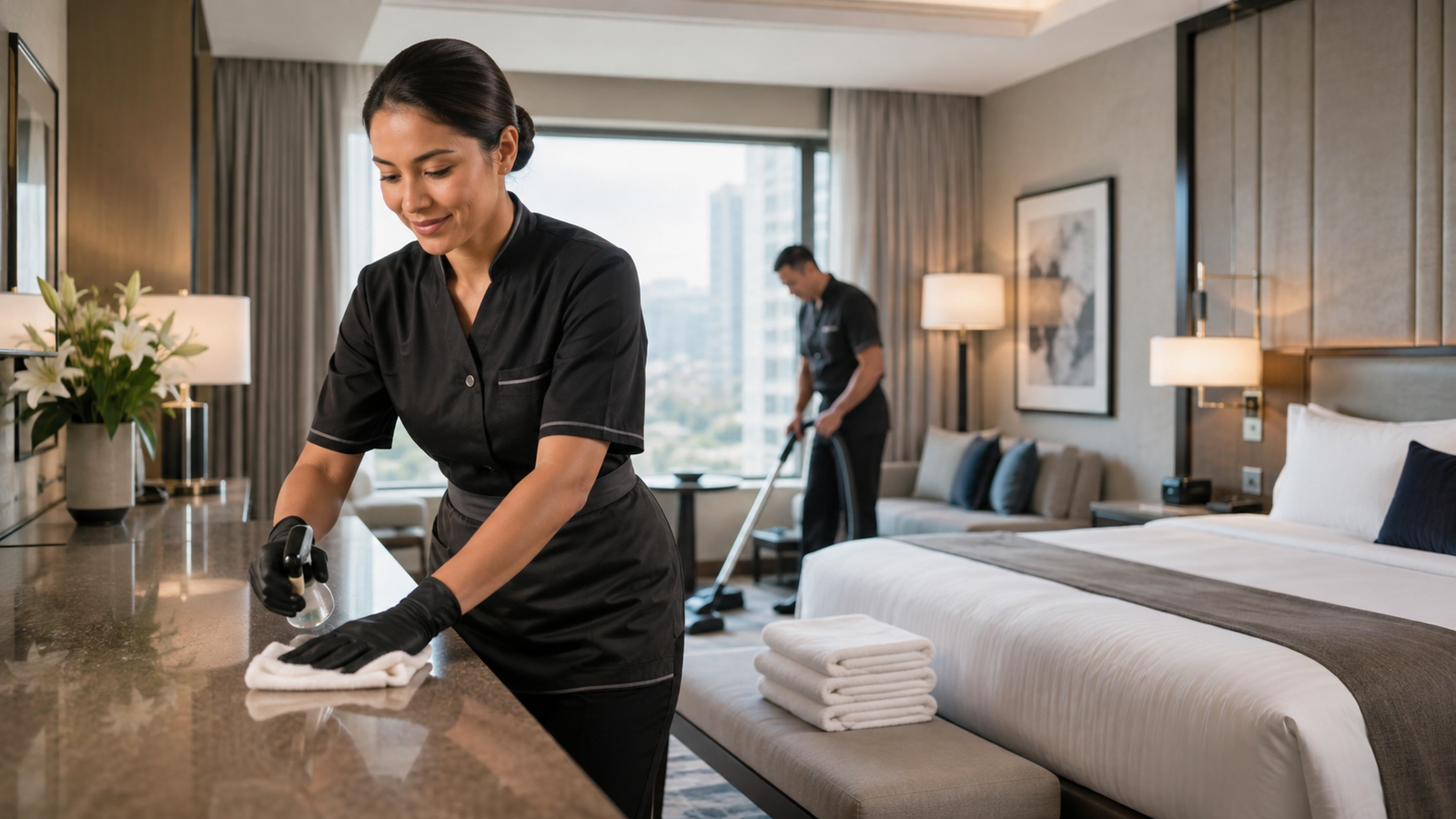
Guest rooms require careful, discreet cleaning because guests expect privacy, order, and comfort. Our hospitality service scope includes detailed cleaning support for guest rooms. A practical plan should address visible dust, floors, carpet, restroom surfaces, mirrors, waste, and frequently touched points.
Cleaning should follow a repeatable sequence so missed areas do not depend on memory. Door handles, switches, remote controls, desks, faucets, toilet handles, and other touchpoints should have a clear place on the checklist. A consistent process also makes quality easier to inspect.
How Should Hallways, Elevators, and Shared Restrooms Be Cleaned?
Hallways and elevators receive continuous traffic, so they can collect debris, fingerprints, and scuff marks quickly. Cleaning frequencies should reflect check-in periods, events, weekends, and other busy times.
Shared restrooms need more than occasional visual checks. Floors, sinks, mirrors, fixtures, partitions, toilets, and touchpoints should be cleaned consistently, while supplies and waste containers are monitored. Our commercial care services include restroom sanitation and supply management as part of maintaining a clean, well-presented facility.
How Should Dining and Other Guest-Facing Areas Be Addressed?
Dining areas should remain presentable before, during, and after service periods. Floors, glass, counters, fixtures, and surrounding surfaces should be included in the cleaning plan, with a quick response process for spills and visible debris.
The same approach applies to meeting rooms, lounges, and other shared spaces. Cleaning teams should understand when these areas are scheduled for use and when they can be serviced without disturbing guests.
How Does Professional Janitorial Service Improve Cleaning Consistency?
Professional janitorial service gives managers a structured way to define what should be cleaned, when it should be cleaned, and how results will be reviewed. A written scope reduces confusion between routine duties, periodic deep cleaning, and urgent response needs.
A strong plan should identify:
- Daily, nightly, weekly, and periodic tasks
- Guest-facing areas requiring daytime checks
- High-touch surfaces needing frequent attention
- Floor and carpet maintenance intervals
- Restroom cleaning and supply responsibilities
- Inspection methods and communication channels
Our website explains that we support quality control through inspections, client feedback, and continued staff development. Hotel managers can also use a clear janitorial inspection checklist to document conditions, assign accountability, and confirm that recurring work meets the agreed scope.
Consistency also depends on communication. When occupancy, events, access requirements, or priorities change, the cleaning plan should change with them. This helps the cleaning team focus its time where it will have the greatest effect on guests and operations.
Why Do Floors, Carpet, Tile, and Glass Affect the Guest Experience?
Guests spend much of their stay moving across floors and shared spaces. Carpet stains, dull hard floors, dirty grout, or marked glass can make an otherwise attractive property feel neglected.
Routine vacuuming and spot response help control visible soil, while scheduled deeper care supports carpeted areas. Our commercial carpet maintenance guide explains how vacuuming, spot treatment, and deeper extraction can work together as part of a broader maintenance plan.
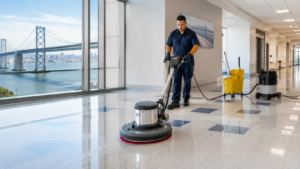
Hard surfaces require care suited to their material and traffic level. Our resources on hard floor care and commercial tile and grout cleaning show why routine cleaning and periodic restorative work should be planned separately.
Windows and interior glass also influence light and overall presentation. Fingerprints and smudges are especially noticeable near entrances, lobby doors, elevators, and dining areas. Window and glass cleaning can be incorporated into a regular or periodic service plan.
How Should High-Touch Surfaces Be Included in Hotel Cleaning Standards?
High-touch surfaces are areas handled frequently by guests and staff. In hospitality settings, these may include:
- Door handles
- Elevator buttons
- Stair and escalator railings
- Front desk counters
- Light switches
- Restroom fixtures
- Guest-room controls
- Shared tables and seating areas
Cleaning should come before disinfection when a surface is visibly dirty. Disinfectants should be used according to their labels, including contact time and surface compatibility. Our high-touch surface protocol helps facility managers identify commonly handled areas that may need more frequent attention.
First Service Janitorial also provides disinfection cleaning services that include cleaning visibly dirty surfaces before applying disinfectant and following product instructions for dilution, contact time, ventilation, and protective equipment.
Disinfection should support routine cleaning, not replace it. Applying disinfectant to a dirty surface without completing the necessary cleaning steps may not provide the intended result.
How Can Cleaning Be Scheduled Without Disrupting Hotel Operations?
Hotels operate beyond standard business hours, so cleaning schedules must account for guests, arrivals, departures, staff, events, and quiet periods. Our janitorial services offer flexible scheduling, including evenings, nights, and weekends.
A practical schedule may combine:
- Routine cleaning during lower-traffic periods
- Daytime checks for lobbies, elevators, and public restrooms
- Scheduled floor, carpet, window, and detail work
- Rapid response for spills or unexpected conditions
- Periodic deep cleaning based on traffic and property needs
Public areas may need attention throughout the day, while more disruptive floor, carpet, or window services may be better scheduled during quieter periods. The schedule should be based on the property’s actual activity instead of a fixed routine that ignores guest traffic.
For a property preparing for an event, reopening, seasonal refresh, or special project, our one-time commercial cleaning services can provide targeted support without requiring a recurring commitment.
What Should Hotel Managers Look for in a Janitorial Cleaning Plan?
A useful plan should be specific enough to inspect but flexible enough to adapt. Managers should know which spaces are included, which tasks are performed, how often service occurs, and how concerns will be handled.
Before approving a plan, hotel managers should ask whether:
- Guest rooms, lobbies, dining areas, restrooms, and shared spaces are clearly identified
- Routine and periodic services are separated
- The schedule matches actual occupancy and traffic
- Floors, carpet, tile, grout, glass, and high-touch surfaces are addressed
- Restroom supplies and waste responsibilities are clearly assigned
- There is a process for inspections and feedback
- Service can adjust for events or changing operating needs
A detailed scope creates a shared definition of quality. It also makes it easier to identify whether a concern falls within the routine schedule, requires periodic service, or needs immediate attention.
How Can Regular Inspections Protect the Guest Experience?
Even a detailed cleaning plan needs ongoing review. Inspections help hotel managers confirm that agreed tasks are being completed and that the property’s changing needs are being addressed.
Inspections may focus on visible conditions, commonly missed areas, recurring complaints, supply levels, and the overall presentation of guest-facing spaces. Findings should be documented clearly and shared with the cleaning team.
Feedback is most useful when it is specific. Instead of stating that a lobby needs improvement, the inspection should identify the exact concern, such as marked glass near the entrance, debris along the floor edges, or fingerprints on elevator controls. Specific feedback allows the issue to be corrected and monitored.
How Can First Service Janitorial Support a Better Hospitality Experience?
We support Bay Area hospitality properties with detailed, discreet cleaning for guest rooms, lobbies, and dining areas. An approved plan may also include routine facility cleaning, carpet and floor care, restroom sanitation, window and glass cleaning, trash and recycling, kitchen-area cleaning, and surface disinfection.
We tailor service around the property’s schedule, priorities, traffic, and expectations. This may involve recurring janitorial coverage, daytime checks, periodic commercial care, or one-time cleaning support.
Our goal is to help maintain a clean, welcoming environment that reflects the care guests expect. Hotel managers can request a custom cleaning quote to discuss their facility, schedule, priorities, and areas requiring professional support.
Which Organizations Inform These Cleaning Practices?
Centers for Disease Control and Prevention. “When and How to Clean and Disinfect a Facility.” Centers for Disease Control and Prevention, 16 Apr. 2024. Accessed 5 Aug. 2026.
United States Environmental Protection Agency. “Selected EPA-Registered Disinfectants.” United States Environmental Protection Agency, 11 Sept. 2025. Accessed 5 Aug. 2026.
Occupational Safety and Health Administration. “Cleaning Industry: Hazards and Solutions.” United States Department of Labor. Accessed 5 Aug. 2026.