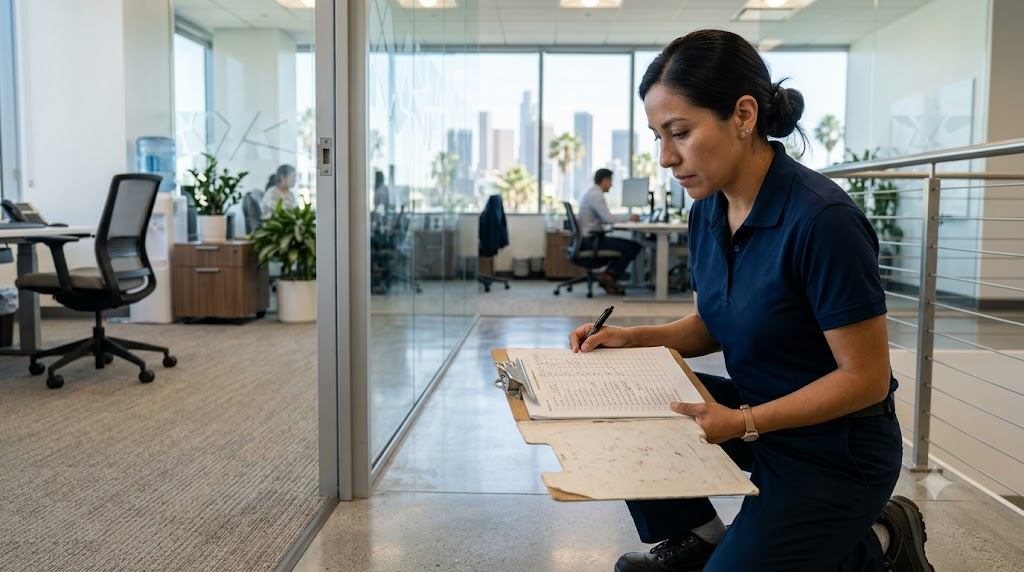
Why Does a Janitorial Inspection Checklist Matter for California Office Buildings?
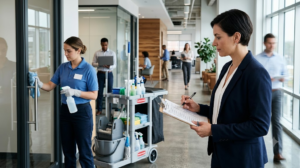
A janitorial inspection checklist helps office managers, property managers, and facility teams know whether a building is being cleaned consistently. Without a checklist, cleaning quality can depend too much on memory, assumptions, or quick visual checks. That can lead to missed restrooms, neglected high-touch surfaces, dirty floors, overflowing trash, or supply shortages that affect employees and visitors.
For California office buildings, the checklist should be practical. It should not be a confusing form that nobody uses. It should clearly show which areas were cleaned, what was inspected, what needs follow-up, and whether the work meets the building’s expectations.
A good checklist also helps your cleaning provider understand your priorities. If your building has heavy restroom traffic, frequent client visits, shared kitchens, conference rooms, or high daily foot traffic, those details should shape the inspection process. This is why businesses often work with a professional provider like First Service Janitorial, which provides commercial cleaning and janitorial services for offices and other facilities across California.
What Areas Should Be Included in an Office Building Cleaning Inspection?
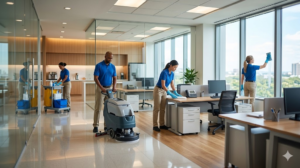
A strong janitorial inspection checklist should cover every major area employees, visitors, and tenants use throughout the day. The goal is to inspect both appearance and hygiene. A space may look neat from a distance but still have dusty surfaces, sticky counters, or high-touch areas that need attention.
Your checklist should include:
- Entryways and reception areas
- Lobby furniture and front desk surfaces
- Workstations and office areas
- Conference rooms
- Restrooms
- Breakrooms and kitchens
- Hallways and common areas
- Floors, carpets, and hard surfaces
- Interior glass and windows
- Trash and recycling areas
- High-touch surfaces
- Supply restocking points
- Problem areas that need follow-up
If the building has multiple floors, suites, or departments, the checklist should be organized by area. This makes it easier to confirm that the full building was inspected, not just the most visible spaces.
What Should Be Checked in Entrances, Lobbies, and Reception Areas?
The entrance and lobby shape the first impression of an office building. These areas usually collect dust, debris, fingerprints, and floor marks faster than private offices because they receive the most traffic.
The checklist should confirm that:
- Entry glass and interior glass are free of visible smudges
- Door handles and push plates are wiped
- Reception counters are dusted and cleaned
- Lobby furniture is straightened and free of debris
- Floors are vacuumed, swept, or mopped
- Mats are clean and positioned properly
- Trash and recycling bins are emptied
- Visible dust is removed from ledges and horizontal surfaces
Because First Service Janitorial provides janitorial and office cleaning services, these front-facing areas should be part of a routine office cleaning plan. They are simple to inspect but important to the overall appearance of the building.
What Should Be Checked in Workstations and Office Areas?
Office areas need a checklist that respects the workspace while still keeping shared surfaces clean. In many buildings, cleaners may not move personal items unless the client allows it. That means the checklist should clearly explain what can and cannot be cleaned on desks and workstations.
The checklist should include:
- Dusting available desk surfaces
- Wiping shared tables and counters
- Emptying trash and replacing liners
- Vacuuming carpeted areas
- Cleaning hard floors where applicable
- Spot-cleaning visible spills or marks
- Wiping light switches, door handles, and shared touchpoints
- Reporting cluttered areas that block proper cleaning
This section should also note areas that could not be cleaned because of personal belongings, locked doors, or restricted access. That helps keep communication clear between the building manager and cleaning team.
What Should Be Checked in Conference Rooms and Meeting Areas?
Conference rooms often need extra attention because they are used by employees, visitors, clients, and leadership teams. A missed detail in these rooms can stand out quickly.
The inspection checklist should confirm that:
- Tables are wiped and free of residue
- Chairs are aligned
- Floors are vacuumed or mopped
- Whiteboards are cleaned if requested
- Trash bins are emptied
- Glass doors and panels are cleaned
- High-touch points are wiped
- Food crumbs or drink spills are removed
If the building hosts frequent meetings, the checklist should include a note about cleaning frequency. Some rooms may need service daily, while others may only need attention after use.
What Should Be Checked in Office Restrooms?
Restrooms are one of the most important parts of a janitorial inspection checklist. Even if the rest of the building looks clean, a poorly maintained restroom can create a negative impression and raise hygiene concerns.
The checklist should include:
- Toilets and urinals cleaned and sanitized
- Sinks and faucets cleaned
- Mirrors cleaned
- Counters wiped
- Partitions spot-cleaned
- Floors swept and mopped
- Trash removed
- Odors checked and reported
- Soap, paper towels, toilet tissue, and liners restocked if supplies are provided
- Door handles, dispensers, and flush handles wiped
First Service Janitorial includes restroom sanitation and supply management within its commercial care services, which makes this a key checklist category for office buildings that want consistent results.
What Should Be Checked in Breakrooms and Kitchens?
Breakrooms and kitchens can become messy quickly because they combine food, trash, shared appliances, sinks, and counters. A checklist helps prevent these areas from being overlooked.
The checklist should confirm that:
- Counters are wiped
- Tables are cleaned
- Sinks and faucets are cleaned
- Appliance exteriors are wiped
- Trash and recycling are emptied
- Floors are swept and mopped
- Cabinet handles and drawer pulls are wiped
- Food spills or odors are reported
- Paper products or supplies are restocked if provided
A janitorial inspection should also identify recurring problems, such as overflowing trash, sticky floors, or food left out overnight. These notes help the facility manager decide whether the cleaning schedule needs to be adjusted.
What Should Be Checked for Floors, Carpets, and Hard Surfaces?
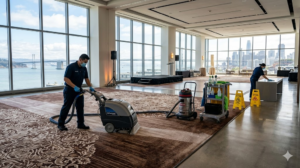
Floors are one of the easiest areas to judge visually, but they still need detailed inspection. A floor can look acceptable from a distance while still having stains, dust buildup, sticky spots, or worn high-traffic paths.
The checklist should include:
- Carpet vacuuming
- Spot checks for stains
- Hard floor sweeping
- Mopping where needed
- Floor edges and corners
- Entry mats
- Stairways if applicable
- Elevator floors if applicable
- Visible scuffs or marks
- Areas needing deeper floor care
First Service Janitorial lists floor and carpet care as part of its commercial services. A California office building that receives heavy foot traffic may also benefit from periodic one-time commercial cleaning for deeper cleaning needs, seasonal refreshes, move-ins, special events, or first-time service evaluations.
What Should Be Checked for Windows, Glass, and High-Touch Surfaces?
Glass and high-touch surfaces are easy to miss during a rushed cleaning. They are also easy for employees and visitors to notice.
The checklist should include:
- Interior glass doors
- Lobby glass
- Conference room glass
- Partition glass
- Door handles
- Light switches
- Elevator buttons
- Shared counters
- Handrails
- Faucet handles
- Dispensers
- Breakroom appliance handles
The Centers for Disease Control and Prevention explains that high-touch surfaces are more likely to spread germs and may need more frequent cleaning in high-traffic areas. For office buildings, this means the inspection checklist should clearly identify the surfaces that people touch most often.
What Should Be Checked for Trash, Recycling, and Supply Restocking?
Trash and supply issues are common sources of tenant complaints. They are also simple to prevent when the checklist is detailed.
The inspection should confirm that:
- Trash bins are emptied
- Liners are replaced
- Recycling areas are checked
- Overflowing bins are reported
- Restroom supplies are restocked if provided
- Breakroom supplies are restocked if provided
- Storage areas are neat
- Cleaning supply needs are reported
If your office building uses shared supply closets, the checklist should include a section for low-stock items. This helps avoid last-minute shortages.
How Should Disinfection Be Included in the Checklist?
Disinfection should be specific, not vague. A checklist should not simply say “disinfected” without identifying what was disinfected. It should list the surfaces and areas included in the service.
The checklist may include:
- Restroom touchpoints
- Door handles
- Light switches
- Shared counters
- Conference room tables
- Breakroom surfaces
- Elevator buttons
- Handrails
- Reception counters
First Service Janitorial provides disinfection services that target high-touch areas in offices, schools, healthcare facilities, and government buildings. For office buildings, disinfection should be paired with routine cleaning because visible soil should be removed before disinfectants are used.
How Should Quality Control Be Added to the Checklist?
A janitorial inspection checklist should not only ask whether a task was done. It should also measure quality. This can be done with a simple rating system.
For example:
- Pass
- Needs attention
- Not completed
- Not accessible
- Follow-up required
The checklist should also include space for notes. A short note can explain why an area failed inspection, whether supplies were missing, or whether a locked door prevented service.
A strong quality control section may include:
- Date and time of inspection
- Name of inspector
- Area inspected
- Cleaning task status
- Photos if needed
- Follow-up deadline
- Person responsible for follow-up
- Client feedback notes
First Service Janitorial states that its janitorial services follow a quality assurance process with inspections, client feedback, and continuous staff development. This aligns well with the purpose of a checklist because inspections help keep service consistent.
How Often Should California Office Buildings Be Inspected?
The right inspection frequency depends on building size, traffic, industry, and tenant expectations. A small office may only need a weekly formal inspection, while a larger multi-tenant office building may need daily walkthroughs and a more detailed weekly review.
A practical schedule may look like this:
- Daily checks for restrooms, trash, kitchens, and high-touch surfaces
- Weekly inspections for floors, glass, dusting, and common areas
- Monthly reviews for deeper cleaning needs and recurring issues
- Seasonal reviews for one-time cleaning, floor care, or special projects
First Service Janitorial offers flexible scheduling through its commercial services, which is helpful for offices that need cleaning outside regular business hours.
How Can First Service Janitorial Help With Office Building Cleaning?
First Service Janitorial is a good fit for California office buildings that need professional janitorial support, commercial care, one-time cleaning, and cleaning service planning. The company serves San Jose and the Bay Area, including areas such as San Mateo, Marin, Alameda, Contra Costa, Santa Clara, and nearby communities.
Relevant First Service Janitorial pages to use as internal links include:
- Commercial Cleaning and Janitorial Services in San Jose, CA
- Janitorial and Office Cleaning Services
- Commercial Care Services
- One-Time Commercial Cleaning Services
- Industries We Serve
- About First Service Janitorial
- Get a Free Cleaning Quote
- Book a Free Consultation
These pages support the main topic because a janitorial inspection checklist is most useful when it connects directly to the actual cleaning services being performed.
Which Organizations Were Cited?
Centers for Disease Control and Prevention. “When and How to Clean and Disinfect a Facility.” CDC, 16 Apr. 2024.
California Department of Industrial Relations. “Cal/OSHA Overview of Employer Responsibilities.” State of California Department of Industrial Relations.
Occupational Safety and Health Administration. “1910.22 General Requirements.” United States Department of Labor.
United States Environmental Protection Agency. “Selected EPA-Registered Disinfectants.” EPA.
What Is the Final Takeaway?
A janitorial inspection checklist for California office buildings should be clear, detailed, and easy to use. It should cover the areas people notice most, such as lobbies, restrooms, floors, glass, kitchens, and conference rooms. It should also include less visible but important details, such as high-touch surfaces, trash removal, restocking, and follow-up notes.
The best checklist is not just a form. It is a quality control tool. When used consistently, it helps office buildings stay cleaner, more organized, and more professional for employees, tenants, and visitors. For businesses that want dependable support, First Service Janitorial offers professional office cleaning, janitorial services, disinfection, commercial care, and one-time cleaning services for California office buildings.