A clean facility supports safety, productivity, and confidence. But many business owners and facility managers avoid reviewing their janitorial provider because they worry it will interrupt employees, customers, tenants, or daily operations. The good news is that a cleaning audit does not have to be stressful. When handled properly, it can be simple, respectful, and highly useful.
Auditing your janitorial provider means looking at whether the cleaning service is meeting your standards. It does not mean creating conflict or stopping business activity. It means reviewing the quality of service, checking for missed areas, confirming communication practices, and making sure your facility still receives the level of care it needs.
For businesses in San Jose and across the Bay Area, First Service Janitorial offers professional commercial cleaning and janitorial support for offices, schools, healthcare facilities, government buildings, commercial spaces, and other business environments. Their service approach focuses on reliable cleaning, flexible scheduling, transparent proposals, and professional care.
Why Should You Audit Your Janitorial Provider?
You should audit your janitorial provider because cleaning quality can change over time. Even if the service started strong, your facility may grow, foot traffic may increase, restrooms may need more attention, or employees may notice repeated issues.
A janitorial audit helps you answer important questions:
- Are high-touch areas being cleaned properly?
- Are restrooms consistently stocked and sanitized?
- Are floors, carpets, windows, and breakrooms being maintained?
- Is the cleaning schedule still right for your business hours?
- Is your provider responding quickly when concerns are raised?
- Are cleaning expectations clear and documented?
A good audit protects your business from small issues becoming bigger problems. It also gives your current provider a fair chance to improve before you make any major decision.
How Can You Audit Cleaning Quality Without Interrupting Employees?
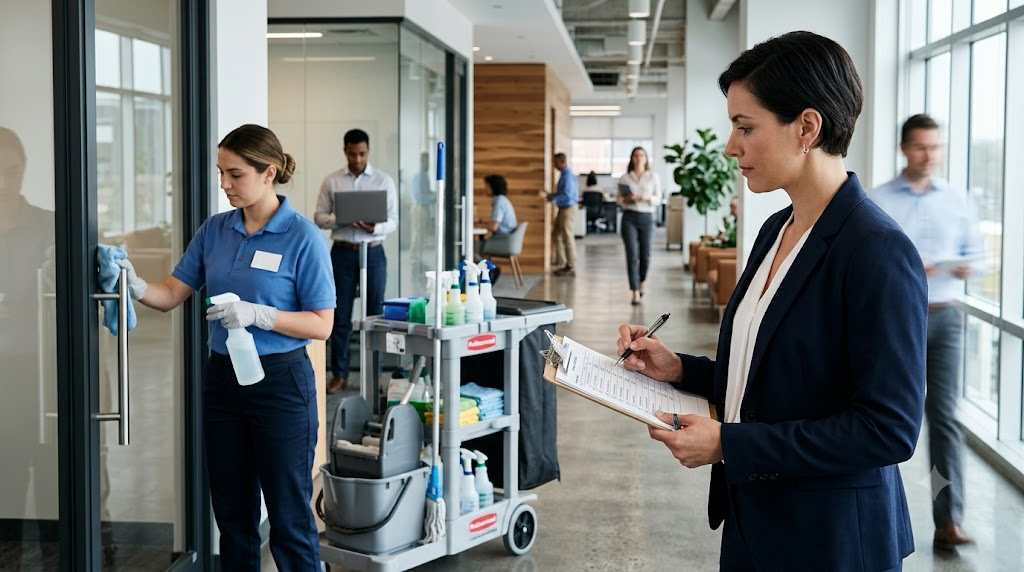
You can audit cleaning quality without interrupting employees by using a simple walkthrough process. The best time to inspect is before opening, after closing, or during a quiet part of the workday.
Start with visible areas. These usually tell you a lot about the quality of routine cleaning. Check lobbies, entrances, restrooms, breakrooms, conference rooms, workstations, floors, and trash areas. Look for signs of skipped tasks, poor detail work, or inconsistent service.
Your inspection does not need to be complicated. Use a checklist and take notes. Focus on facts, not opinions. Instead of writing “restroom looks bad,” write “paper towels were empty in the second-floor restroom” or “sink counters had visible water spots at 8:00 a.m.”
If your team needs outside support, First Service Janitorial’s janitorial and office cleaning services include tailored cleaning solutions for offices, schools, healthcare, and commercial facilities. Their services include carpet care, restroom sanitation, window cleaning, trash and recycling, surface disinfection, and kitchen cleaning.
What Areas Should Be Included in a Janitorial Audit?
A strong janitorial audit should cover the areas that affect health, appearance, comfort, and daily operations. You do not need to inspect every inch of the building. Instead, focus on the areas people use most often.
Which Front-Facing Areas Should You Check?
Start with the areas customers, visitors, and employees see first. These spaces shape the impression of your business.
Check:
- Entry doors and glass
- Reception desks
- Lobby floors
- Waiting areas
- Hallways
- Conference rooms
- Visible trash bins
If these spaces look neglected, visitors may assume the rest of the facility is not well maintained.
Which Employee Areas Should You Review?
Employee spaces matter because they affect morale and productivity. Review breakrooms, kitchens, shared desks, copy rooms, private offices, and employee restrooms.
Look for:
- Overflowing trash
- Sticky counters
- Dust on surfaces
- Dirty appliances
- Unclean sinks
- Unstocked supplies
A clean employee area helps people feel respected and supported at work.
Which Restroom Details Should You Inspect?
Restrooms are one of the most important parts of a janitorial audit. They are also one of the first places where poor cleaning becomes obvious.
Check:
- Toilets and urinals
- Sinks and counters
- Mirrors
- Floors
- Partitions
- Odor control
- Soap, tissue, and paper towel supply
- Trash removal
First Service Janitorial lists restroom sanitation and supply management as part of its commercial care services, which makes it a key area to consider when reviewing service quality.
Which Floor and Surface Issues Should You Watch For?
Floors and surfaces show whether routine cleaning is consistent. Depending on your facility, this may include hard floors, carpets, tile, grout, and entry mats.
Look for:
- Dust buildup
- Stains
- Sticky spots
- Uneven floor care
- Dirty corners
- Carpet traffic lanes
- Smudged glass
- Missed high-touch surfaces
First Service Janitorial’s commercial care services include routine office and facility cleaning, floor and carpet care, restroom sanitation, supply management, window and glass cleaning, and flexible scheduling.
How Can You Review Cleaning Performance Without Blaming the Provider?
The best audit is professional, fair, and clear. Avoid approaching the process as a complaint session. Instead, treat it as a quality review.
Use this simple method:
- Document the current condition of the facility.
- List what is working well.
- Identify repeated cleaning gaps.
- Compare the current service with your facility needs.
- Ask whether the cleaning schedule needs to change.
- Give the provider specific examples.
- Set a timeline for improvement.
This approach keeps the conversation productive. It also avoids unnecessary tension with the cleaning team.
For example, instead of saying, “The office is always dirty,” you can say, “The breakroom counters have been missed three times this month, and the trash area near the back entrance needs more consistent attention.”
How Can You Audit Scheduling Without Disrupting Business Operations?
Scheduling is one of the most important parts of a janitorial audit. A cleaning provider may be doing good work, but the schedule may no longer match your business.
Ask these questions:
- Are cleaners arriving at the right time?
- Is the cleaning being completed before employees arrive?
- Are cleaning tasks affecting customers or staff?
- Would evening, night, or weekend service work better?
- Do high-traffic areas need more frequent cleaning?
- Does the facility need periodic deep cleaning?
First Service Janitorial states that it can accommodate after-hours cleaning, including evenings, nights, and weekends, to help reduce disruption. This is especially helpful for offices, medical facilities, schools, gyms, retail spaces, and other active business environments.
If your facility needs a deeper reset without committing to ongoing changes, one-time commercial cleaning services can help with special events, seasonal upkeep, move-ins, or first-time deep cleaning needs.
How Can You Tell If Your Provider Understands Your Industry?
Every business type has different cleaning needs. A gym does not have the same cleaning priorities as an office. A school does not have the same daily traffic pattern as a retail space. A healthcare setting requires extra attention to cleanliness and high-touch areas.
To audit industry fit, ask:
- Does the provider understand your facility type?
- Are they cleaning the areas that matter most to your business?
- Are they using a schedule that fits your traffic patterns?
- Are they paying attention to health, safety, and appearance?
- Are they flexible when your needs change?
First Service Janitorial provides cleaning services for many industries, including office buildings, schools, event venues, gyms, hospitality spaces, industrial facilities, retail establishments, medical and healthcare facilities, financial institutions, museums, salons, restaurants, and places of worship. You can review their industries served page to compare your facility type with their service experience.
How Can You Use Employee Feedback Without Creating Disruption?
Employee feedback is valuable, but it should be collected carefully. You do not need a long meeting or formal survey. A short feedback form can work well.
Ask employees:
- Are there areas that are often missed?
- Are restrooms clean and stocked?
- Are breakrooms cleaned well?
- Are odors, spills, or trash issues recurring?
- Are cleaning activities interrupting your work?
- What is one improvement you would like to see?
Keep the feedback focused on facility conditions, not personal criticism of cleaners. This keeps the audit respectful and useful.
Once you gather feedback, look for patterns. One complaint may be isolated. Three or more comments about the same area may show a recurring issue.
How Can You Review Communication and Responsiveness?
Cleaning quality is important, but communication is just as important. A provider should be easy to reach, clear about expectations, and responsive when issues come up.
Review these points:
- Do they respond quickly to concerns?
- Do they provide clear cleaning plans?
- Do they explain pricing and service scope?
- Do they follow up after issues are reported?
- Do they adjust service when your needs change?
- Do they provide a smooth process for quotes or evaluations?
First Service Janitorial highlights transparent pricing, fast response times, flexible scheduling, and tailored cleaning programs. Businesses can request a custom cleaning quote by sharing their facility address, industry type, and cleaning needs.
When Should You Consider a Professional Cleaning Evaluation?
You should consider a professional cleaning evaluation when you are unsure whether your current janitorial provider is meeting expectations. This is useful if you see repeated quality issues, inconsistent cleaning, poor communication, or a mismatch between your current cleaning schedule and your actual facility needs.
A professional evaluation can help you understand:
- The real condition of your facility
- Whether your current provider is meeting standards
- Which areas need better hygiene, safety, or appearance
- Whether a different cleaning plan would be more effective
- What next steps make sense for your business
First Service Janitorial offers a First Service Evaluation Call to help businesses review cleaning quality, evaluate current janitorial coverage, and receive guidance on possible improvements.
How Can You Build a Simple Janitorial Audit Checklist?
A simple checklist helps you stay organized. You can use this framework:
What Should You Check Daily?
- Trash removal
- Restroom cleanliness
- Restroom supplies
- Entryway appearance
- Breakroom surfaces
- High-touch areas
- Visible dust or debris
What Should You Check Weekly?
- Floors and carpets
- Interior glass
- Conference rooms
- Kitchen appliances
- Detailed restroom cleaning
- Corners and baseboards
- Odor control
What Should You Check Monthly?
- Deep cleaning needs
- Carpet condition
- Tile and grout condition
- Floor care quality
- Window cleaning needs
- Supply usage
- Overall provider performance
This checklist can help you see whether cleaning gaps are isolated or recurring.
How Can First Service Janitorial Help Improve Cleaning Quality?
First Service Janitorial can help businesses that need dependable janitorial services, office cleaning, commercial care, disinfection services, one-time cleaning, and flexible cleaning schedules across San Jose and the Bay Area.
Their services are built around practical business needs:
- Routine office and facility cleaning
- Carpet and floor care
- Restroom sanitation
- Window and glass cleaning
- Trash and recycling support
- Surface disinfection
- Kitchen and breakroom cleaning
- One-time deep cleaning
- Flexible scheduling
- Custom cleaning quotes
First Service Janitorial also emphasizes service, speed, and professionalism. Their about page explains their mission to deliver dependable janitorial services with a commitment to service, discipline, and integrity.
What Is the Best Way to Audit Your Janitorial Provider Without Disrupting Operations?
The best way is to keep the audit simple, scheduled, and respectful. Walk through the facility during quiet hours. Use a checklist. Take notes. Gather employee feedback. Review communication. Check whether the cleaning schedule still fits your business. Then speak with your provider using specific examples.
If your current provider is meeting expectations, the audit confirms that your facility is in good shape. If there are gaps, the audit gives you the information needed to request improvements or explore a better cleaning plan.
A good janitorial audit should not disrupt your business. It should help your business run more smoothly.
Works Cited
Centers for Disease Control and Prevention. “Cleaning and Disinfecting.” CDC, 2025.
Centers for Disease Control and Prevention. “When and How to Clean and Disinfect a Facility.” CDC, 2024.
First Service Janitorial. “Commercial Cleaning & Janitorial Services in San Jose, CA.” First Service Janitorial, 2026.
First Service Janitorial. “Janitorial & Office Cleaning San Jose.” First Service Janitorial, 2026.
First Service Janitorial. “Commercial Care Services.” First Service Janitorial, 2026.
First Service Janitorial. “One-Time Commercial Cleaning Services in the Bay Area.” First Service Janitorial, 2026.
First Service Janitorial. “Industries We Serve.” First Service Janitorial, 2026.
First Service Janitorial. “Book a Free Consultation.” First Service Janitorial, 2026.
Occupational Safety and Health Administration. “1910.141 Sanitation.” OSHA.
United States Environmental Protection Agency. “About List N: Disinfectants for Coronavirus.” EPA, 2026.