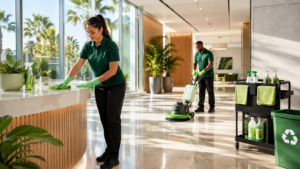
Vinyl composition tile, commonly called VCT, is widely used in offices, schools, medical facilities, retail spaces, government buildings, and other commercial properties. It is durable and practical, but it needs the right maintenance program to preserve its appearance and protect its surface.
Routine mopping alone may not be enough. Over time, floor finish can become scratched, discolored, uneven, or embedded with soil. Facility managers may then need to consider stripping, waxing, burnishing, or a less intensive scrub-and-recoat service.
These processes are not interchangeable. Each one solves a different floor-care problem. Understanding the differences can help Bay Area facility managers avoid unnecessary stripping, improve scheduling, and select a service that matches the floor’s actual condition.
First Service Janitorial provides commercial care services, including hard-floor care, for commercial facilities in San Jose and throughout the Bay Area.
What Is VCT Flooring?
VCT is a resilient flooring material commonly used in commercial and institutional buildings. It is valued for its durability, modular tile design, and ability to handle regular foot traffic when maintained correctly.
In many facilities, the VCT surface is protected by layers of floor finish. The finish creates a barrier between daily traffic and the tile. It can also provide the desired level of gloss and make routine cleaning more manageable.
The protective finish can gradually wear down because of:
- Dirt and grit tracked through entrances
- Rolling carts and equipment
- Chairs and movable furniture
- Frequent foot traffic
- Spills and staining
- Inconsistent daily cleaning
- Incorrect floor-cleaning products
- Worn or overloaded entry mats
- Delayed restorative maintenance
A dull floor does not always need to be completely stripped. Facility managers should first determine whether the problem is loose soil, damaged finish, finish buildup, or deterioration of the tile itself.
What Is the Difference Between Stripping, Waxing, and Burnishing?
The three services may be included in the same overall floor-care program, but they perform different functions.
What Does VCT Floor Stripping Accomplish?
Floor stripping is the process of removing existing finish and accumulated buildup from the VCT surface. It creates a clean foundation for the application of new floor finish.
A typical stripping process may include:
- Closing or isolating the work area
- Removing movable furniture and obstacles
- Dry-cleaning the floor to remove loose debris
- Applying a compatible stripping solution
- Allowing the solution to work according to its instructions
- Agitating the old finish with appropriate equipment
- Recovering the resulting liquid and residue
- Rinsing or neutralizing the floor when required
- Allowing the floor to dry completely
- Inspecting the tile before applying new finish
Stripping is an intensive restorative procedure. It should generally be considered when the existing finish has severe discoloration, deep scratches, embedded soil, peeling, uneven buildup, or damage that no longer responds to routine maintenance.
What Does Waxing a VCT Floor Mean?
“Waxing” is a commonly used term for applying protective floor finish. Many modern commercial floor-care programs use polymer-based finish rather than traditional wax, but facility teams and service providers may still refer to the process as waxing.
Floor finish is normally applied in controlled, even coats. Each coat must be given the required drying time before the next coat is applied. The correct finish, number of coats, drying conditions, and reopening time depend on the flooring and product instructions.
The finished surface should appear even rather than streaked, sticky, cloudy, or excessively thick. Applying more finish is not always better. Excessive buildup can make future maintenance more difficult and may create an uneven appearance along edges and low-traffic areas.
What Does Burnishing Accomplish?
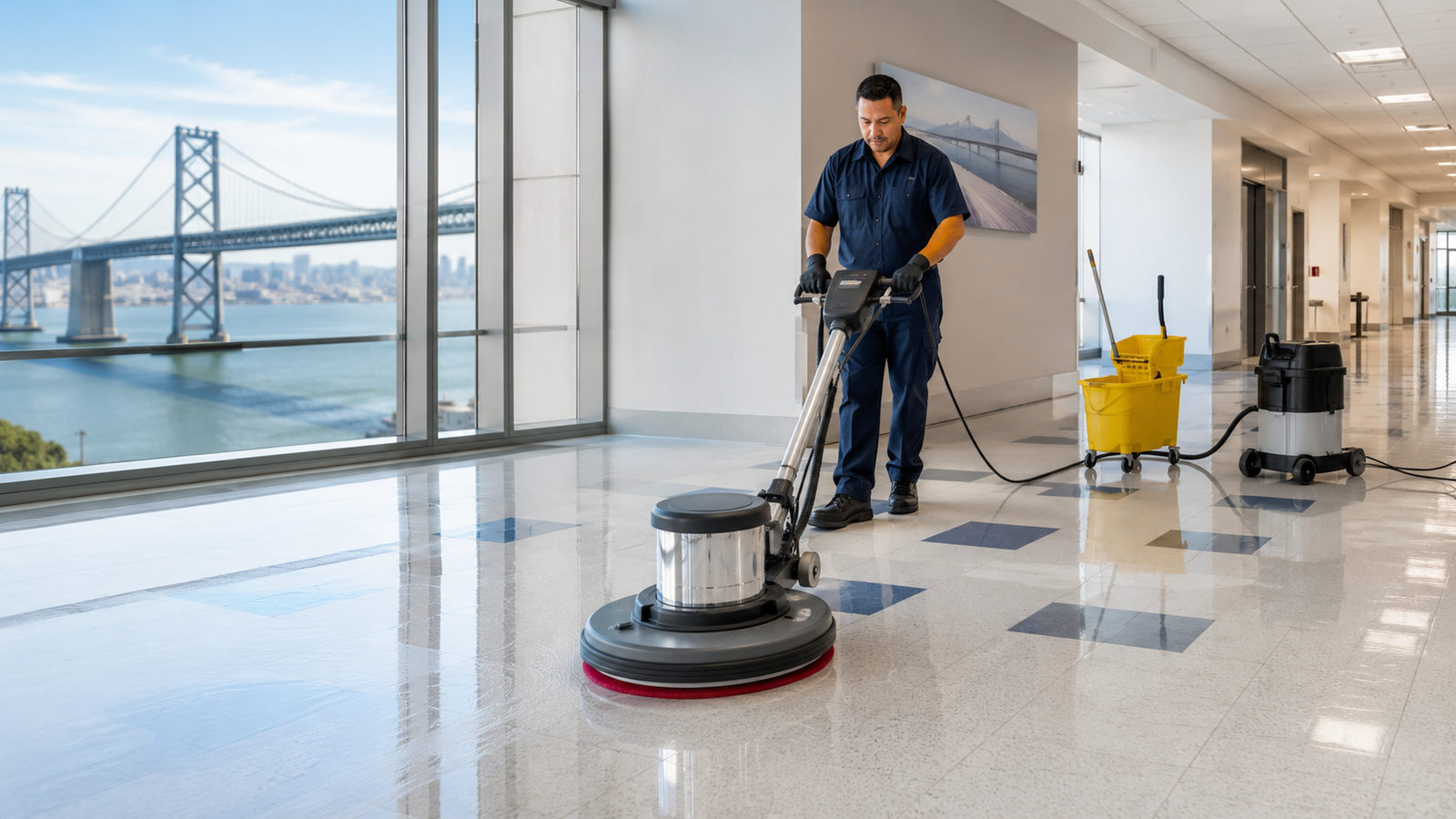
Burnishing is an interim maintenance process used to improve the appearance of an existing floor finish. A high-speed floor machine and a compatible pad are used to smooth and polish the upper layer of finish.
Burnishing can:
- Restore gloss
- Reduce the appearance of light scuffs
- Improve the uniformity of the finish
- Help preserve an existing floor-care system
- Extend the time before more intensive restoration is needed
Burnishing does not remove heavy finish buildup or repair deeply damaged flooring. If the finish is peeling, badly discolored, or deeply scratched, burnishing may make little difference. It should not be used to hide a condition that requires stripping or recoating.
When Does a VCT Floor Need Scrubbing and Recoating Instead?
Scrubbing and recoating is a middle option between routine maintenance and full stripping. During this process, the floor is thoroughly cleaned and the damaged upper portion of the finish is abraded or removed. New finish is then applied over the properly prepared remaining layers.
A scrub-and-recoat service may be appropriate when:
- The lower layers of finish remain sound
- Surface scratches are visible
- Gloss no longer returns through burnishing
- Traffic lanes look worn
- The floor has minor embedded soil
- A complete finish removal is not yet necessary
This approach may help facilities extend the time between full stripping projects. However, it only works when the remaining finish is clean, stable, and compatible with the new application.
A qualified floor-care team should inspect the surface rather than assume every dull floor requires complete stripping.
How Can Facility Managers Choose the Right VCT Service?
The decision should be based on floor condition, not a fixed calendar date. Two buildings with the same type of tile may require very different schedules because their traffic, entrances, layouts, and cleaning programs differ.
Facility managers should look for the following signs:
| Observed condition | Service to consider |
| Loose soil or recent spills | Routine cleaning |
| Light scuffs and reduced gloss | Burnishing |
| Surface wear with a stable lower finish | Scrub and recoat |
| Deep scratches or embedded discoloration | Stripping and refinishing |
| Peeling or uneven finish buildup | Stripping and refinishing |
| Loose, cracked, or damaged tiles | Flooring assessment before floor care |
| Unknown older tile or adhesive | Review building records before aggressive work |
This table is only a starting point. Flooring instructions, finish compatibility, safety requirements, and an on-site evaluation should guide the final decision.
First Service Janitorial’s professional janitorial services can be tailored around a facility’s floor types, traffic patterns, schedule, and overall maintenance needs.
How Often Should VCT Floors Be Stripped and Waxed?
There is no accurate one-size-fits-all stripping schedule. A heavily used school hallway may wear differently from an administrative office, medical waiting room, retail aisle, or low-traffic storage area.
The maintenance frequency may be influenced by:
- Daily pedestrian traffic
- Type and amount of tracked-in soil
- Entry mat placement
- Rolling equipment
- Spills and moisture exposure
- Quality of daily dust removal
- Cleaning-product compatibility
- Frequency of burnishing
- Thickness and condition of the finish
- Building operating hours
- Seasonal weather conditions
A better approach is to inspect the floor regularly and schedule the least intensive service that will correct the current condition.
Routine dust removal, compatible damp cleaning, prompt spill response, and planned burnishing can help preserve the finish. Periodic scrubbing and recoating may further delay the need for full stripping.
Why Do Bay Area Conditions Affect VCT Floor Maintenance?
Bay Area facilities experience changing soil and moisture conditions throughout the year. Rainy periods can increase tracked-in moisture and outdoor residue near entrances. Drier months can bring more dust and fine particles into buildings.
Dense occupancy, long business hours, public access, and shared commercial spaces may also increase floor traffic. A facility used five days a week during regular office hours will have different needs from a building that operates daily or hosts public events.
Facility managers should adjust their floor-care plan by:
- Inspecting entrances during rainy periods
- Keeping entry mats clean and properly positioned
- Increasing soil removal when outdoor dust is heavier
- Monitoring high-traffic paths separately
- Cleaning spills before they affect the finish
- Scheduling restorative work during low-occupancy periods
- Reviewing the plan after events or seasonal changes
The article on seasonal cleaning challenges offers additional guidance for adjusting facility cleaning priorities throughout the year.
What Should Facility Managers Check Before Floor Stripping Begins?
Good preparation helps protect occupants, cleaning personnel, nearby surfaces, and the floor itself.
Before approving the work, facility managers should confirm:
- The floor is VCT and suitable for the proposed process
- Flooring and finish instructions are available
- The existing finish is compatible with the maintenance plan
- Loose or damaged tiles have been identified
- Furniture and movable obstacles can be relocated
- The work area can be closed to foot traffic
- Appropriate warning signs and barriers will be used
- Ventilation needs have been reviewed
- Cleaning chemicals will be labeled and used correctly
- Adequate drying and curing time is available
- The reopening time is clearly communicated
Older flooring deserves additional caution. If the age or composition of the tile and adhesive is unknown, facility managers should review available asbestos records before approving aggressive maintenance. Damaged or suspected asbestos-containing materials should not be sanded, ground, or disturbed through an ordinary floor-care project.
How Should VCT Maintenance Be Scheduled Around Building Operations?
Stripping and refinishing normally require more downtime than routine cleaning or burnishing. The work area must remain closed during cleaning, finish application, drying, and any required curing period.
Facility managers should consider:
- Evening or overnight access
- Weekend availability
- Tenant and employee schedules
- School breaks
- Medical or public-service operating hours
- Delivery routes
- Emergency exits
- Elevator and restroom access
- Furniture relocation
- Security arrangements
- Temperature and ventilation conditions
Large facilities may need to divide the project into sections. This allows part of the building to remain available while another area is being serviced.
Facilities comparing daytime and after-hours coverage can review the differences between day porter and nightly janitorial services. First Service Janitorial offers flexible scheduling, including evening, night, and weekend service.
What Maintenance Can Extend the Life of a VCT Finish?
The best way to reduce unnecessary stripping is to prevent dirt from damaging the finish in the first place. Daily and interim care can make a major difference.
A practical maintenance plan may include:
- Cleaning and maintaining entrance mats
- Removing dust and grit regularly
- Responding to spills promptly
- Using a compatible neutral cleaner
- Avoiding excessive water
- Replacing dirty cleaning solution as needed
- Using clean mop heads and floor pads
- Cleaning corners and edges
- Monitoring high-traffic lanes
- Burnishing when the finish responds appropriately
- Scheduling scrub-and-recoat service before severe wear develops
- Documenting floor condition during inspections
Using the wrong chemical, pad, or machine setting can affect the finish and may damage the floor. Product labels and flooring instructions should guide every part of the maintenance process.
What Should a VCT Floor Inspection Include?
A floor should be evaluated under normal lighting and from different viewing angles. High-gloss areas can hide defects when viewed from only one direction.
An inspection checklist may review:
- Uniformity of gloss
- Scratches and scuff marks
- Embedded soil
- Discoloration
- Sticky or cloudy areas
- Traffic-lane wear
- Finish buildup along edges
- Residue on baseboards
- Cracked or loose tiles
- Moisture near entrances
- Conditions under movable furniture
- Warning-sign placement during service
- Dryness before reopening
Photographs and written notes can help facility managers track changes over time. The janitorial inspection checklist can be adapted to include VCT floor condition and maintenance completion.
Facilities should also periodically audit their janitorial provider to confirm that scheduled floor-care tasks are being completed consistently.
What Factors Affect VCT Floor-Care Pricing?
A quote should be based on the actual work required rather than square footage alone. Several conditions can affect labor, materials, equipment, and scheduling.
Common pricing factors include:
- Total serviceable floor area
- Current condition of the finish
- Amount of finish buildup
- Required edge work
- Number of rooms or separated areas
- Furniture relocation
- Accessibility
- Desired finish level
- Number of finish coats required
- Drying time between applications
- After-hours or weekend scheduling
- Need to divide the project into phases
Facility managers should ask whether the proposal covers stripping, rinsing, finish application, burnishing, furniture movement, edge detailing, and final inspection. Clear service descriptions make it easier to compare scope and avoid misunderstandings.
How Can First Service Janitorial Support VCT Floor Care?
First Service Janitorial provides routine facility cleaning, hard-floor care, carpet care, restroom sanitation, window cleaning, surface disinfection, and flexible scheduling for offices, schools, medical facilities, retail properties, and other commercial environments.
A customized floor-care plan can combine daily cleaning with periodic burnishing, scrubbing and recoating, or restorative service based on the floor’s condition. This allows facility managers to address wear before the entire surface requires intensive restoration.
Review the complete range of industries served or request a custom cleaning quote for a VCT floor evaluation and facility-specific service plan.
Which Organizations Inform These VCT Floor-Care Practices?
Agency for Toxic Substances and Disease Registry. “Toxicological Profile for Asbestos.” United States Department of Health and Human Services, Sept. 2001. Accessed 22 July 2026.
International Sanitary Supply Association. “Simple Steps Toward More Sustainable Floor Care.” ISSA, 11 July 2019. Accessed 22 July 2026.
Occupational Safety and Health Administration. “Protecting Workers Who Use Cleaning Chemicals.” United States Department of Labor. Accessed 22 July 2026.
Resilient Floor Covering Institute. “Vinyl Composition Tile.” RFCI. Accessed 22 July 2026.