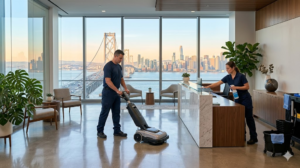

Clean windows can make an office building feel brighter, better maintained, and more professional. They are one of the first things employees, tenants, clients, and visitors notice when approaching a property. However, commercial window cleaning involves more than occasionally wiping visible fingerprints from the front entrance.
At First Service Janitorial, we approach window and glass cleaning as part of a broader facility care plan. The right service depends on the building’s layout, window accessibility, foot traffic, surrounding environment, and appearance standards. Some glass surfaces may require attention every day, while others may only need scheduled cleaning several times per year.
Understanding what is included and how often service should be scheduled helps Bay Area facility managers build a practical cleaning plan without paying for unnecessary visits or allowing dirt to accumulate for too long.
Why Does Commercial Window Cleaning Matter for Bay Area Offices?
Windows affect how people view both the inside and outside of an office building. Fingerprints, dust, water spots, pollen, and environmental residue can quickly make an otherwise clean workplace look neglected.
Professional window cleaning can help office buildings:
- Maintain a polished and professional appearance
- Allow more natural light into work areas
- Remove fingerprints and smudges from high-traffic glass
- Keep entrances and reception areas presentable
- Support consistent property maintenance
- Reduce the buildup of dirt around glass surfaces
- Improve the appearance of meeting rooms and shared spaces
Window cleaning is especially important near entrances, reception areas, conference rooms, executive offices, and customer-facing spaces. These areas often contain glass doors, partitions, sidelights, and other surfaces that people see at close range.
Our commercial care services include window and glass cleaning alongside carpet care, floor maintenance, restroom sanitation, and routine facility cleaning. This allows facility managers to coordinate several appearance-related services through one cleaning plan.
What Is Usually Included in Commercial Window Cleaning?
The exact scope should always be written into the cleaning proposal. Commercial properties vary widely, so building managers should not assume that every pane, frame, screen, or exterior surface is automatically included.
A proper assessment identifies the glass surfaces, their condition, their accessibility, and the cleaning frequency required.
How Are Interior Windows and Glass Surfaces Cleaned?
Interior window cleaning generally focuses on removing dust, fingerprints, smudges, and light residue from accessible glass. These surfaces may include office windows, glass doors, reception glass, conference room panels, and interior partitions.
Interior glass often becomes dirty faster than expected because employees and visitors touch doors and partitions throughout the day. Glass near kitchens, break rooms, and busy hallways may also develop film or spotting.
Depending on the agreed scope, interior glass cleaning may involve:
- Wiping accessible window glass
- Removing fingerprints and smudges
- Cleaning interior glass doors
- Cleaning glass partitions
- Cleaning sidelights near entrances
- Wiping accessible edges and surrounding areas
- Spot cleaning visible marks between full services
Interior glass can often be coordinated with regular janitorial and office cleaning services, helping the building maintain a consistent appearance throughout the week.
How Are Exterior Windows Evaluated?
Exterior window cleaning depends heavily on building height, landscaping, window design, exterior obstacles, and safe access. Ground-level glass may be relatively straightforward, while upper-floor windows can require a different assessment.
Before exterior work is scheduled, the facility manager and cleaning provider should confirm:
- Which exterior windows are included
- Whether the windows are safely accessible
- Whether equipment can be positioned without blocking entrances
- Whether landscaping limits access
- Whether parked vehicles must be moved
- Whether the work may affect pedestrians
- Whether additional safety planning is required
First Service Janitorial’s website confirms window and glass cleaning as part of its commercial service scope. However, specialty access, elevated exterior work, and building-specific equipment requirements should be confirmed during the facility assessment and documented in the proposal.
Facility managers can also review our guide explaining why commercial buildings need professional window cleaning services.
Are Glass Doors and Entryways Included?
Glass doors and entryways are often the highest-priority surfaces in an office building. They are touched frequently and seen immediately by everyone entering the property.
A commercial window cleaning plan may address:
- Main entrance doors
- Lobby glass
- Side entrance doors
- Interior vestibule glass
- Glass around reception areas
- Conference room doors
- Accessible glass panels near elevators
These surfaces may need more frequent spot cleaning than exterior windows. In a busy office, fingerprints can reappear within hours of service. For this reason, entrance glass is often included in routine janitorial visits, while full window cleaning follows a separate schedule.
Are Window Frames, Sills, and Tracks Included?
Frames, sills, and tracks should be discussed separately. Some window cleaning appointments focus mainly on glass, while detailed cleaning around the window may require additional time.
Dust and debris can settle on horizontal sills even when the glass remains relatively clean. Tracks may also hold soil, insects, and residue that cannot be removed through basic glass cleaning.
Facility managers should ask whether the proposed service includes:
- Light dusting of accessible frames
- Wiping interior window sills
- Removing loose debris
- Detailed track cleaning
- Screen cleaning
- Removal of adhesive or stubborn residue
Stain removal, paint removal, hard-water deposit treatment, construction residue removal, and restoration work may not be part of routine window cleaning. Any unusual condition should be identified before service begins.
How Often Should Bay Area Office Windows Be Cleaned?
There is no single schedule that works for every office building. Window cleaning frequency should be based on visibility, traffic, exposure, building standards, and the speed at which the glass becomes dirty.
The following ranges can be used as planning guidelines rather than fixed requirements.
Which Glass Surfaces May Need Daily or Weekly Attention?
High-touch glass may need daily spot cleaning or several cleanings per week as part of routine janitorial service.
These areas can include:
- Main entrance doors
- Lobby glass
- Reception partitions
- Conference room doors
- Glass near elevators
- Break room glass
- Customer-facing interior partitions
A full window cleaning service may not be necessary every day. Spot cleaning visible fingerprints and smudges is often enough to keep these areas presentable between scheduled detailed cleanings.
Which Windows May Need Monthly Cleaning?
Monthly cleaning may work well for highly visible interior glass, ground-floor windows, and customer-facing office spaces.
A monthly schedule may be appropriate when:
- The office receives regular visitors
- The building has substantial entrance glass
- The windows face a busy street
- Employees frequently use glass meeting rooms
- Appearance standards are especially high
- Dust or spotting becomes visible within several weeks
Monthly service can also help property managers maintain a predictable standard rather than waiting for windows to look noticeably dirty.
Which Windows May Need Quarterly Cleaning?
Quarterly cleaning is a common starting point for general office windows that do not receive constant contact or heavy environmental exposure.
This schedule may suit:
- Interior perimeter windows
- Upper-level accessible glass
- Lower-traffic office areas
- Administrative spaces
- Buildings in relatively protected locations
- Exterior windows that remain presentable for several months
Quarterly service allows the facility manager to address gradual buildup before it becomes severe. The schedule can then be adjusted after reviewing actual conditions.
Our guide on how often to schedule professional office cleaning explains why cleaning frequency should be based on occupancy, use, and facility conditions rather than a generic package.
When May Semiannual Cleaning Be Enough?
Some low-traffic, less-visible, or protected windows may only need detailed cleaning twice per year. However, semiannual service is usually more appropriate for glass that is not touched regularly and does not strongly affect the property’s first impression.
Waiting six months may not work well for entrance doors, street-facing windows, glass conference rooms, or customer-facing spaces. Facility managers should inspect these surfaces between appointments rather than relying only on the calendar.
What Factors Should Change the Cleaning Frequency?
A window cleaning schedule should remain flexible. Even buildings of similar size can require different service frequencies.
Important factors include:
- Foot traffic: Busy entrances accumulate fingerprints and marks more quickly.
- Street exposure: Traffic, construction, and nearby activity may increase dust.
- Weather exposure: Rain, wind, and changing seasonal conditions can leave visible spotting.
- Landscaping: Trees and plants may contribute pollen, sap, or organic residue.
- Building orientation: Different sides of the property may experience different exposure.
- Interior activity: Kitchens, break rooms, and shared spaces may create film or splashes.
- Tenant expectations: Professional offices may require a consistently polished appearance.
- Special events: Meetings, inspections, and client visits may justify additional cleaning.
Bay Area conditions can vary between cities and even between different sides of the same building. Our article about seasonal cleaning challenges for Bay Area offices explains why facility plans should change as conditions change.
How Does Window Cleaning Fit Into a Complete Office Cleaning Plan?
Window cleaning works best when it is coordinated with other cleaning tasks. Clean windows may still look neglected when nearby sills are dusty, carpets are stained, or lobby floors are dull.
A complete office plan may combine window cleaning with:
- Routine office cleaning
- Carpet vacuuming and extraction
- Hard floor maintenance
- Restroom sanitation
- Surface disinfection
- Trash and recycling removal
- Entrance cleaning
- One-time deep cleaning
Our industries we serve page identifies office buildings as one of the commercial environments supported by our cleaning services.
Facility managers can also use a janitorial inspection checklist for California office buildings to evaluate windows alongside floors, restrooms, entrances, and shared spaces.
How Can Window Cleaning Be Scheduled Without Disrupting Employees?
Commercial cleaning should support the workplace rather than interrupt it. Our services can be scheduled during evenings, nights, or weekends when needed to reduce interference with normal operations.
Window cleaning may be scheduled:
- Before employees arrive
- After the office closes
- During low-traffic periods
- On weekends
- Alongside regular janitorial service
- Before an important client visit
- As part of a seasonal deep clean
For buildings with active lobbies or customer entrances, the work may need to be divided into sections. Clear communication helps ensure that doors remain usable and employees know which areas are being serviced.
Facility managers comparing daytime and after-hours options can review our guide to day porter and nightly janitorial services.
What Should Facility Managers Confirm Before Approving Service?
A clear proposal protects both the facility and the cleaning team. Before approving a window cleaning plan, confirm the following details:
- The exact windows and glass surfaces included
- Whether service covers interior glass, exterior glass, or both
- Whether frames, sills, tracks, and screens are included
- The proposed cleaning frequency
- The expected service time
- Any access restrictions
- Any special residue or staining
- Whether employees need to move items away from windows
- Whether exterior work requires additional planning
- How quality concerns will be reported
The cleaning scope should also distinguish full cleaning from routine spot cleaning. This prevents confusion when entrance doors are wiped regularly but exterior windows follow a monthly or quarterly schedule.
Businesses that need a single detailed service can explore our one-time commercial cleaning services. Recurring service can be considered after the building’s actual needs are evaluated.
How Should Safety and Accessibility Be Addressed?
Safety must guide every window cleaning decision. California requirements state that windows should not be cleaned unless the work can be completed using safe means. Training, appropriate equipment, and proper supervision become especially important when elevation or specialized access is involved.
Facility managers should disclose access limitations, building rules, electrical hazards, restricted areas, and any known concerns during the assessment. They should never assume that an exterior window can be serviced simply because it is visible.
For elevated or specialty work, availability and access methods must be evaluated before the service is promised or scheduled.
How Do We Create the Right Window Cleaning Schedule?
At First Service Janitorial, we believe a cleaning schedule should reflect the facility rather than force every office into the same package.
We begin by considering the building’s layout, glass surfaces, usage, operating hours, and visible problem areas. From there, the plan can separate routine spot cleaning from periodic detailed window cleaning.
A practical starting plan may include:
- Frequent spot cleaning for entrance glass
- Monthly cleaning for customer-facing interior glass
- Quarterly cleaning for general office windows
- Seasonal adjustments based on visible buildup
- Additional service before important events or inspections
After several service cycles, the schedule can be adjusted. If windows still look clean at the next appointment, the interval may be extended. If spotting and fingerprints return quickly, service may need to be more frequent.
Facility managers can request a custom cleaning quote to discuss their office layout, priorities, and preferred schedule.
What Should Bay Area Facility Managers Remember?
Commercial window cleaning is not a one-size-fits-all service. The right plan separates high-touch glass from general office windows, identifies interior and exterior responsibilities, and accounts for access, traffic, weather exposure, and building expectations.
For many offices, frequent entrance spot cleaning combined with monthly or quarterly detailed service provides a practical starting point. The schedule should then be reviewed based on how quickly each area becomes dirty.
At First Service Janitorial, we provide window and glass cleaning as part of a broader commercial cleaning approach for Bay Area offices and facilities. By building the service around the property’s actual needs, we help facility managers maintain clean, professional, and welcoming workplaces throughout the year.
Which Organizations Support These Safety Guidelines?
Works Cited
California Department of Industrial Relations. “General Requirements for All Window Cleaning Operations.” California Code of Regulations, Title 8, sec. 3282. Accessed 28 July 2026.
International Window Cleaning Association. “Window Cleaning Technical Bulletins.” International Window Cleaning Association. Accessed 28 July 2026.
Occupational Safety and Health Administration. “Fall Protection Standards.” United States Department of Labor. Accessed 28 July 2026.