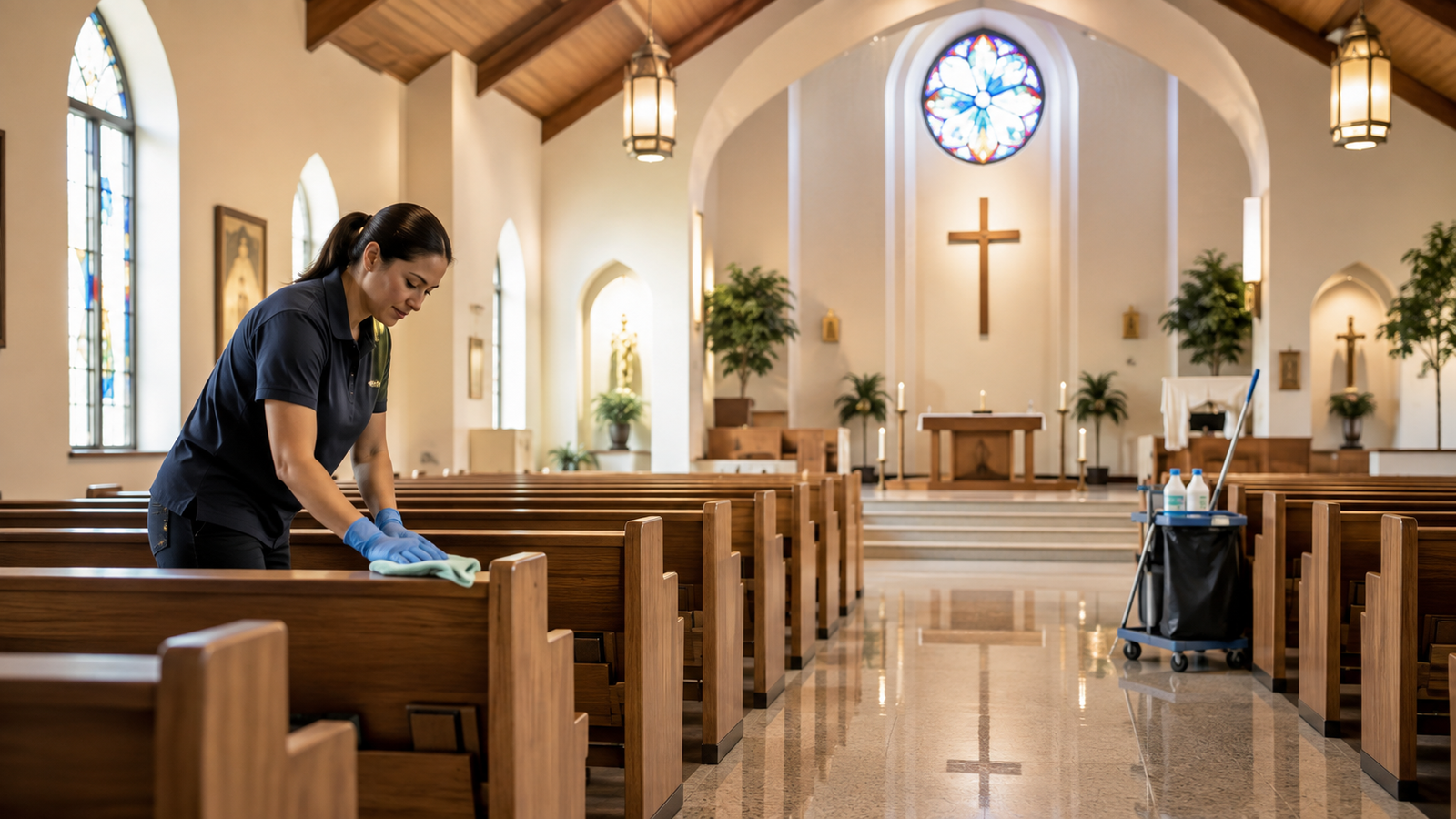
Cleaning churches and houses of worship requires more than preparing the sanctuary before a weekly service. These facilities may include gathering halls, offices, classrooms, kitchens, restrooms, nurseries, and busy entrances. Yet many organizations rely on a short checklist focused mainly on visible floors, trash, and seating.
At First Service Janitorial, we understand that a place of worship should feel peaceful, respectful, and welcoming. Our approach to churches and places of worship considers how the whole building is used throughout the week, from worship and meetings to children’s activities and community events.
Why Is Cleaning a House of Worship More Complex Than It Looks?
A religious facility may look quiet between services, but its rooms often serve several purposes. A fellowship hall can host meals, classes, support groups, or receptions, while classrooms and sanctuaries may have different groups using them on the same day.
This changing use creates uneven traffic. A simple routine may keep obvious areas tidy but miss dust, fingerprints, spills, and debris on edges, fabrics, fixtures, and frequently touched surfaces. Our Bay Area commercial cleaning plans consider room purpose, traffic, materials, and event timing.
Which Sanctuary Areas Are Commonly Overlooked?
The sanctuary is usually the most carefully presented room, but a neat appearance does not always mean it has been cleaned thoroughly. Large open spaces can hide dust and soil outside the main line of sight.
Commonly missed areas include:
- The tops, backs, arms, and undersides of pews or chairs
- Dust around seat connections and floor anchors
- Fingerprints on doors, railings, and glass
- Ledges, baseboards, and window frames
- Carpet edges and areas beneath movable seating
- Touchpoints near sound or presentation areas
Vacuuming the center aisle improves appearance, but edge work, spot attention, careful dusting, and surface wiping are also important. Our commercial care services include floor and carpet care, restroom sanitation, window and glass cleaning, and flexible scheduling that can be matched to the building’s needs.
What High-Touch and Entry Areas Are Easy to Miss?
Entrances collect much of the dust, moisture, leaves, and grit carried in from outdoors. When entry areas are not maintained, soil travels farther into the building and increases wear on carpets and hard floors. Door glass, handles, mats, railings, welcome counters, push plates, and nearby corners should be included in the routine.
High-touch surfaces also need a defined cleaning plan. The Centers for Disease Control and Prevention advises facilities to consider how often surfaces are touched and how heavily an area is used. Cleaning should generally happen before sanitizing or disinfecting because dirt can make the next step less effective.
Frequently touched areas may include:
- Door handles and light switches
- Stair and accessibility rails
- Chair arms and pew edges
- Check-in stations and counters
- Restroom handles and dispensers
- Kitchen appliance handles
- Classroom tables and shared equipment
Our janitorial services include surface disinfection and can be tailored around the facility’s busiest spaces. Products and methods should always be appropriate for the surface and used according to their labels.
Why Do Restrooms, Kitchens, and Children’s Rooms Need More Attention?
Restrooms can shape how visitors judge the entire facility. They may look acceptable before a service but become soiled or run low on supplies during a large gathering. A stronger plan covers fixtures, partitions, handles, dispensers, trash, floors, and checks during high-attendance events.
Kitchens and fellowship halls can change quickly after coffee service, meals, children’s programs, and celebrations. Responsibilities should be clear so staff, volunteers, and cleaners know who handles counters, tables, sinks, floors, and trash.
Children’s rooms also need consistency because tables, chairs, handles, shelves, and activity surfaces receive frequent contact. Cleaning chemicals must be stored away from children. The Environmental Protection Agency advises users to follow disinfectant labels, including the required contact time.
For special meals, seasonal gatherings, or celebrations, a one-time commercial clean can help restore the facility without requiring recurring service.
Why Do Carpets, Upholstery, and Hard Floors Need Separate Plans?
A single floor routine is rarely enough. Sanctuaries may have carpet, hallways may use resilient flooring, restrooms may have tile, and offices may contain upholstered chairs.
Carpeted aisles benefit from vacuuming, spot attention, edge cleaning, and periodic deeper care. Hard floors need methods suited to their traffic and finish, while upholstered seating may collect dust and marks that normal wiping does not address.
Our broader facility cleaning solutions can combine routine janitorial work with specialized care, helping organizations address floors and fabrics before they appear severely worn.
How Should Cleaning Be Scheduled Around Worship and Events?
Cleaning should support the calendar rather than compete with it. Evening, nighttime, or weekend service can reduce interruptions to classes, rehearsals, meetings, staff work, and worship.
What Should Be Addressed After Major Gatherings?
The immediate priorities are trash, visible spills, restrooms, entrances, high-touch surfaces, and heavily used floors. Event rooms should also be reset for their next scheduled use.
What Should Be Included in Weekly Cleaning?
Weekly service may include full-room vacuuming, mopping, restroom detailing, dusting, glass cleaning, offices, classrooms, kitchens, and shared spaces. Frequency should reflect attendance and actual building use.
What Should Be Planned Periodically?
Periodic care may include deeper floor work, carpet attention, interior glass, detailed dusting, and areas behind movable furniture. Seasonal planning can prepare the building for holidays or major community programs.
Our cleaning insights can help facility leaders think beyond a basic checklist and plan around traffic, accountability, and long-term appearance.
Why Is a Written Cleaning Scope Important?
Informal directions often lead to inconsistent results. One person may interpret “clean the sanctuary” as vacuuming the aisle and emptying trash. Another may expect detailed dusting, spot removal, glass cleaning, seating inspection, and touchpoint care.
A written scope should identify:
- Rooms included in service
- Tasks required in each room
- Cleaning frequencies
- Supply responsibilities
- Access and security procedures
- Event-related changes
- Inspection and communication expectations
Clear instructions also protect restricted areas, records, ceremonial spaces, and valuable furnishings that may require specific access rules.
How Can Professional Cleaning Support Volunteers?
Volunteers are valuable, but they may not be available after every event or trained for every task. Professional cleaning creates a reliable baseline while volunteers focus on hospitality, setup, and simple resets.
Occupational Safety and Health Administration guidance stresses chemical labels, safety data sheets, employee training, and protective measures when hazardous cleaning products are used. A trained team can provide clearer responsibility and safer handling practices.
At First Service Janitorial, we provide adaptable scheduling designed to reduce disruption. Organizations that are unsure about their current coverage can book an evaluation call to review facility conditions, priorities, and possible improvements.
How Can Religious Organizations Build a Better Cleaning Plan?
A better plan begins with a complete walkthrough. We consider every room used by staff, members, children, guests, and community groups, then match tasks and frequencies to the building’s real schedule.
Facility leaders should ask:
- Which rooms receive the most traffic?
- Which surfaces are touched most often?
- When are restrooms busiest?
- Which events generate spills or food waste?
- Which floors and fabrics need periodic care?
- Who supplies consumables and cleaning products?
- Who checks completed work?
- How are schedule changes communicated?
Once these questions are answered, cleaning becomes easier to manage and evaluate. Religious organizations can request a custom cleaning quote based on the facility, schedule, and cleaning priorities.
Why Should Cleanliness Be Part of a House of Worship’s Welcome?
A clean house of worship supports the sense of care that members and visitors experience when they enter. The best plans do not stop at the sanctuary. They include entrances, restrooms, kitchens, classrooms, offices, floors, seating, glass, and the many touchpoints used throughout the week.
At First Service Janitorial, we help Bay Area religious organizations create practical cleaning plans around their real facilities and schedules. By identifying overlooked areas, assigning clear responsibilities, and combining routine janitorial work with periodic care, we can help maintain a respectful, orderly, and welcoming environment for every gathering.
Which Organizations Support These Cleaning Practices?
Centers for Disease Control and Prevention. “When and How to Clean and Disinfect a Facility.” Centers for Disease Control and Prevention, 16 Apr. 2024. Accessed 4 Aug. 2026.
Centers for Disease Control and Prevention. “How to Clean and Disinfect Early Care and Education Settings.” Centers for Disease Control and Prevention, 19 Apr. 2024. Accessed 4 Aug. 2026.
Environmental Protection Agency. “Selected EPA-Registered Disinfectants.” United States Environmental Protection Agency, updated 11 Sept. 2025. Accessed 4 Aug. 2026.
Occupational Safety and Health Administration. “Hazard Communication.” United States Department of Labor. Accessed 4 Aug. 2026.