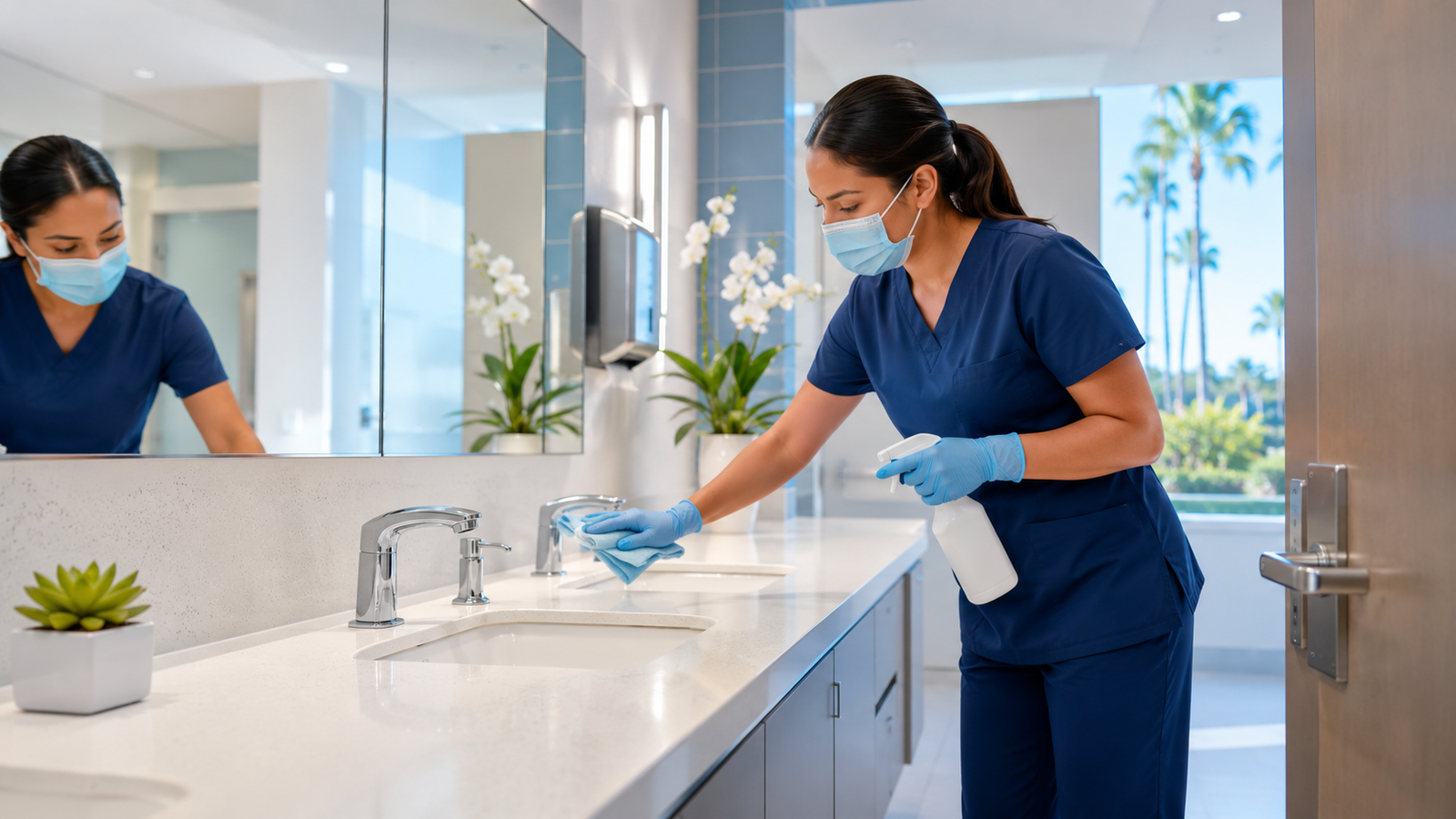
Why Does Restroom Sanitation Matter So Much in California Medical Buildings?
Restroom sanitation is one of the most important parts of infection-conscious facility care in California medical buildings. Restrooms are small, shared, high-use areas where patients, visitors, staff, vendors, and caregivers touch many of the same surfaces throughout the day. A restroom may look clean at a glance, but cross-contamination risk can remain when high-touch surfaces, sinks, partitions, handles, faucets, floors, and dispensers are not cleaned and disinfected correctly.
Cross-contamination happens when germs or contaminants move from one surface, object, hand, or area to another. In a medical building, this concern is greater because the people using the facility may include older adults, children, immune-compromised patients, employees, and visitors with different health needs. A clean restroom helps support safer traffic flow, better hygiene habits, and a more professional patient experience.
For California facility managers, sanitation is not only about appearance. It is about reducing touchpoint risks, improving confidence, and maintaining a building that feels cared for. That is why working with a professional provider like First Service Janitorial matters. The company provides janitorial services, disinfection services, commercial care, one-time cleaning, restroom sanitation, surface disinfection, and cleaning support for healthcare and commercial spaces across California and the Bay Area.
How Do Restrooms Become Cross-Contamination Hot Spots?
Restrooms become cross-contamination hot spots because they combine moisture, frequent hand contact, waste handling, shared fixtures, and tight traffic patterns. Even when users wash their hands, they often touch multiple surfaces before leaving the room. These surfaces may include:
- Door handles
- Faucet handles
- Flush handles
- Soap dispensers
- Paper towel dispensers
- Hand dryers
- Stall locks
- Grab bars
- Countertops
- Light switches
- Trash receptacles
In a medical building, these touchpoints can connect many different spaces. A person may touch a restroom door handle, then touch an elevator button, reception counter, chair arm, clipboard, or exam room door. Without consistent restroom sanitation, contaminants can move beyond the restroom and into common areas.
This is why restroom cleaning should not be treated as a simple task at the end of the night. It should be part of a broader janitorial plan that includes high-touch surface cleaning, disinfection, supply management, trash removal, and quality checks. First Service Janitorial’s janitorial services include cleaning support for offices, schools, healthcare facilities, and commercial facilities, with restroom sanitation and surface disinfection listed as part of its service scope.
What Is the Difference Between Cleaning, Sanitizing, and Disinfecting?
Cleaning, sanitizing, and disinfecting are related, but they are not the same. Understanding the difference helps medical building managers avoid weak sanitation routines.
How Does Cleaning Help Restroom Safety?
Cleaning removes visible dirt, debris, dust, stains, and organic material from surfaces. In restrooms, this includes removing soil from sinks, counters, floors, fixtures, toilets, urinals, partitions, and trash areas. Cleaning is important because disinfectants work better when surfaces are not covered with visible soil.
How Does Sanitizing Lower General Germ Levels?
Sanitizing reduces germs on surfaces to safer levels based on public health standards. It is commonly used for certain lower-risk surfaces, but medical building restrooms usually need more than basic sanitizing because of heavy use and shared touchpoints.
How Does Disinfecting Reduce Harmful Microorganisms?
Disinfecting uses products designed to kill many harmful microorganisms on surfaces. In medical buildings, disinfection is especially important for high-touch restroom areas and surfaces that may be exposed to bodily fluids. First Service Janitorial’s disinfection services include cleaning visibly dirty surfaces before disinfecting, applying products according to label directions, and focusing on workplace health and safety.
Which Restroom Areas Need the Most Attention in Medical Buildings?
A good restroom sanitation plan should focus on the surfaces most likely to be touched, splashed, contaminated, or overlooked. In California medical buildings, priority areas often include:
- Entry and exit handles
- Faucet handles and sink bowls
- Counter edges and splash zones
- Toilet and urinal flush handles
- Seat surfaces and surrounding bases
- Stall doors, locks, and partition edges
- Grab bars and accessibility fixtures
- Soap, sanitizer, and paper towel dispensers
- Trash containers and lids
- Floor edges around toilets and sinks
- Vents, corners, and lower wall areas
The Centers for Disease Control and Prevention recommends cleaning and disinfecting both low-touch and high-touch surfaces in healthcare cleaning procedures, including handwashing sinks. The Occupational Safety and Health Administration also requires environmental and working surfaces to be cleaned and decontaminated after contact with blood or other potentially infectious materials.
How Does Restroom Sanitation Protect Patients and Staff?
Restroom sanitation helps protect patients and staff by reducing the number of contaminated surfaces they encounter during a normal visit. In many medical buildings, restrooms are used by people before appointments, after lab visits, during long waits, and between treatments. Staff may also use nearby restrooms between patient-facing duties.
A stronger sanitation routine supports:
- Cleaner handwashing areas
- Lower touchpoint contamination risk
- Better odor control
- Safer waste handling
- More comfortable patient visits
- Improved staff confidence
- A cleaner impression of the medical facility
This matters because patient trust can be affected by what they see and smell. A restroom with empty soap dispensers, overflowing trash, stained counters, or wet floors can make people question the cleanliness of the entire building. On the other hand, a well-maintained restroom signals that the facility takes safety, order, and care seriously.
First Service Janitorial’s commercial care services include restroom sanitation and supply management, routine office and facility cleaning, floor and carpet care, window and glass cleaning, and flexible scheduling. These services help medical building managers create a more complete cleaning program instead of relying on spot cleaning alone.
Why Should Restroom Sanitation Include High-Touch Surface Disinfection?
High-touch surface disinfection matters because shared contact points create repeated opportunities for contamination to spread. In restrooms, some surfaces may be touched hundreds of times in a single day. If these surfaces are not cleaned and disinfected properly, they can become part of a larger contamination path through the building.
The Environmental Protection Agency explains that disinfectants must be used according to label directions, including contact time. Contact time means the surface must remain visibly wet long enough for the disinfectant to work as intended. This is a common issue in rushed cleaning programs. If a disinfectant is sprayed and wiped away too quickly, the surface may not receive the full benefit of the product.
A restroom disinfection plan should include:
- Pre-cleaning visibly dirty surfaces
- Using appropriate disinfectants for the surface type
- Following product label directions
- Allowing proper contact time
- Preventing chemical misuse
- Drying surfaces when required
- Using separate tools to reduce cross-contamination between areas
First Service Janitorial also offers guidance through its blog on related topics such as high-touch surface protocol, EPA-registered disinfectants, and emergency disinfection services.
How Can Cleaning Tools Cause Cross-Contamination If Used Incorrectly?
Cleaning tools can reduce contamination, but only when they are used correctly. If the same cloth, mop, sponge, or bucket is used across multiple restroom areas without proper separation, contaminants can move from toilets to sinks, from floors to counters, or from one restroom to another.
A safer restroom sanitation process should include:
- Separate tools for restroom areas
- Fresh cloths for different surface zones
- Proper mop handling
- Clean water and solution changes
- Correct disposal of used materials
- Careful glove changes when needed
- Clear cleaning sequences from cleaner areas to dirtier areas
For example, a janitorial worker should not wipe a toilet handle and then use the same cloth on a faucet handle. The process should move in a controlled order so that cleaning tools do not become the source of contamination. This is one reason training, consistency, and supervision matter in medical building restroom sanitation.
First Service Janitorial’s janitorial page notes that its staff undergo background checks and ongoing training to maintain service standards, and its services can be tailored to each facility’s needs.
How Often Should Medical Building Restrooms Be Cleaned?
The right cleaning frequency depends on building size, restroom traffic, patient volume, hours of operation, and the type of medical services provided. A small administrative medical office may not need the same frequency as a busy multi-tenant medical building, urgent care facility, or specialty clinic building.
However, restroom sanitation in medical buildings should usually include both scheduled cleaning and responsive checks. A practical schedule may include:
- Opening inspection before patients arrive
- Midday touchpoint cleaning
- Restocking of soap and paper supplies
- Trash removal before overflow occurs
- Floor checks for spills or moisture
- End-of-day cleaning and disinfection
- Periodic deep cleaning for grout, partitions, vents, and corners
The Centers for Disease Control and Prevention recommends regular cleaning of housekeeping surfaces and disinfection or cleaning of environmental surfaces on a regular basis and when surfaces are visibly soiled. This supports the idea that restroom sanitation should not rely only on appearance.
For facilities needing a deeper reset, First Service Janitorial offers one-time commercial cleaning services, including restroom cleaning and sanitizing, trash removal, supply restocking if provided, and flexible scheduling across several Bay Area communities.
How Does Professional Restroom Sanitation Support Compliance Awareness?
Professional restroom sanitation supports compliance awareness by helping facilities follow structured procedures, document cleaning expectations, and reduce gaps in daily maintenance. While janitorial providers do not replace a medical facility’s infection control leadership, they can support the facility’s hygiene goals through reliable cleaning and disinfection practices.
Medical building managers should look for cleaning support that includes:
- Written cleaning scopes
- Defined restroom tasks
- High-touch surface focus
- Supply checks
- Product label compliance
- Flexible scheduling
- Quality inspections
- Clear communication
First Service Janitorial serves multiple industries, including medical and healthcare facilities, office buildings, schools, gyms, retail establishments, and other commercial spaces. Its industries served page emphasizes cleaning solutions for Bay Area businesses and facilities with different cleaning requirements.
Why Should California Medical Buildings Choose First Service Janitorial?
California medical buildings need more than basic restroom cleaning. They need reliable janitorial support that understands high-touch areas, restroom sanitation, disinfection, supply needs, and the importance of a clean patient-facing environment.
First Service Janitorial is a strong choice because its services align with the needs of medical and commercial facilities. The company provides:
- Janitorial services
- Disinfection services
- Commercial care services
- One-time commercial cleaning
- Restroom sanitation
- Surface disinfection
- Trash and recycling support
- Kitchen and common area cleaning
- Flexible scheduling
- Facility-specific cleaning plans
For medical building managers who want to evaluate current restroom sanitation quality, First Service Janitorial also offers options to request a quote or book a consultation. Its website states that the First Service Evaluation Call helps facilities understand whether current janitorial coverage is keeping pace with facility expectations.
What Works Cited Sources Support This Article?
Centers for Disease Control and Prevention. “Environmental Cleaning Procedures.” Centers for Disease Control and Prevention, 19 Mar. 2024. Accessed 13 July 2026.
Centers for Disease Control and Prevention. “Recommendations for Disinfection and Sterilization in Healthcare Facilities.” Centers for Disease Control and Prevention, 7 Dec. 2023. Accessed 13 July 2026.
Environmental Protection Agency. “Selected EPA-Registered Disinfectants.” United States Environmental Protection Agency, 11 Sept. 2025. Accessed 13 July 2026.
First Service Janitorial. “Commercial Cleaning San Jose CA.” First Service Janitorial. Accessed 13 July 2026.
First Service Janitorial. “Disinfection Services Bay Area.” First Service Janitorial. Accessed 13 July 2026.
First Service Janitorial. “Janitorial and Office Cleaning San Jose.” First Service Janitorial. Accessed 13 July 2026.
First Service Janitorial. “Commercial Care Services.” First Service Janitorial. Accessed 13 July 2026.
Occupational Safety and Health Administration. “Bloodborne Pathogens.” Occupational Safety and Health Administration. Accessed 13 July 2026.