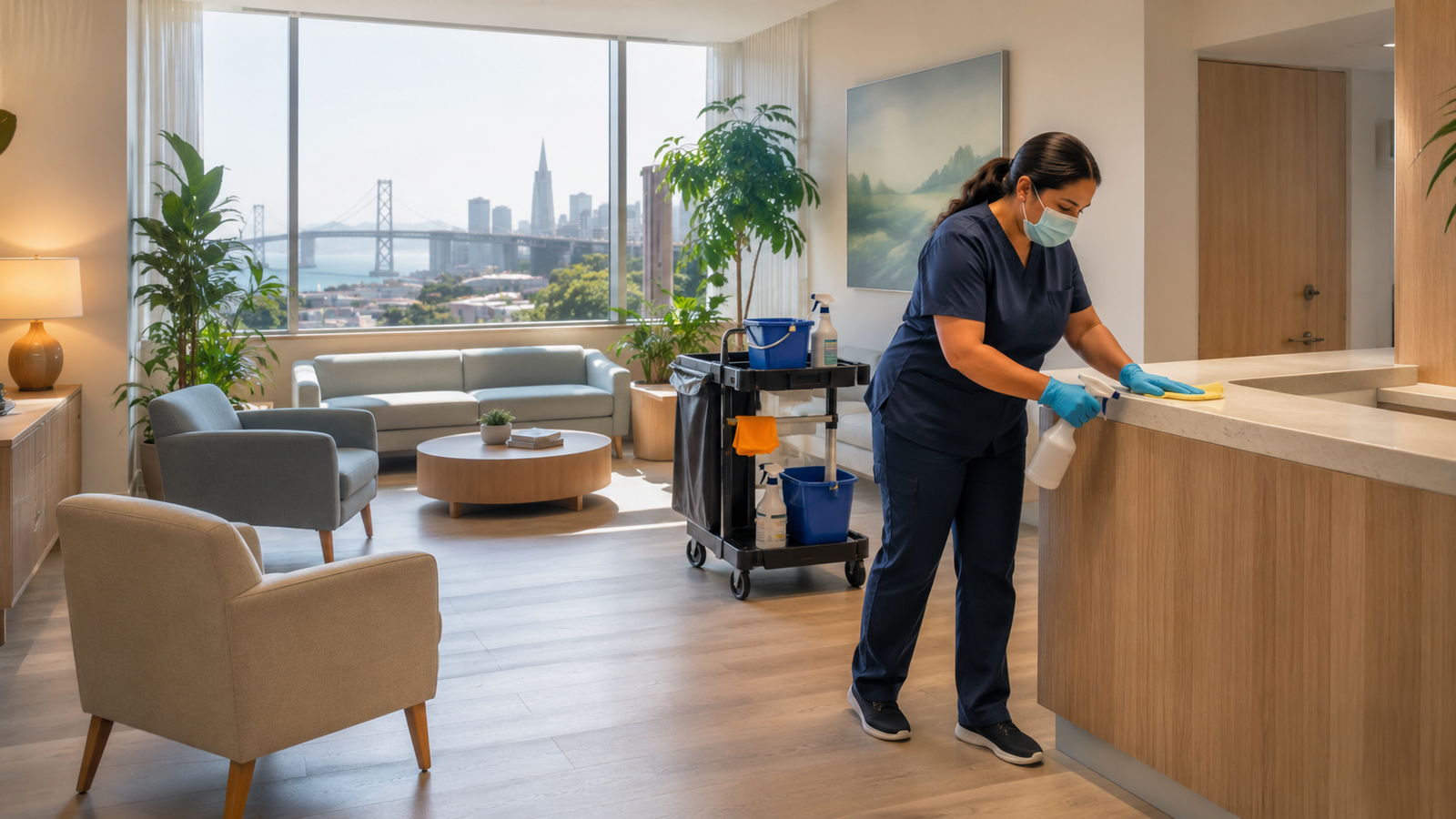
Why Does Cleaning Mental Health and Behavioral Health Facilities Require Extra Care?
Cleaning mental health and behavioral health facilities requires more than making rooms look neat. These spaces often serve people who may be experiencing stress, anxiety, trauma, recovery challenges, or emotional crisis. A clean facility can help create a calmer, safer, and more welcoming environment for patients, staff, visitors, and care teams.
In the Bay Area, behavioral health facilities may include outpatient counseling centers, recovery support spaces, administrative offices, group therapy rooms, wellness centers, and healthcare-adjacent facilities. Each setting has different needs, but the goal is the same: keep the space clean, sanitary, respectful, and ready for daily care.
A professional cleaning plan should focus on:
- High-touch surface cleaning
- Restroom sanitation
- Trash and recycling removal
- Floor and carpet care
- Waiting room and office cleaning
- Surface disinfection when needed
- Flexible scheduling that avoids disrupting care
First Service Janitorial provides janitorial services for offices, schools, healthcare facilities, government buildings, retail spaces, and industrial sites across the Bay Area. Its services include tailored cleaning solutions, restroom sanitation, surface disinfection, carpet care, trash and recycling, and flexible scheduling.
How Should Cleaning Support a Calm and Respectful Environment?
Mental health and behavioral health spaces should feel orderly without feeling cold or harsh. Patients and visitors may be sensitive to clutter, odors, noise, or poor restroom conditions. A clean space helps reduce distractions and supports a better first impression.
Cleaning teams should work with facility managers to understand how each area is used. For example, a therapy room may need discreet cleaning after hours, while a lobby may need more frequent touch-point cleaning during the day. Group rooms may need attention to chairs, tables, door handles, and floors because several people may use the same space within a short period.
A strong plan should include:
- Quiet cleaning methods where possible
- Consistent cleaning times
- Clear communication with facility staff
- Respect for privacy and patient-sensitive areas
- Attention to odors, spills, and visible dust
- A steady routine that supports a professional environment
First Service Janitorial offers commercial cleaning and office janitorial services across California, including San Jose, San Mateo, Marin, Alameda, Contra Costa, Santa Clara, and surrounding areas. The company focuses on creating clean, safe, and welcoming environments for the people who use each facility.
What Areas Need the Most Attention in Behavioral Health Facilities?
Different rooms carry different cleaning needs. A behavioral health facility may include reception areas, private offices, therapy rooms, restrooms, breakrooms, staff offices, hallways, and shared meeting spaces. Each area should be cleaned based on use, traffic, and risk.
Which High-Touch Surfaces Should Be Cleaned Often?
High-touch surfaces are touched many times throughout the day. These surfaces can collect germs, oils, dust, and residue quickly, especially in waiting rooms and shared offices.
Important high-touch surfaces may include:
- Door handles
- Light switches
- Reception counters
- Desk surfaces
- Chair arms
- Table tops
- Faucet handles
- Restroom fixtures
- Shared touchpads
- Elevator buttons
- Handrails
- Cabinet handles
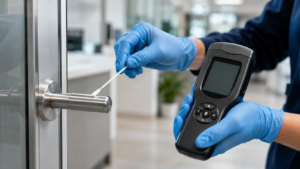
The CDC recommends cleaning high-touch surfaces regularly and cleaning surfaces before disinfecting because dirt can make disinfecting chemicals less effective. This is especially important in healthcare-adjacent environments where cleanliness supports the health and comfort of everyone in the building.
Why Are Restrooms Especially Important?
Restrooms are one of the most important areas in mental health and behavioral health facilities. A poorly maintained restroom can quickly affect how patients, families, and staff feel about the quality of the facility.
Restroom cleaning should include:
- Toilets
- Sinks
- Faucet handles
- Partitions
- Floors
- Mirrors
- Door handles
- Trash removal
- Supply checks
- Odor control
First Service Janitorial includes restroom sanitation and supply management as part of its commercial care services. For facilities with steady patient or visitor traffic, restroom care should be part of a routine cleaning plan, not an occasional task.
How Should Floors and Carpets Be Maintained?
Floors in behavioral health spaces can carry dirt, dust, spills, and outdoor debris, especially during rainy Bay Area weather. Carpeted waiting rooms and offices may also hold odors, allergens, and visible wear if they are not maintained properly.
Floor and carpet care may include:
- Vacuuming
- Mopping
- Spot cleaning
- Floor care
- Carpet cleaning
- Entryway cleaning
- Removal of visible debris
First Service Janitorial offers commercial care, including routine office and facility cleaning, floor and carpet care, restroom sanitation, window and glass cleaning, trash and recycling, surface disinfection, and kitchen cleaning.
How Should Disinfection Be Handled in Mental Health and Behavioral Health Spaces?
Disinfection should be thoughtful and appropriate. It is not always necessary to disinfect every surface every time, but it may be needed for high-touch areas, illness-related situations, visible contamination, or higher-risk spaces.
The CDC explains that cleaning removes many germs from surfaces, while disinfecting can kill harmful germs that remain after cleaning. The EPA also notes that disinfectant products are regulated and must be used according to label directions. This means the correct product, surface type, contact time, and safety precautions matter.
For behavioral health facilities, disinfection planning should consider:
- Which areas are high traffic
- Which surfaces are touched most often
- Whether someone has been visibly ill
- Whether the facility has healthcare-specific requirements
- Whether the product is appropriate for the surface
- Whether the space can be cleaned without disrupting patient care
First Service Janitorial provides surface disinfection for offices, schools, healthcare facilities, and commercial spaces. Facility managers should communicate any special cleaning requirements before service begins so the cleaning plan matches the facility’s daily operations.
What Safety Concerns Should Facility Managers Discuss Before Cleaning Begins?
Behavioral health settings can have sensitive safety needs. Cleaning teams should not assume that every facility is the same. Facility managers should explain restricted areas, staff-only rooms, supply storage expectations, and any special rules about entering patient care spaces.
Important topics to discuss include:
- Which rooms are restricted
- Which areas require staff approval before entry
- Where cleaning supplies may be stored
- How trash should be handled
- What to do if bodily fluids are found
- How to report damage or safety concerns
- Which cleaning times are least disruptive
- Whether certain products or fragrances should be avoided
OSHA’s Bloodborne Pathogens Standard includes rules related to blood and other potentially infectious materials. In practice, this means facility staff and cleaning providers should have clear procedures for handling situations that may involve blood, sharps, or contaminated materials. Cleaning staff should not be asked to improvise in these situations.
Why Is Scheduling Important for Behavioral Health Cleaning?
Many mental health and behavioral health facilities need cleaning that does not interrupt appointments, group sessions, intake meetings, or private conversations. Cleaning during the wrong time can create noise, movement, or privacy concerns.
A good schedule may include:
- Evening cleaning
- Weekend cleaning
- After-hours restroom care
- Pre-opening cleaning
- Special cleaning after high-traffic days
- One-time deep cleaning before inspections or new programs
First Service Janitorial can accommodate after-hours cleaning, including evenings and weekends. The company also offers one-time commercial cleaning for facilities that need a deep clean without committing to recurring service.
How Can a Cleaning Plan Be Customized for Bay Area Facilities?
No two behavioral health facilities are exactly alike. A small counseling office may need routine office cleaning, restroom sanitation, trash removal, and vacuuming. A larger behavioral health center may need more frequent restroom care, high-touch surface cleaning, disinfection, and floor maintenance.
A customized cleaning plan should consider:
- Facility size
- Number of rooms
- Patient and visitor traffic
- Hours of operation
- Type of flooring
- Restroom count
- Staff areas
- Cleaning frequency
- Special privacy needs
- Any healthcare-related requirements
First Service Janitorial serves many industries, including office buildings, schools, medical and healthcare facilities, gyms, hospitality spaces, retail facilities, and other commercial environments. This makes it important for Bay Area facility managers to request a plan based on their actual space, not a generic checklist.
What Should Facility Managers Look for in a Cleaning Partner?
A behavioral health facility needs a cleaning partner that is reliable, careful, and easy to communicate with. The cleaning team should understand that the building is not just an office. It is a place where people may be seeking support, privacy, and stability.
Facility managers should look for:
- Consistent cleaning quality
- Flexible scheduling
- Clear communication
- Professional staff
- Attention to detail
- Restroom and high-touch surface focus
- Ability to support healthcare-adjacent spaces
- Willingness to customize the plan
- Transparent quote process
First Service Janitorial is a veteran-owned team based in San Jose. Its service approach is built around service, speed, and professionalism, with janitorial solutions tailored to each facility.
How Can First Service Janitorial Help Behavioral Health Facilities in the Bay Area?
First Service Janitorial can support Bay Area mental health and behavioral health facilities with professional commercial cleaning and janitorial services that fit the needs of the space. Its service scope includes routine janitorial cleaning, surface disinfection, restroom sanitation, trash and recycling, floor and carpet care, window and glass cleaning, kitchen and breakroom cleaning, and one-time deep cleaning.
A facility manager can start by scheduling a cleaning evaluation or requesting a custom cleaning quote. This allows the team to review the facility’s condition, understand cleaning priorities, and recommend a practical next step.
For behavioral health facilities, the best cleaning plan is one that protects the professional appearance of the space while respecting the sensitive nature of patient care. Clean rooms, sanitary restrooms, maintained floors, and reliable routines all help create an environment that feels safer, calmer, and more prepared for daily service.
What Sources Were Consulted?
Centers for Disease Control and Prevention. “Environmental Cleaning Procedures.” CDC, 19 Mar. 2024.
Centers for Disease Control and Prevention. “When and How to Clean and Disinfect a Facility.” CDC, 16 Apr. 2024.
California Department of Public Health. “Environmental Cleaning and Disinfection.” CDPH, 2018.
Environmental Protection Agency. “Selected EPA-Registered Disinfectants.” EPA, 11 Sept. 2025.
Occupational Safety and Health Administration. “1910.1030 Bloodborne Pathogens.” OSHA.
The Joint Commission. “Environment of Care Resource Center.” The Joint Commission.