A dirty workplace can look like a small problem. A stained carpet, messy breakroom, full trash bin, smudged glass door, or restroom that feels neglected may not seem urgent at first. For busy San Jose employers, these issues can be pushed aside while the team focuses on customers, deadlines, staffing, and daily operations.
The problem is that workplace cleanliness affects more than appearance. It affects employee comfort, client trust, safety, facility upkeep, and the amount of time managers spend dealing with avoidable complaints. The hidden costs of a dirty workplace are often quiet, but they can build over time.
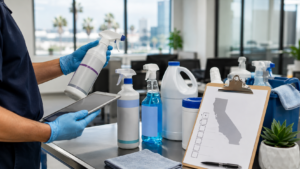
For businesses that need consistent support, First Service Janitorial provides commercial cleaning and office janitorial services for workplaces across California, including San Jose. Its listed services include janitorial cleaning, disinfection, commercial care, one-time commercial cleaning, floor and carpet care, restroom sanitation, window and glass cleaning, trash and recycling, surface disinfection, and kitchen or breakroom cleaning.
Why Does a Dirty Workplace Cost More Than It Looks Like?
A dirty workplace usually does not create one large problem right away. It creates small daily problems that slowly affect the business.
San Jose employers may lose value through:
- Lower employee focus
- More restroom and breakroom complaints
- Poor first impressions
- Faster wear on floors and carpets
- Safety concerns from spills, clutter, or dirty walkways
- More time spent correcting cleaning issues
- Lower confidence in the work environment
These losses are not always listed as a cleaning expense, but they still affect operations. A clean facility tells employees, customers, and visitors that the business is organized and cared for. That is why routine janitorial and office cleaning services are important for offices, schools, healthcare spaces, and commercial facilities.
How Can a Messy Office Reduce Productivity?
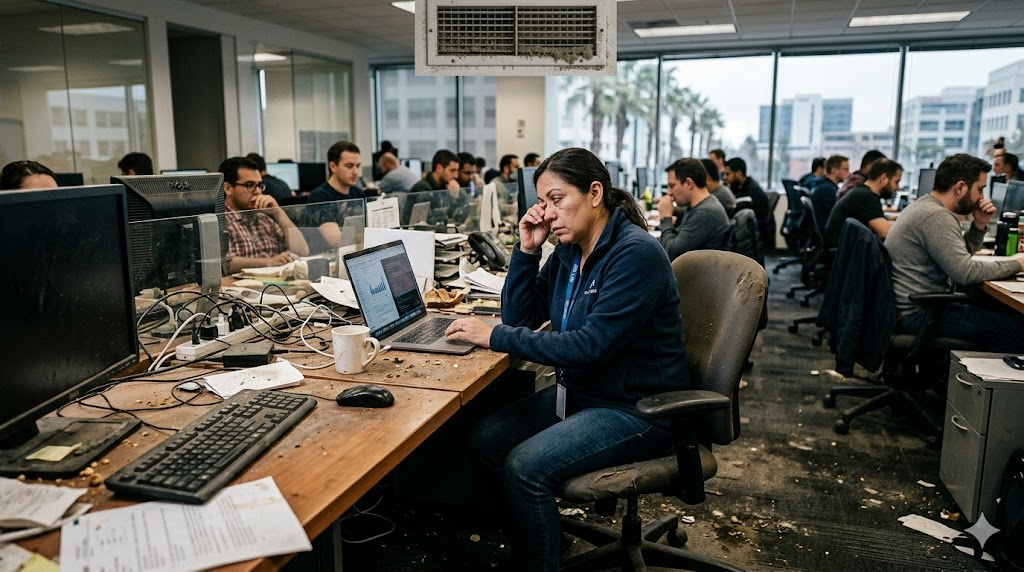
Employees notice the spaces they use every day. When trash sits too long, dust gathers on surfaces, carpet stains spread, restrooms feel uncomfortable, or the breakroom is not clean, employees may feel distracted or undervalued.
A messy workplace can lead to:
- More visual distractions
- More complaints to managers
- Less pride in the workplace
- Less comfort in shared spaces
- More time spent working around messes
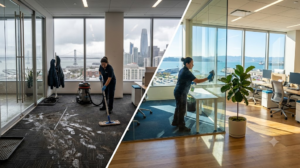
Professional cleaning does not fix every productivity issue, but it removes a common source of stress. A clean workplace gives employees fewer distractions and makes shared areas easier to use.
First Service Janitorial’s commercial care services include routine office and facility cleaning, floor and carpet care, restroom sanitation and supply management, window and glass cleaning, and flexible scheduling. These services help keep a workplace organized, presentable, and ready for daily use.
How Can Poor Cleaning Affect Health and Attendance?
Workplaces have many shared touchpoints. Door handles, counters, desks, restroom fixtures, breakroom surfaces, light switches, and shared equipment can collect dirt and germs because many people touch them throughout the day.
The Centers for Disease Control and Prevention advises that high-touch surfaces should be cleaned regularly, and disinfecting may be needed when someone is sick or when there is a higher risk of illness (Centers for Disease Control and Prevention).
For employers, the hidden cost is not only the cleaning task. It is also the discomfort employees and visitors may feel when shared areas look or feel unclean. A practical plan should focus on high-touch surfaces, restrooms, breakrooms, trash areas, floors, counters, and entry points.
For facilities that need a deeper reset after heavy use, events, move-ins, seasonal work, or first-time service, one-time commercial cleaning can help refresh the space without requiring a recurring commitment.
How Can Dirty Floors and Restrooms Increase Risk?
Floors and restrooms are two of the strongest signals of facility care. Dirty floors can show stains, dust, tracked-in debris, slippery spots, or dull hard surfaces. Poor restroom conditions can create complaints quickly because restrooms are personal, high-use areas.
The Occupational Safety and Health Administration says floors should be kept clean and dry, and aisles and passageways should remain clear and in good repair (Occupational Safety and Health Administration). Cleaning cannot remove every risk, but it helps reduce preventable problems caused by spills, debris, clutter, and poorly maintained walking areas.
Restrooms also affect trust. If a restroom looks or smells dirty, employees and visitors may assume the whole facility is poorly maintained. First Service Janitorial lists carpet care, restroom sanitation, window cleaning, trash and recycling, surface disinfection, and kitchen cleaning as part of its cleaning focus.
How Can Poor Facility Appearance Hurt Client Trust?
People often judge a business before a meeting starts. Entryways, lobbies, floors, windows, restrooms, and waiting areas all shape the first impression. If those areas look neglected, visitors may question the company’s attention to detail.
A dirty workplace can make people wonder:
- Is this business organized?
- Does this team care about quality?
- Are employees treated well?
- Is this facility safe and professional?
- Will the service be handled with the same level of care?
These questions may not be spoken out loud, but they can still affect trust. This matters for office buildings, schools, retail spaces, fitness centers, healthcare facilities, event venues, hospitality spaces, salons, and other public-facing workplaces. First Service Janitorial lists a wide range of industries served, which helps employers match cleaning needs to the type of facility they manage.
How Can Deferred Cleaning Raise Maintenance Costs?
Waiting too long to clean can make normal upkeep harder. Dirt and debris can wear down floors. Carpet can hold stains and odors. Glass can collect smudges. Restrooms and breakrooms can become harder to reset when cleaning falls behind.
Deferred cleaning may lead to:
- More intensive deep cleaning
- Shorter usable life for carpets and flooring
- More staff and visitor complaints
- More time spent fixing preventable problems
- A weaker professional image during business hours
The United States Environmental Protection Agency notes that indoor pollutants such as dust, mold, and other particles can affect indoor air quality and may trigger health concerns for some people (United States Environmental Protection Agency). Routine cleaning cannot replace building maintenance, but it can support a cleaner indoor environment by reducing visible dust, debris, and surface buildup.
How Can San Jose Employers Build a Smarter Cleaning Plan?
A smarter cleaning plan starts with how the facility is used. A small office does not need the same plan as a school, healthcare space, gym, retail store, or event venue. The right plan depends on foot traffic, operating hours, restroom use, surface types, visitor volume, and employee expectations.
Employers should ask:
- Which areas get the most use?
- Are restrooms receiving complaints?
- Are floors or carpets showing visible wear?
- Are breakrooms cleaned consistently?
- Are high-touch surfaces cleaned regularly?
- Is the schedule disrupting business?
First Service Janitorial offers flexible scheduling, including options that work around business hours. Employers who are unsure about current cleaning quality can schedule a First Service Evaluation Call to review their facility and consider next steps.
Which Cleaning Areas Should Employers Prioritize?
The highest priority areas are the spaces people use most. These often include entrances, lobbies, restrooms, breakrooms, kitchens, conference rooms, shared work areas, floors, glass, and high-touch surfaces.
A practical plan may include:
- Regular trash removal
- Restroom cleaning and sanitizing
- Breakroom and kitchen surface cleaning
- Floor care based on traffic
- Carpet care when needed
- Window and glass cleaning
- Surface disinfection for high-touch areas
- Supply restocking if provided
- One-time deep cleaning after events or heavy use
Employers can request a custom cleaning quote to match the cleaning plan to the facility type, schedule, and expectations.
What Should Employers Ask Before Choosing a Janitorial Partner?
A cleaning plan should not be judged on price alone. A low-cost plan that misses important areas can become more expensive later through complaints, poor appearance, and avoidable disruption.
San Jose employers should ask:
- Does the plan fit the actual facility?
- Can cleaning happen after hours or on weekends?
- Are restrooms, floors, carpets, glass, and breakrooms included?
- Is one-time cleaning available?
- Are disinfection services available for high-touch areas?
- Is communication clear and responsive?
- Is there a process for reviewing quality?
First Service Janitorial’s about page describes its focus on service, speed, professionalism, discipline, and integrity. Those values matter because cleaning is not a one-time impression. It is part of how the workplace functions every day.
Which Organizations Were Cited?
Centers for Disease Control and Prevention. “Cleaning and Disinfecting.” CDC, 3 June 2025.
Centers for Disease Control and Prevention. “When and How to Clean and Disinfect a Facility.” CDC, 16 Apr. 2024.
Occupational Safety and Health Administration. “Housekeeping: Slips, Trips, and Falls.” OSHA.
United States Environmental Protection Agency. “Indoor Air Quality.” EPA.
United States Environmental Protection Agency. “An Office Building Occupant’s Guide to Indoor Air Quality.” EPA.