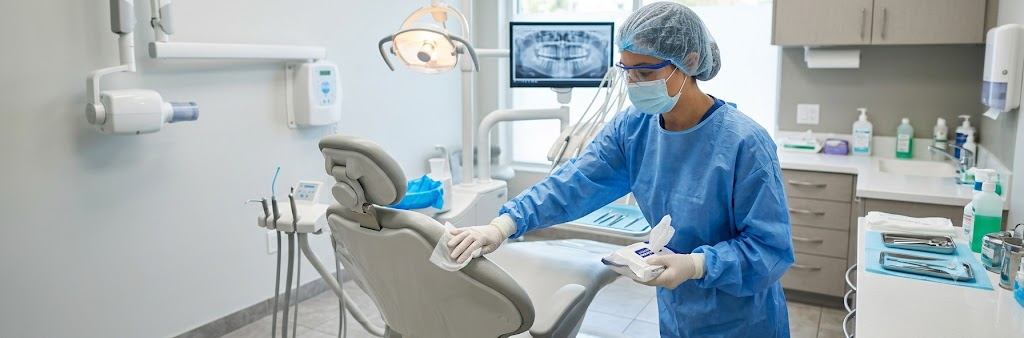
Dental offices are different from standard commercial spaces because patients, staff, equipment, treatment rooms, waiting areas, restrooms, and high-touch surfaces all need careful attention. A regular office may need dusting, trash removal, vacuuming, restroom care, and basic surface wiping. A dental office needs those services too, but it also needs cleaning support that respects infection prevention goals.
That is why dental offices should look beyond basic janitorial work. Infection prevention is not just about making the space look clean. It is about reducing soil, controlling high-touch surface contamination, supporting safer workflows, and helping the dental team maintain a professional environment.
First Service Janitorial provides commercial cleaning, janitorial services, disinfection services, commercial care, and one-time cleaning solutions for Bay Area businesses, including healthcare facilities. Dental practices can use this kind of support to maintain cleaner non-clinical and shared spaces while the dental team continues to manage clinical infection-control duties, instrument sterilization, and patient-care protocols.
Why Do Dental Offices Need More Than Standard Janitorial Cleaning?
Dental offices have more surface-contact risk than many standard workplaces. Patients move from the reception area to treatment areas. Staff members move between workstations, restrooms, supply zones, and operatories. Door handles, counters, switches, pens, restroom fixtures, chairs, and shared surfaces can collect dust, soil, and microbial contamination through normal daily use.
The CDC explains that dental environmental surfaces can become contaminated through touch, splash, or droplets during patient care. It also identifies frequently touched items, such as light handles, switches, and drawer knobs, as surfaces that may contribute to cross-contamination if they are not handled properly.
A standard janitorial routine may focus on appearance. A dental office cleaning plan should focus on appearance, hygiene, workflow, and risk-based surface care. That means the cleaning plan should be customized around:
- Patient flow
- High-touch surfaces
- Restroom use
- Reception area traffic
- Staff break areas
- Floor and carpet condition
- Disinfection needs
- After-hours access
- Cleaning frequency
- Facility-specific expectations
This is where professional janitorial services become important. A dental office should not rely on a one-size-fits-all checklist made for a standard office environment.
What Makes Dental Office Cleaning Different From General Office Cleaning?
General office cleaning usually focuses on shared desks, floors, restrooms, glass, breakrooms, trash, and common areas. Dental office cleaning includes those same basics, but the stakes are higher because the environment supports patient care.
A specialized dental office cleaning plan should separate routine janitorial work from areas that require dental-team control. For example, a janitorial provider can support lobby cleaning, restroom sanitation, trash removal, floor care, breakroom cleaning, surface disinfection, and general facility maintenance. The dental team remains responsible for clinical procedures, instrument sterilization, chairside turnover, sharps handling, and any duties that must be performed by trained dental healthcare personnel.
That separation matters. It keeps responsibilities clear and helps prevent confusion. A janitorial provider should not claim to replace the dental office’s infection-control program. Instead, the right provider supports the facility by keeping the broader environment cleaner, more organized, and better maintained.
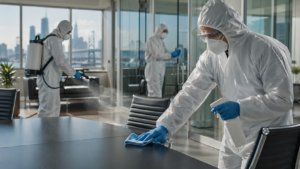
First Service Janitorial offers disinfection services that focus on high-touch areas and professional cleaning practices. For dental offices, that type of support can help strengthen the facility’s overall hygiene plan when coordinated with the office’s internal protocols.
Which Areas Should Dental Offices Prioritize for Infection Prevention Support?
A dental office cleaning plan should begin with the areas people touch most often. These areas may not always look dirty, but they receive repeated contact throughout the day.
Which Reception and Waiting Room Surfaces Need Extra Attention?
The reception area is the first space patients see. It is also one of the busiest shared areas in the office. A good cleaning plan should address:
- Entry door handles
- Reception counters
- Sign-in surfaces
- Waiting room chairs
- Armrests
- Light switches
- Payment counter areas
- Children’s area surfaces, if present
- Glass doors and partitions
- Floors and walkways
The waiting room should feel clean, calm, and organized. It should not smell harsh or feel neglected. A well-maintained reception area helps patients feel more confident before treatment begins.
Which Restroom Cleaning Steps Matter Most?
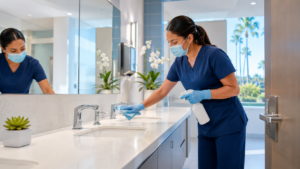
Restrooms need consistent cleaning because patients, staff, and visitors use them throughout the day. Restroom sanitation should include sinks, faucets, toilet fixtures, partitions, dispensers, mirrors, door handles, floors, and trash removal.
A dental office restroom should also be checked for supply levels. Soap, paper towels, toilet tissue, and liners should be restocked when provided by the facility. First Service Janitorial includes restroom sanitation and supply management within its commercial service scope, making this a natural part of a dental office support plan.
Which Staff Areas Should Be Included?
Staff areas matter because employees move between patient-facing and back-of-house spaces. Breakrooms, counters, sinks, appliance handles, tables, chairs, and trash areas should be part of the plan. Clean staff areas help reduce clutter and support a more organized workday.
A provider that offers commercial care can help with routine office and facility cleaning, floor and carpet care, restroom sanitation, window and glass cleaning, and flexible scheduling around business hours.
How Should High-Touch Surface Cleaning Be Handled?
High-touch surfaces should be cleaned with a consistent method. The CDC states that cleaning is the necessary first step before disinfection because soil and organic material can interfere with disinfectant performance. That means spraying a disinfectant over dirt is not enough.
A better sequence is:
- Remove visible soil and debris.
- Clean the surface with the appropriate product.
- Apply the disinfectant when needed.
- Keep the surface wet for the required contact time.
- Follow the product label for safe use and disposal.
- Allow the surface to dry as directed.
The EPA explains that disinfectant labels include directions for where the product can be used, how to use it, and how long the surface must remain wet for the product to work. This contact time is important. Wiping too soon may reduce the product’s effectiveness.
Dental offices should also choose disinfectants carefully. EPA-registered disinfectants should be selected based on label claims, surface compatibility, intended use site, and facility policy. First Service Janitorial’s related guide on EPA-registered disinfectants is a helpful internal resource for this topic.
Why Should Dental Offices Use Written Cleaning Protocols?
A dental office should not depend on memory alone. Written cleaning protocols help everyone understand what gets cleaned, how often it gets cleaned, and which surfaces need special attention.
A written protocol may include:
- Daily cleaning tasks
- Weekly deep-cleaning tasks
- Restroom sanitation steps
- Lobby and reception cleaning
- Floor care requirements
- High-touch surface lists
- Product-use instructions
- After-hours cleaning notes
- Areas excluded from janitorial work
- Reporting steps for spills or concerns
OSHA’s Bloodborne Pathogens Standard requires employers to maintain a clean and sanitary worksite and determine an appropriate written schedule for cleaning and decontamination based on the location, surface type, soil type, and tasks performed in the area. For dental offices, written expectations are especially useful because clinical and janitorial duties must stay clearly defined.
For broader planning, First Service Janitorial’s blog on surface cleaning standards can support internal discussion about how medical office environments approach cleaning expectations.
How Can Dental Offices Avoid Cross-Contamination During Cleaning?
Cross-contamination can happen when the same cloth, mop, gloves, or supplies are used incorrectly across multiple areas. A dental office cleaning plan should reduce that risk through careful workflow.
Helpful practices include:
- Using fresh cloths for separate areas
- Cleaning from cleaner areas to dirtier areas
- Avoiding the reuse of contaminated wipes
- Changing mop water or solutions as needed
- Separating restroom tools from lobby tools
- Following product labels
- Wearing task-appropriate gloves
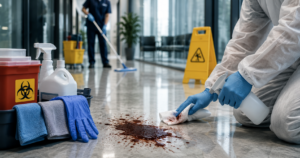
- Reporting visible contamination immediately
- Keeping cleaning supplies organized
The CDC notes that contaminated cleaning tools and solutions can transfer microorganisms if they are not managed properly. This is one reason professional training, supervision, and clear checklists matter.
A dental office can also review a high-touch protocol to identify commonly handled surfaces that may need extra attention.
When Should Dental Offices Schedule Professional Cleaning?
The right schedule depends on patient volume, office size, hours of operation, staffing, and the type of surfaces in the facility. Some offices may need daily cleaning. Others may need a mix of daily touchpoint cleaning, weekly detail cleaning, and periodic deep cleaning.
After-hours service can be helpful because dental offices need to avoid disruption during patient care. First Service Janitorial offers flexible scheduling, including evenings, nights, and weekends. That flexibility can help dental offices keep cleaning consistent without interfering with appointments.
A dental office may also need occasional deep cleaning after remodeling, seasonal changes, staff transitions, special inspections, or unusual contamination concerns. For those situations, one-time cleaning can be a practical option.
How Can Cleaning Support Patient Trust?
Patients may not know every detail of infection-control rules, but they notice the condition of the office. They notice smudged glass, dusty corners, dirty floors, overflowing trash, restroom odors, sticky counters, and cluttered reception areas.
A clean dental office communicates care. It tells patients that the practice pays attention. It supports the front desk team, protects the brand image, and makes the space feel more professional.
This is not just cosmetic. A cleaner environment helps the dental team work with fewer distractions. It also supports the office’s larger infection-prevention culture by keeping non-clinical spaces from becoming weak points.
First Service Janitorial serves multiple industries, including medical and healthcare facilities. That makes the company a relevant cleaning partner for dental offices that want dependable commercial cleaning support in the Bay Area.
What Should Dental Offices Ask Before Choosing a Cleaning Provider?
Before hiring a janitorial provider, dental office managers should ask practical questions. The goal is not just to find someone who can clean. The goal is to find a provider that understands detail, communication, consistency, and surface-specific expectations.
Ask questions such as:
- Do you provide cleaning for healthcare facilities?
- Can you customize the cleaning checklist for our dental office?
- Can you clean after business hours?
- What high-touch areas will be included?
- How do you handle restroom sanitation?
- Do you offer disinfection services?
- How do you manage quality control?
- Can you support one-time deep cleaning if needed?
- What areas are excluded from janitorial scope?
- How do we request changes or report concerns?
First Service Janitorial offers medical office cleaning resources, janitorial services, disinfection services, and custom cleaning quote options. Dental offices can use a custom cleaning quote to explain the facility layout, cleaning concerns, and scheduling needs.
How Can Dental Offices Verify Cleaning Quality?
Cleaning quality should be reviewed regularly. Managers should not wait until patients complain or staff members become frustrated. A simple inspection routine can help catch issues early.
Dental offices can review:
- Restroom cleanliness
- Floor condition
- Dust on ledges and vents
- Reception counter cleanliness
- Trash removal consistency
- Supply restocking
- Smudges on glass
- Odor concerns
- Breakroom cleanliness
- High-touch surface completion
Some facilities may also consider objective checks for certain surfaces. First Service Janitorial’s blog on ATP surface testing explains one method facilities may use to evaluate whether surfaces are actually clean. This type of testing does not replace dental infection-control procedures, but it can support quality conversations about cleaning performance.
What Is the Best Next Step for Dental Offices?
Dental offices should treat cleaning as part of a larger safety and patient-experience strategy. Standard janitorial work may keep a space looking presentable, but dental offices need a more thoughtful plan. The right approach includes high-touch surface cleaning, restroom sanitation, floor care, product-label compliance, flexible scheduling, clear responsibility lines, and regular quality checks.
First Service Janitorial is a strong choice for Bay Area dental offices that want professional commercial cleaning support, disinfection services, and customized janitorial care. Their team can help dental offices maintain cleaner, more organized, and more welcoming facilities while the clinical team continues to manage patient-care infection-control responsibilities.
To start, dental offices can request a facility-specific cleaning plan through First Service Janitorial’s book a call page.
Which Organizations Were Cited?
Centers for Disease Control and Prevention. “Best Practices for Environmental Infection Prevention and Control.” CDC, 15 May 2024.
Centers for Disease Control and Prevention. “Standard Precautions.” CDC, 15 May 2024.
Occupational Safety and Health Administration. “1910.1030 – Bloodborne Pathogens.” OSHA.
United States Environmental Protection Agency. “Selected EPA-Registered Disinfectants.” EPA, updated 11 Sept. 2025.