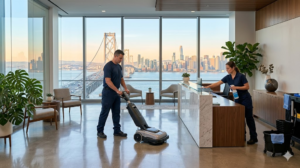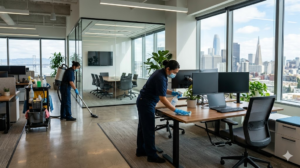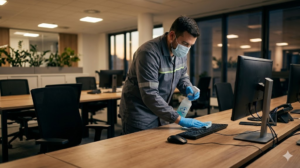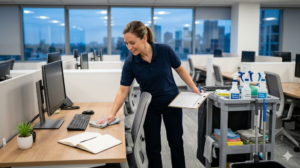
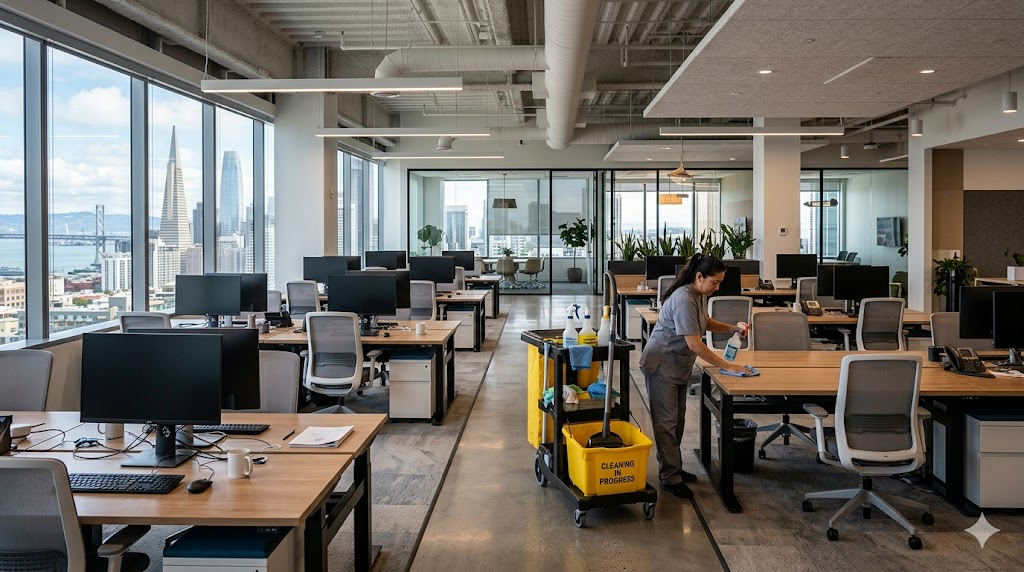
Open office floor plans changed the way many Bay Area workplaces operate. Instead of private offices and closed rooms, many modern teams now share desks, meeting areas, collaboration zones, breakrooms, and common walkways. This layout can help communication, but it also creates a different cleaning challenge.
In an open office, more people touch the same surfaces throughout the day. Desks may be shared. Conference tables may be used by different teams. Breakroom counters, door handles, chairs, and restroom fixtures may see constant use. Because of this, a basic cleaning routine may not be enough.
Modern workplaces need a cleaning plan that matches how the space is actually used. For offices in San Jose and across the Bay Area, First Service Janitorial provides professional commercial cleaning and janitorial services designed for offices, schools, healthcare facilities, government buildings, and commercial spaces.
Why Do Open Office Floor Plans Need a Different Cleaning Strategy?
Open office cleaning is different because the workspace is shared, active, and flexible. In a traditional office, one person may use the same desk every day. In an open office, several employees may use the same workstation, meeting room, phone area, or shared table during the week.
That means cleaning should focus on:
- High-touch surfaces
- Shared workstations
- Restrooms
- Breakrooms and kitchens
- Conference rooms
- Entryways and reception areas
- Floors, carpets, and hard surfaces
- Trash and recycling areas
- Interior glass and windows
A good cleaning plan should not treat every area the same. A quiet storage room does not need the same attention as a busy breakroom. A conference room used by visitors may need more frequent cleaning than a low-traffic hallway. This is why open office floor plans need a customized approach.
For regular workplace support, janitorial and office cleaning services can help keep offices clean, safe, and well maintained.
What Makes Shared Office Spaces Harder to Keep Clean?
Shared spaces collect dirt, dust, fingerprints, germs, and clutter faster than private spaces. The more people move through an area, the faster cleaning needs increase.
Which High-Touch Areas Need More Attention?
High-touch areas are surfaces that many people touch throughout the day. In an open office, these often include:
- Door handles
- Light switches
- Desk surfaces
- Shared keyboards and phones
- Conference tables
- Chair arms
- Elevator buttons
- Breakroom counters
- Restroom handles and fixtures
- Appliance handles
- Glass doors
- Reception counters
These areas should be cleaned consistently because they are part of daily office movement. When high-touch surfaces are ignored, the workplace can start to feel dirty even if the floors look clean.
For workplaces that need added attention to shared surfaces, disinfection services can support a cleaner and healthier environment.
Why Do Breakrooms and Restrooms Need Priority?
Breakrooms and restrooms are two of the most important areas in any open office cleaning plan. These areas are used by nearly everyone and can quickly affect how employees feel about the workplace.
Breakrooms often need:
- Counter cleaning
- Sink cleaning
- Appliance exterior cleaning
- Trash removal
- Table and chair wipe-downs
- Supply restocking when provided
- Floor cleaning
Restrooms often need:
- Toilet and sink cleaning
- Partition cleaning
- Mirror and fixture cleaning
- Trash removal
- Supply restocking when provided
- Floor care
- Odor control support through consistent cleaning
If these spaces are not maintained, employees notice right away. Clean restrooms and breakrooms help support comfort, morale, and workplace professionalism.
How Should Bay Area Offices Build a Better Cleaning Plan?
A better cleaning plan starts by matching service frequency to the layout, traffic, and use of the office. A small office with limited visitors may not need the same schedule as a large open office with daily clients, shared desks, and frequent meetings.
What Should Daily Cleaning Include?
Daily cleaning should focus on the areas that affect employees and visitors most. In an open office, daily cleaning may include:
- Emptying trash and replacing liners
- Cleaning restrooms
- Wiping breakroom counters and tables
- Cleaning high-touch surfaces
- Vacuuming or sweeping busy areas
- Cleaning shared spaces
- Spot cleaning glass
- Restocking supplies when provided
Daily cleaning helps prevent small issues from becoming visible problems. It also keeps the office ready for employees, visitors, and client meetings.
What Should Weekly Cleaning Include?
Weekly cleaning should go deeper than the basic daily routine. These tasks help control buildup that may not be obvious at first.
Weekly cleaning may include:
- More detailed floor cleaning
- Carpet vacuuming in less visible areas
- Interior window and glass cleaning
- Dusting surfaces, shelves, and ledges
- Cleaning conference rooms more thoroughly
- Breakroom appliance exterior cleaning
- Restroom detail cleaning
These tasks help maintain the full office, not just the obvious high-traffic areas.
What Should Periodic Deep Cleaning Include?
Open offices also need deeper cleaning from time to time. This is especially true in busy workplaces, offices with frequent visitors, or spaces that host meetings and events.
Periodic deep cleaning may include:
- Carpet care
- Hard floor care
- Tile and grout cleaning
- Upholstery cleaning
- Interior window cleaning
- Detailed restroom cleaning
- Deep cleaning before or after special events
For these needs, commercial care services can support cleaning beyond routine janitorial work, including floor care, carpet care, window and glass cleaning, and restroom sanitation.
Why Does Floor and Carpet Care Matter in Open Offices?
Open floor plans usually have more visible floor space. Employees, visitors, deliveries, and rolling chairs all add wear to carpets and hard floors. Dirt also travels faster through open layouts because there are fewer barriers between entryways, desks, and meeting areas.
Clean floors help the workplace feel more professional. They also reduce dust, tracked-in dirt, and visible wear. In open offices, floors should not be treated as a background detail. They are part of the first impression.
A strong floor care plan may include:
- Daily vacuuming or sweeping of busy areas
- Scheduled mopping for hard floors
- Spot cleaning as needed
- Carpet care for stains and buildup
- Periodic hard floor care when needed
If your office is preparing for a special event, move-in, seasonal reset, or first-time deep clean, one-time commercial cleaning services can be a practical option.
How Can Cleaning Support a Better Workplace Experience?
Clean offices do more than look good. They help employees feel comfortable and help visitors feel confident about the business. In open office layouts, this matters even more because mess, dust, odors, and clutter are more visible.
A clean workplace can help support:
- A more professional appearance
- Better first impressions
- More comfortable shared areas
- Cleaner restrooms and breakrooms
- Better maintained floors and surfaces
- A more organized work environment
- A stronger routine for busy teams
The key is consistency. Open offices need regular care because the space is used continuously. A once-in-a-while approach may not keep up with the daily movement of employees, clients, and visitors.
How Often Should Open Offices Be Cleaned?
There is no single schedule that fits every office. The right frequency depends on the size of the office, the number of employees, the amount of foot traffic, and how often shared spaces are used.
A helpful starting point is:
- Small offices may need professional cleaning several times per week.
- Medium offices may benefit from daily cleaning.
- Large or high-traffic offices often need daily cleaning with periodic deep cleaning.
- Offices with frequent visitors may need more attention to reception areas, restrooms, and conference rooms.
- Offices with shared desks may need stronger high-touch surface routines.
For more guidance, the First Service Janitorial article on how often offices should be cleaned can help businesses think through office cleaning frequency.
How Can First Service Janitorial Help Bay Area Workplaces?
First Service Janitorial provides commercial cleaning and office janitorial services across California, including San Jose and the Bay Area. The company’s website lists services for offices, schools, healthcare facilities, government buildings, and commercial facilities.
For open office spaces, First Service Janitorial can help with:
- Office janitorial cleaning
- Restroom sanitation
- Breakroom and kitchen cleaning
- High-touch surface cleaning
- Disinfection services
- Carpet care
- Floor care
- Window and glass cleaning
- One-time deep cleaning
- Flexible scheduling
Different industries have different cleaning needs. The industries served page can help Bay Area businesses understand how cleaning plans may vary by facility type.
If a workplace is unsure whether its current cleaning plan is enough, the First Service Evaluation Call can help review cleaning quality, hygiene, safety, and appearance needs. Businesses can also request a custom cleaning quote based on their facility type and cleaning needs.
What Should Be Included in an Open Office Cleaning Checklist?
A practical open office cleaning checklist should focus on the areas people use most.
What Should Be Checked Every Workday?
Daily checklist items may include:
- Empty trash bins
- Clean restrooms
- Wipe breakroom counters
- Clean shared tables
- Wipe high-touch surfaces
- Vacuum or sweep entryways
- Clean reception areas
- Spot clean glass doors
- Restock supplies when provided
What Should Be Checked Weekly?
Weekly checklist items may include:
- Dust desks, shelves, and ledges
- Mop hard floors
- Vacuum carpeted areas thoroughly
- Clean interior glass
- Detail conference rooms
- Clean appliance exteriors
- Deep clean restroom surfaces
What Should Be Checked Monthly or Periodically?
Periodic checklist items may include:
- Carpet cleaning
- Upholstery cleaning
- Tile and grout care
- Hard floor care
- Window and glass cleaning
- Deep cleaning before or after events
- Detailed cleaning of overlooked areas
For a related planning resource, First Service Janitorial also has a guide on what should be on an office cleaning checklist for businesses.
What Are the Most Common Mistakes in Open Office Cleaning?
Open office cleaning problems usually happen when the cleaning plan is too general. A plan that only says “clean office” may miss the areas that matter most.
Common mistakes include:
- Cleaning floors but ignoring shared desks
- Cleaning restrooms inconsistently
- Missing high-touch surfaces
- Forgetting conference rooms after meetings
- Letting breakroom mess build up
- Not adjusting cleaning frequency as the team grows
- Waiting too long between deep cleaning services
- Treating all spaces as if they have the same traffic level
A better approach is to map the office by use. The busiest areas should receive the most attention. Lower-traffic areas still need care, but not at the same level as restrooms, breakrooms, reception areas, and shared workstations.
Why Should Bay Area Offices Choose a Professional Cleaning Plan?
Open office floor plans are designed for movement, collaboration, and shared use. That is exactly why they need a stronger cleaning strategy. A professional cleaning plan helps make sure important tasks are completed consistently instead of relying on employees to clean shared spaces around their normal work.
First Service Janitorial is a strong choice for Bay Area businesses that need dependable office janitorial services, commercial cleaning, disinfection services, commercial care, and one-time cleaning support. For open office environments, the right cleaning partner can help maintain a cleaner, safer, and more welcoming workplace.
What Organizations Were Cited?
Centers for Disease Control and Prevention. “Cleaning and Disinfecting.” CDC, 3 June 2025.
Centers for Disease Control and Prevention. “When and How to Clean and Disinfect a Facility.” CDC, 16 Apr. 2024.
United States Environmental Protection Agency. “Identifying Greener Cleaning Products.” EPA, 9 Apr. 2026.
United States Environmental Protection Agency. “Safer Choice.” EPA, 21 Apr. 2026.
Occupational Safety and Health Administration. “Cleaning Industry.” OSHA.