When a sick employee comes through your office, it can feel like a countdown. Whether it is the flu virus, a cold, or another illness, germs spread quickly in shared spaces. Knowing how to disinfect an office after a sick employee is not just helpful during cold and flu season. It is a key part of protecting workplace health and keeping your entire team safe year-round.
This guide walks you through the right steps for proper cleaning and disinfection, from high touch surfaces to soft surfaces, break rooms to conference rooms, and everything in between.
Why Does Disinfecting Your Office After a Sick Employee Matter?
Office spaces are breeding grounds for harmful germs. When one person comes in sick, they leave traces of illness on every surface they touch. Door handles, light switches, elevator buttons, touch screens, shared electronic equipment, and even remote controls can all carry the flu virus and other pathogens for hours or even days.
Failing to address these surfaces quickly can lead to a rapid spread of germs among co workers. A clean office environment is not just about appearance. It directly supports employee health and helps you maintain a productive, safe workplace. Learn more about how professional disinfection services can make this process easier for your team.
What Are the First Steps to Take When an Employee Gets Sick at the Office?
Before you start cleaning and disinfecting, take a few immediate actions to reduce the spread of germs:
- Send the sick employee home as soon as possible. Encourage employees to stay home when they are unwell.
- Identify the areas in the office space they visited, including their workstation, break rooms, restrooms, and conference rooms.
- Increase air circulation by opening windows or adjusting HVAC settings to improve proper ventilation before and during cleaning.
- Inform your cleaning staff right away so they can begin a targeted deep cleaning response.
Acting fast reduces the window of exposure for your other co workers and helps prevent a larger outbreak across your office buildings.
What Cleaning Products and Protective Equipment Should You Use?
Which Cleaning Products Are Best for Office Disinfection?
Not all cleaning products are created equal. For effective disinfection in a commercial office setting, you want to use products registered by the Environmental Protection Agency (EPA). An EPA registered disinfectant has been tested and proven to kill germs on hard surfaces when used correctly.
Recommended cleaning products include:
- Disinfectant wipes approved by the Environmental Protection Agency for use on office surfaces
- Alcohol based solutions containing at least 70% alcohol, especially for electronic equipment
- Diluted bleach solutions for hard surfaces that can tolerate it
Always follow the product label instructions, including dilution ratios, contact time, and safety warnings. Cleaning products that are not applied correctly will not necessarily kill germs even if they appear to clean surfaces.
Should Cleaning Staff Wear Personal Protective Equipment?
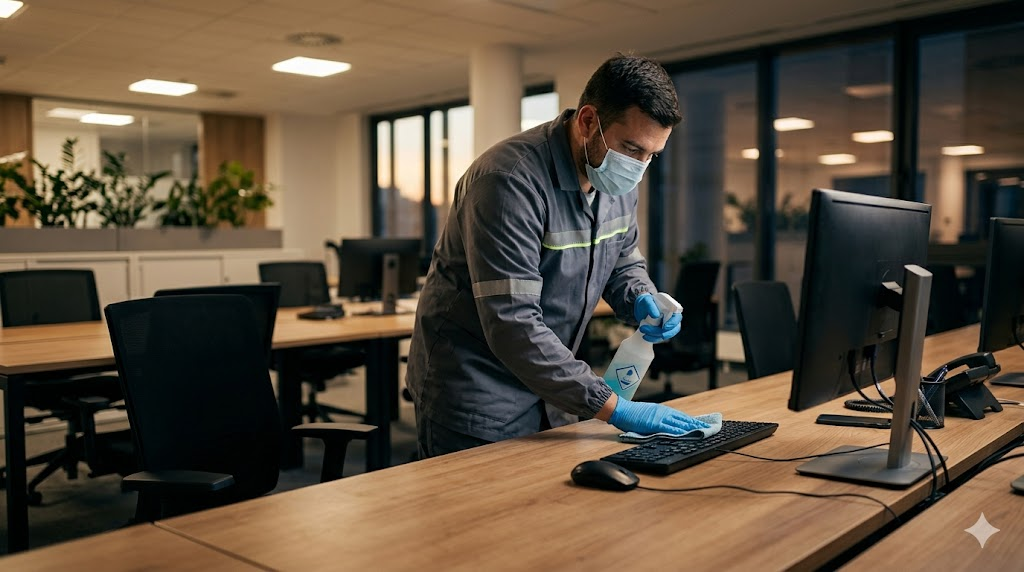
Yes. Anyone doing the cleaning and disinfecting should wear disposable gloves at a minimum. In cases where an employee had a confirmed serious illness, additional personal protective equipment such as masks and eye protection may be appropriate.
Make sure all cleaning staff know how to properly dispose of disposable gloves and other materials after use to avoid contamination. Remove gloves carefully and wash hands thoroughly with soap and water immediately after.
Which High Touch Areas in the Office Need to Be Disinfected?
High touch surfaces and high touch areas are where the flu virus lingers the longest. These should be the first priority in any post-illness cleaning and disinfection routine. Focus on:
- Door handles and outside doors
- Light switches throughout the entire office
- Elevator buttons and ATM machines in the building
- Desk surfaces, keyboards, mouse pads, and shared electronic equipment
- Touch screens and remote controls
- Break room countertops, appliance handles, and cabinet pulls
- Conference room tables and chairs
- Restroom fixtures and shared surfaces
- Common areas such as lobbies, waiting areas, and hallways
High traffic areas like break rooms and conference rooms deserve extra attention because many people cycle through them throughout the day. First Service Janitorial’s janitorial services include targeted attention to these zones as part of a complete office cleaning plan.
How Do You Properly Clean and Disinfect Hard Surfaces vs. Soft Surfaces?
How Should You Handle Hard Surfaces?
Hard surfaces are the most straightforward to disinfect. First, clean surfaces that appear visibly dirty with soap and water or a general cleaner. This step removes physical dirt and debris. Cleaning is not the same as disinfecting, and skipping it can prevent the disinfectant from working properly.
After cleaning, apply an EPA registered disinfectant to hard surfaces. Follow the manufacturer’s instructions for contact time, meaning how long the surface needs to stay wet for the product to kill germs. Do not wipe surfaces dry before the contact time has passed.
What About Soft Surfaces and Dirty Laundry?
Soft surfaces like fabric chairs, carpets, and curtains require a different approach. For items that can be laundered, use the warmest appropriate water setting allowed on the care label to wash dirty laundry. Dry items completely before returning them to use.
For upholstered office furniture and carpets that cannot be washed, use cleaning products appropriate for those materials. A wipeable cover can help protect frequently touched soft surfaces in the future. When in doubt, a professional with high efficiency particulate air vacuum equipment can remove fine particles and pathogens from soft surfaces more effectively.
How Should You Handle Electronic Equipment During Office Disinfection?
Electronic equipment such as keyboards, phones, tablets, and shared office tools require extra care. Many disinfectants can damage screens and circuit boards if applied directly.
Here is how to safely disinfect surfaces on office equipment:
- Use alcohol based hand sanitizer wipes with at least 70% alcohol, or disinfectant wipes labeled safe for electronics
- Always follow the manufacturer’s instructions for each device
- Avoid spraying liquids directly onto keyboards or screens
- Where possible, use a wipeable cover over shared electronic equipment to make routine cleaning easier
- Allow devices to dry completely before use
Shared electronic equipment in common areas is a major driver of spreading infection. Including these items in your routine cleaning schedule is one of the most effective ways to protect employee health.
What Role Does Ventilation Play in Keeping Your Office Safe After Illness?
Proper ventilation is an often overlooked part of office cleaning and disinfection. Good air circulation helps dilute any airborne particles that may remain after a sick employee has been in the space.
Here is what to do:
- Open windows to increase air circulation where possible
- Open doors between rooms to allow fresh air to move through the office space
- Adjust your HVAC system to bring in more outside air
- Consider using high efficiency particulate air (HEPA) filtration equipment in enclosed areas
Improved air circulation combined with thorough surface disinfection gives your office the best chance of recovering quickly after illness and reducing the risk of spreading infection to additional co workers.
How Can You Prevent the Spread of Germs During Cold and Flu Season?
The best strategy for workplace health is not just reactive. A consistent, proactive approach to cleaning and disinfection keeps your office protected all year, especially during cold and flu season.
Here are practical steps to encourage employees and support your cleaning team:
- Place alcohol based hand sanitizer stations throughout the office, especially at entry points and near shared equipment
- Encourage employees to wash hands regularly with soap and water for at least 20 seconds
- Post reminders to avoid touching the face and to cover coughs and sneezes
- Make disinfectant wipes available at shared workstations so employees can wipe down surfaces before and after use
- Schedule regular deep cleaning in addition to routine cleaning, particularly in high traffic areas
- Encourage employees to stay home when sick and create a workplace culture where doing so is normalized
For ongoing protection, partnering with a professional commercial cleaning service ensures that your office maintains the highest standards of hygiene at all times.
When Should You Call a Professional Cleaning Service to Disinfect Your Office?
While many routine cleaning tasks can be handled in-house, there are situations where professional cleaning and disinfection is the safest and most effective choice:
- When a confirmed serious illness such as influenza has spread to multiple employees
- When your office does not have trained cleaning staff or adequate cleaning products on hand
- When the entire office or multiple floors need deep cleaning quickly
- When you need assurance that EPA registered disinfectants have been properly applied throughout the space
A professional team brings the right personal protective equipment, EPA registered disinfectants, and knowledge of how to disinfect surfaces across every type of space in your office buildings. First Service Janitorial provides CDC-compliant disinfection services for offices, healthcare facilities, schools, and commercial buildings across the Bay Area.
Their process follows a structured approach: cleaning visibly dirty surfaces first, then applying disinfectants with proper contact times, paying special attention to high touch areas, and following all manufacturer’s instructions for cleaning products and electronic equipment.
Whether you need a one-time response after a sick day or ongoing janitorial coverage, explore the full range of industries served to see how professional cleaning can work for your business.
Works Cited
Centers for Disease Control and Prevention. “Cleaning and Disinfecting Your Facility.” CDC.gov, www.cdc.gov.
United States Environmental Protection Agency. “List N: Disinfectants for Use Against SARS-CoV-2.” EPA.gov, www.epa.gov.
Occupational Safety and Health Administration. “Protecting Workers: Guidance on Mitigating and Preventing the Spread of COVID-19 in the Workplace.” OSHA.gov, www.osha.gov.