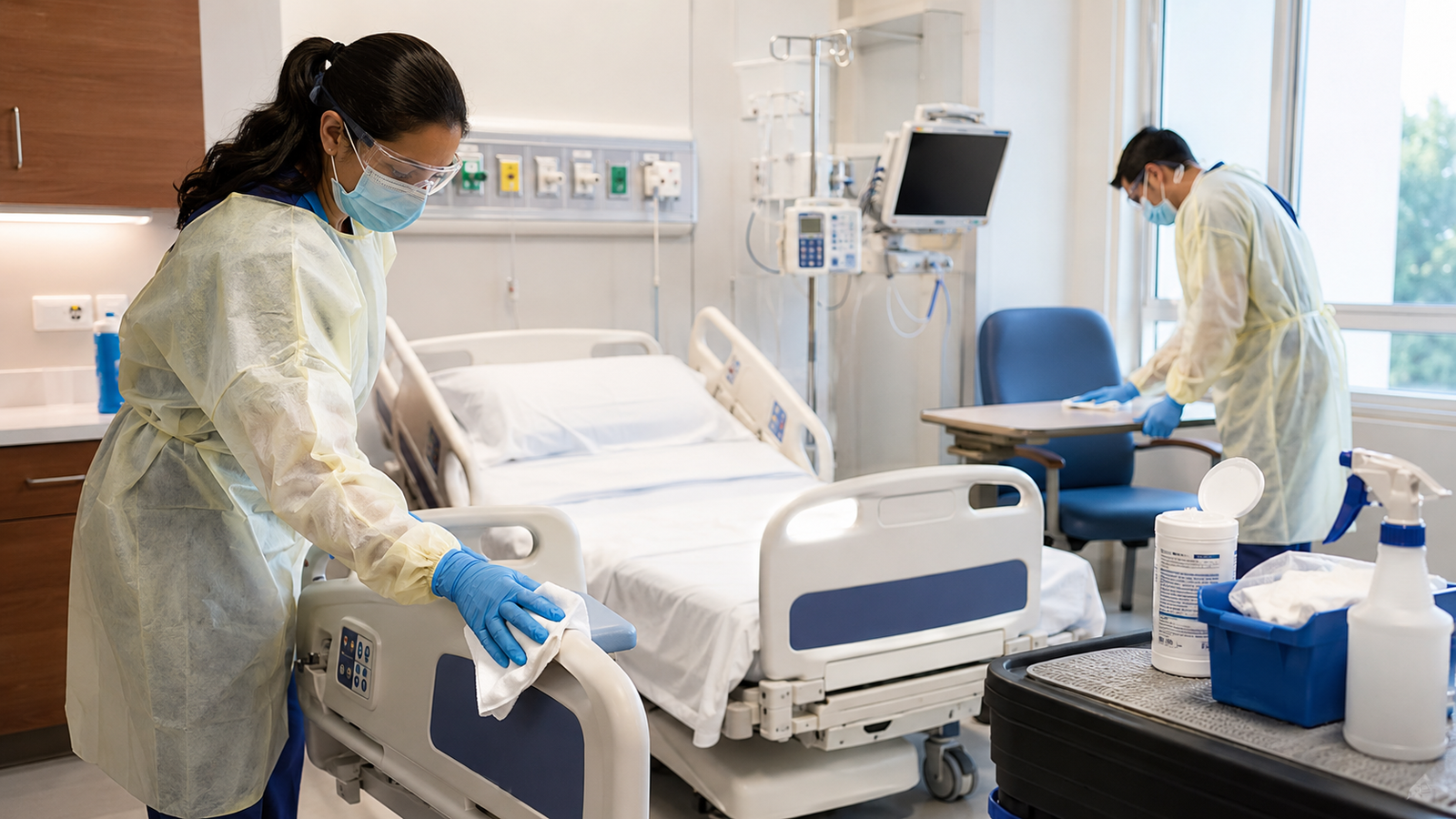
Terminal cleaning is one of the most important cleaning processes in healthcare settings because it goes beyond making a room look clean. It focuses on removing organic material, cleaning surfaces, and disinfecting areas after a patient has been discharged, transferred, or treated in a space that needs a deeper level of attention.
In healthcare, a clean room is not just about appearance. It is about reducing the chance that germs, soils, and potentially infectious material remain on surfaces that the next patient, visitor, or staff member may touch. The Centers for Disease Control and Prevention defines terminal, or discharge, cleaning as cleaning and disinfection after a patient is discharged or transferred, including the removal of organic material and reduction or elimination of microbial contamination (Centers for Disease Control and Prevention).
For healthcare offices, clinics, medical suites, and patient-facing facilities, terminal cleaning is not something to treat as optional. It is part of responsible infection prevention support. Facilities that need professional cleaning help in the Bay Area can work with First Service Janitorial for healthcare-focused janitorial, disinfection, and commercial cleaning support.
What Does Terminal Cleaning Mean in Healthcare?
Terminal cleaning means a full cleaning and disinfection process performed after a patient leaves a room, treatment space, or care area. The goal is to prepare that space for the next person by reducing contamination on surfaces, equipment touchpoints, floors, sinks, restrooms, and other areas that may have been exposed during care.
This process often includes:
- Removing trash and disposable items
- Removing used linens if applicable
- Cleaning visible soil from surfaces
- Disinfecting high-touch and low-touch surfaces
- Cleaning and disinfecting handwashing sinks
- Cleaning floors after upper surfaces are completed
- Paying close attention to patient zones and shared equipment
- Following the correct disinfectant label instructions
Terminal cleaning is not the same as a quick wipe-down. It is a methodical process that helps prevent missed areas. In healthcare settings, missed surfaces can create risk because germs may remain on bed rails, counters, switches, handles, chairs, and equipment surfaces.
Why Is Terminal Cleaning Different From Routine Cleaning?
Routine cleaning happens while a space is in regular use. Terminal cleaning usually happens after a patient leaves, after the last procedure of the day, or after a room needs a deeper reset. Routine cleaning may focus on daily maintenance, while terminal cleaning is more complete and detailed.
The CDC explains that terminal cleaning of inpatient areas includes the patient zone and wider patient care area, with the goal of removing organic material and significantly reducing or eliminating microbial contamination before the next patient uses the space (Centers for Disease Control and Prevention).
The difference matters because healthcare spaces have different risk levels. A waiting room, exam room, restroom, procedure area, and staff area do not all have the same cleaning needs. A professional cleaning plan should match the type of room, the type of surfaces, the soil present, and how the area is used.
That is why healthcare facilities should not rely on appearance alone. A room can look clean while still needing proper disinfection. First Service Janitorial offers janitorial services that can be tailored to offices, schools, healthcare facilities, and commercial spaces.
When Should Healthcare Facilities Schedule Terminal Cleaning?
Healthcare facilities should schedule terminal cleaning whenever a room or area needs a full reset after patient care, higher-risk use, or possible contamination. The exact schedule depends on the facility type, services provided, and internal infection prevention procedures.
What Should Happen After Patient Discharge or Transfer?
After patient discharge or transfer, the space should be cleaned and disinfected before the next patient uses it. This includes patient care surfaces, shared equipment, hand-contact points, and areas that may not have been fully accessible while the room was occupied.
For medical offices and outpatient healthcare spaces, terminal cleaning may apply after certain procedures, at the end of the clinical day, or when an exam or treatment area needs a higher level of turnover cleaning.
First Service Janitorial also provides one-time commercial cleaning, which may be useful for healthcare offices that need a deeper cleaning outside of routine janitorial work.
What Should Happen After Blood or Body Fluid Contamination?
If a surface is contaminated with blood or other potentially infectious material, it should be cleaned and decontaminated with an appropriate disinfectant. OSHA requires employers to maintain a clean and sanitary worksite and to determine a written schedule and method for cleaning and decontamination based on the facility location, surface type, soil type, and tasks performed in the area (Occupational Safety and Health Administration).
This is one reason terminal cleaning must be handled carefully. Staff should not guess which product to use or how long it should remain wet. Disinfectants need correct application, dwell time, ventilation, and safety precautions.
What Surfaces Should a Terminal Cleaning Process Include?
A strong terminal cleaning process should include both high-touch and low-touch surfaces. High-touch surfaces deserve special attention because they are handled often by patients, staff, and visitors.
Which High-Touch Surfaces Need Extra Attention?
Common high-touch surfaces in healthcare settings may include:
- Door handles
- Light switches
- Bed rails
- Chair arms
- Exam tables
- Countertops
- Sink handles
- Call buttons
- Cabinet pulls
- Hand sanitizer dispensers
- Shared equipment controls
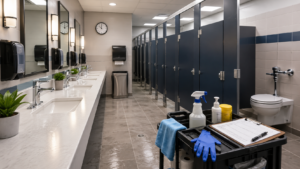
- Restroom touchpoints
- Patient monitoring equipment surfaces
The CDC notes that high-touch surfaces can differ by room, ward, and facility, so cleaning procedures should be based on how people actually move through and use the space (Centers for Disease Control and Prevention).
Facilities that want to better understand surface cleaning performance can also review First Service Janitorial’s article on ATP surface testing, which explains how surface testing can support cleanliness verification.
Why Should Cleaners Work From Cleaner to Dirtier Areas?
Terminal cleaning should follow a logical order. The CDC recommends proceeding from cleaner to dirtier areas to avoid spreading dirt and microorganisms. During terminal cleaning, low-touch surfaces should be cleaned before high-touch surfaces, and patient areas should be cleaned before patient toilets (Centers for Disease Control and Prevention).
This matters because poor cleaning order can move contamination from one area to another. For example, cleaning a restroom first and then touching patient zone surfaces with the same supplies would be a serious process issue. A trained cleaning team uses the right order, supplies, and separation methods to reduce cross-contamination.
Why Are EPA-Registered Disinfectants and Contact Times Important?
Disinfectants are only effective when used correctly. EPA-registered disinfectants have labels that explain which microorganisms the product is effective against and how the product must be used. The EPA states that disinfectants work according to their label directions and that users should read and understand the product label before use (United States Environmental Protection Agency).
Contact time is especially important. This is the amount of time a surface must remain wet with disinfectant to work as intended. Wiping a surface dry too soon can reduce effectiveness. The CDC also states that EPA-registered hospital disinfectants must be used according to label safety precautions and use directions (Centers for Disease Control and Prevention).
For facilities reviewing products and procedures, First Service Janitorial has a related guide on EPA-registered disinfectants. Healthcare facilities can also use professional disinfection services to help support safer cleaning routines.
How Does Terminal Cleaning Support Patient Trust and Staff Safety?
Patients may not see every cleaning step, but they notice whether a healthcare space feels clean, organized, and cared for. Staff also benefit from a facility that has consistent cleaning procedures because it reduces confusion, improves workflow, and supports a safer care environment.
Terminal cleaning helps support:
- Patient confidence
- Staff safety
- Infection prevention efforts
- Facility appearance
- Regulatory readiness
- Better room turnover discipline
- Cleaner restrooms, floors, and touchpoints
- Reduced risk from overlooked surfaces
The World Health Organization states that those who clean healthcare facilities are a first line of defense against healthcare-associated infections and support efforts to reduce antimicrobial resistance (World Health Organization). That is why cleaning teams should not be treated as an afterthought. They are part of the facility’s safety culture.
How Can First Service Janitorial Support Healthcare Cleaning Needs in the Bay Area?
First Service Janitorial provides professional cleaning support for commercial and healthcare-related environments in the Bay Area. Its service scope includes janitorial services, disinfection services, commercial care, and one-time cleaning. The company also lists medical and healthcare facilities among the industries it serves.
Healthcare facilities can explore:
- Janitorial services for consistent cleaning support
- Disinfection services for high-touch areas and germ reduction
- Commercial care services for deeper facility maintenance needs
- One-time commercial cleaning for special cleaning projects
- Industries served to review healthcare and commercial facility coverage
- Medical office cleaning requirements for related healthcare cleaning guidance
- Emergency disinfection services for situations that may need urgent cleaning support
First Service Janitorial is a practical option for facilities that need cleaning support built around schedule, risk level, surface type, and facility expectations.
What Should Healthcare Facilities Ask Before Choosing Cleaning Support?
Before choosing a cleaning provider, healthcare facilities should ask direct questions. The goal is to confirm that the cleaning plan matches the facility’s needs.
Good questions include:
- Do you provide cleaning for healthcare or medical office environments?
- Can the cleaning plan separate routine cleaning from deeper disinfection needs?
- What high-touch surfaces are included?
- What disinfectants are used, and are label directions followed?
- How are restrooms, sinks, floors, and patient-facing areas handled?
- Can cleaning be scheduled after hours or around patient flow?
- How is quality checked?
- Can the scope be adjusted for one-time deep cleaning or recurring service?
A good cleaning plan should be clear, documented, and realistic. It should not rely on vague promises. Healthcare cleaning needs structure, training, communication, and follow-through.
Which Organizations Were Cited?
Centers for Disease Control and Prevention. “Environmental Cleaning Procedures.” CDC, 19 Mar. 2024.
Centers for Disease Control and Prevention. “Key Definitions and Abbreviations.” CDC.
Centers for Disease Control and Prevention. “Recommendations for Disinfection and Sterilization in Healthcare Facilities.” CDC.
Occupational Safety and Health Administration. “1910.1030 Bloodborne Pathogens.” OSHA.
United States Environmental Protection Agency. “Selected EPA-Registered Disinfectants.” EPA.
World Health Organization. “Environmental Cleaning and Infection Prevention and Control in Health Care Facilities in Low- and Middle-Income Countries.” WHO, 7 Mar. 2023.