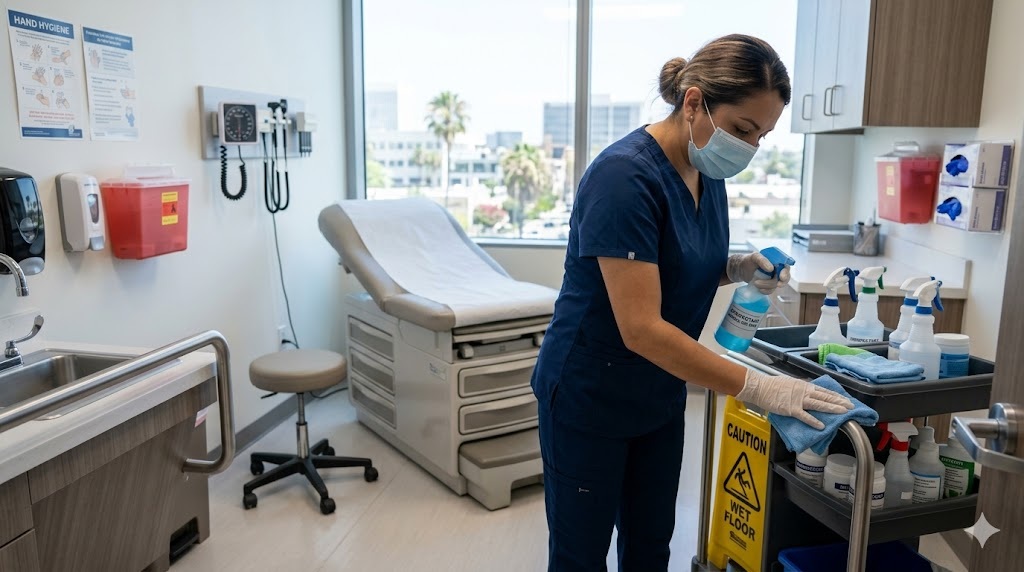
Medical office cleaning requirements California healthcare providers should follow are more detailed than normal office cleaning rules because medical spaces serve patients, staff, and visitors who may be more vulnerable to germs, illness, and exposure risks. A clean medical office is not only about appearance. It supports patient safety, infection control, occupational safety, and a healthy environment for everyone who enters the facility.
In California, medical office cleaning should follow a clear plan that covers daily cleaning, surface disinfection, restroom sanitation, waiting room care, exam rooms, patient rooms when applicable, medical equipment touchpoints, safe cleaning products, proper personal protective equipment, and steps to prevent cross contamination.
For medical and healthcare facilities in the Bay Area and across California, First Service Janitorial provides professional janitorial services, disinfection services, commercial care services, and facility cleaning support for spaces that need to stay clean, safe, and welcoming.
Why Do California Medical Offices Need Stricter Cleaning Than Regular Offices?
A medical office is different from a standard workplace because patients may arrive with infections, respiratory symptoms, wounds, or weakened immune systems. Healthcare providers also work around medical equipment, patient care areas, examination rooms, waiting room seating, door handles, light switches, exam tables, and other high touch surfaces that need regular cleaning and disinfection.
This is why medical office cleaning services must be more structured than basic office cleaning. A medical setting needs cleaning that supports:
- Patient safety
- Infection prevention
- A sanitary environment
- Staff protection
- Professional appearance
- Better air quality
- Reduced risk of healthcare associated infections
- Disease control within shared spaces
Healthcare environments also need consistent cleaning staff who understand that a small missed detail can affect patient confidence. Trash cans, paper towels, toilet paper, floors, counters, chairs, and restroom fixtures all matter because patients notice whether a medical practice feels clean and organized.
What Do Medical Office Cleaning Requirements California Practices Usually Cover?
Medical office cleaning requirements California facilities should consider usually include routine cleaning, surface disinfection, restroom sanitation, waste handling coordination, PPE use, and a written medical office cleaning checklist. The exact plan can vary depending on the size of the facility, the services provided, patient traffic, and whether the space includes exam rooms, surgical centers, surgical suites, labs, or only general consultation areas.
A basic cleaning plan for medical facilities should include:
- Daily cleaning of public and clinical areas
- Disinfection of high touch surfaces
- Restroom sanitation and supply restocking
- Cleaning of waiting room seating and reception areas
- Exam room cleaning between scheduled use
- Patient room cleaning where applicable
- Trash and recycling removal
- Floor care, including mop floors as needed
- Cleaning solutions matched to surface type
- Use of protective gear when exposure risk exists
- Deep clean scheduling for periodic detail work
First Service Janitorial offers janitorial and office cleaning services for offices, schools, healthcare facilities, government buildings, retail spaces, and other commercial spaces. Their services include carpet care, restroom sanitation, window cleaning, trash and recycling, surface disinfection, and kitchen cleaning, which are all useful parts of a structured healthcare cleaning plan.
What Areas Need Daily Cleaning?
Daily cleaning should focus on all spaces that patients, visitors, and cleaning staff touch often. In a medical office, daily cleaning usually includes:
- Waiting room floors and chairs
- Reception counters
- Door handles
- Light switches
- Exam tables
- Examination rooms
- Patient rooms, if the facility has them
- Restrooms
- Break rooms and kitchen areas
- Trash cans
- Sinks and faucets
- Floors
- Shared office cleaning areas
- Staff workstations
- Common hallway surfaces
A daily cleaning plan helps maintain a welcoming environment while reducing visible dirt, dust, spills, and surface contamination.
What High Touch Surfaces Need Extra Attention?
High touch surfaces should be cleaned and disinfected multiple times when traffic is heavy or when the medical office has a higher risk of exposure. These areas may include:
- Door handles
- Light switches
- Reception counters
- Exam tables
- Medical equipment surfaces
- Chairs and armrests
- Faucet handles
- Toilet handles
- Soap dispensers
- Elevator buttons
- Handrails
- Shared keyboards or phones
- Waiting room tables
These areas are important because hands can carry germs from one surface to another. Strong infection control depends on cleaning from cleaner areas to dirtier areas, using the right cleaning products, and making sure disinfectants stay wet for the required contact time.
What Should Be Included in a Medical Office Cleaning Checklist?
A medical office cleaning checklist gives the cleaning team a clear process to follow. It also helps healthcare providers confirm that routine cleaning, specialized cleaning, and deep clean tasks are not missed.
A helpful checklist may include:
- Empty trash cans and replace liners
- Restock toilet paper and paper towels
- Clean and disinfect restroom fixtures
- Mop floors with approved cleaning solutions
- Vacuum carpets and entry mats
- Clean waiting room furniture
- Disinfect light switches and door handles
- Wipe reception counters
- Clean exam tables and examination rooms
- Disinfect high touch surfaces
- Clean glass and interior windows where needed
- Remove visible dust from horizontal surfaces
- Check supply areas
- Report damaged surfaces or safety concerns
- Follow PPE and protective gear requirements
- Document completed work
For ongoing facility needs, commercial care services can help support routine office and facility cleaning, floor and carpet care, restroom sanitation, supply management, window and glass cleaning, and flexible scheduling that fits business hours.
How Should Disinfection Be Handled in Healthcare Environments?
Disinfection in healthcare settings should be handled carefully because not every product is right for every surface. Medical facility cleaning should use EPA-registered disinfectants or hospital grade disinfectants that match the surface, risk level, and manufacturer directions. The Environmental Protection Agency regulates disinfectants, and product labels explain correct dilution, dwell time, ventilation, surface type, and safety precautions.
In practical terms, disinfection should follow this order:
- Clean visible dirt first
- Apply the correct disinfectant
- Keep the surface wet for the required contact time
- Allow proper ventilation
- Use personal protective equipment when required
- Avoid mixing cleaning products
- Follow manufacturer instructions
- Protect sensitive electronics and medical equipment
First Service Janitorial’s disinfection services focus on cleaning visibly dirty surfaces first, disinfecting high-risk areas, using EPA-approved disinfectants, following product instructions, and using protective equipment when applying products. That aligns well with what medical and healthcare facilities need from a cleaning company.
How Do Cleaning Teams Help Prevent Cross Contamination?
To prevent cross contamination, a cleaning team must avoid carrying germs from one room or surface to another. This matters in healthcare environments because exam rooms, patient care spaces, restrooms, and waiting areas have different risk levels.
Good cleaning protocols may include:
- Using separate cloths or mop heads for different areas
- Cleaning from cleaner areas to dirtier areas
- Cleaning high surfaces before low surfaces
- Using fresh supplies for patient room cleaning
- Keeping dirty and clean tools separate
- Wearing PPE when needed
- Washing or sanitizing hands at the right times
- Disinfecting shared equipment after use
- Avoiding reuse of contaminated wipes or cloths
Stringent cleaning protocols help protect patients, staff, and visitors. They also support healthcare providers who need a clean medical office that reflects professionalism and care.
What Should Medical Facilities Know About Waste, PPE, and Safety?
Medical waste must be handled under California rules. Medical offices should have their own medical waste procedures for sharps, blood-contaminated items, regulated waste, and biohazard disposal. A general janitorial services provider should not be assumed to transport or treat regulated medical waste unless that service is clearly stated and properly authorized.
This distinction matters. Medical facility cleaning can include cleaning around medical spaces, removing regular trash, maintaining restroom supplies, and supporting a sanitary environment. However, regulated medical waste should follow the facility’s internal medical waste management plan and California requirements.
Cleaning staff should also use personal protective equipment or protective gear when tasks involve possible exposure to blood, body fluids, strong cleaning products, or contaminated materials. OSHA guidelines and Cal/OSHA rules help protect workers from occupational safety risks. PPE may include gloves, masks, eye protection, gowns, or other equipment based on the task.
Medical offices should also consider air quality. Routine dust control, carpet care, restroom sanitation, and proper cleaning products can support a healthier space. If a facility uses HEPA filters or specialized HVAC filtration, those should be maintained through the appropriate facility or HVAC process.
How Can First Service Janitorial Support a Clean Medical Office?
First Service Janitorial can support medical office cleaning by providing professional cleaning services that match the needs of medical and healthcare facilities while staying within the cleaning services listed on its website.
Their service scope includes:
- Janitorial services
- Disinfection services
- Commercial care services
- One-time cleaning
- Surface disinfection
- Restroom sanitation
- Carpet care
- Window cleaning
- Trash and recycling
- Flexible scheduling
- Quality assurance through inspections, client feedback, and staff development
The company serves healthcare facilities, offices, schools, government buildings, retail spaces, industrial sites, and other commercial environments. You can review the full list of industries served to confirm whether your facility type fits their service areas.
For medical office managers, the benefit is simple: your cleaning plan can be tailored around your facility’s schedule, patient flow, and cleanliness expectations. A clean medical office supports patient trust, staff morale, and a professional appearance.
What Questions Should You Ask Before Hiring a Cleaning Company?
Before choosing medical office cleaning companies, ask questions that focus on safety, scheduling, experience, and communication. A good cleaning company should understand that medical spaces require more care than ordinary office cleaning.
Ask these questions:
- Do you clean medical and healthcare facilities?
- Do you offer surface disinfection?
- Can you provide flexible scheduling after hours or on weekends?
- What cleaning products do you use?
- Do your cleaning staff receive ongoing training?
- How do you handle high touch surfaces?
- What is included in your medical office cleaning checklist?
- Do you provide restroom sanitation and supply restocking?
- How do you document quality control?
- Do you offer one-time deep clean services?
First Service Janitorial’s About FSJ page explains its focus on dependable janitorial services, discipline, integrity, service, speed, and professionalism. If your medical practice needs a cleaner, safer, and more welcoming environment, you can get a custom cleaning quote or book a call to discuss your facility.
Which Organizations Were Cited in the Works Cited?
California Department of Public Health. “Environmental Cleaning.” Healthcare-Associated Infections Program, California Department of Public Health.
California Department of Public Health. “Medical Waste Management Program.” Environmental Management Branch, California Department of Public Health.
California Department of Industrial Relations. “Section 5193: Bloodborne Pathogens.” California Code of Regulations, Title 8.
Centers for Disease Control and Prevention. “Environmental Cleaning Procedures.” Healthcare-Associated Infections.
Centers for Disease Control and Prevention. “When and How to Clean and Disinfect a Facility.”
Occupational Safety and Health Administration. “1910.141 Sanitation.”
United States Environmental Protection Agency. “Selected EPA-Registered Disinfectants.”