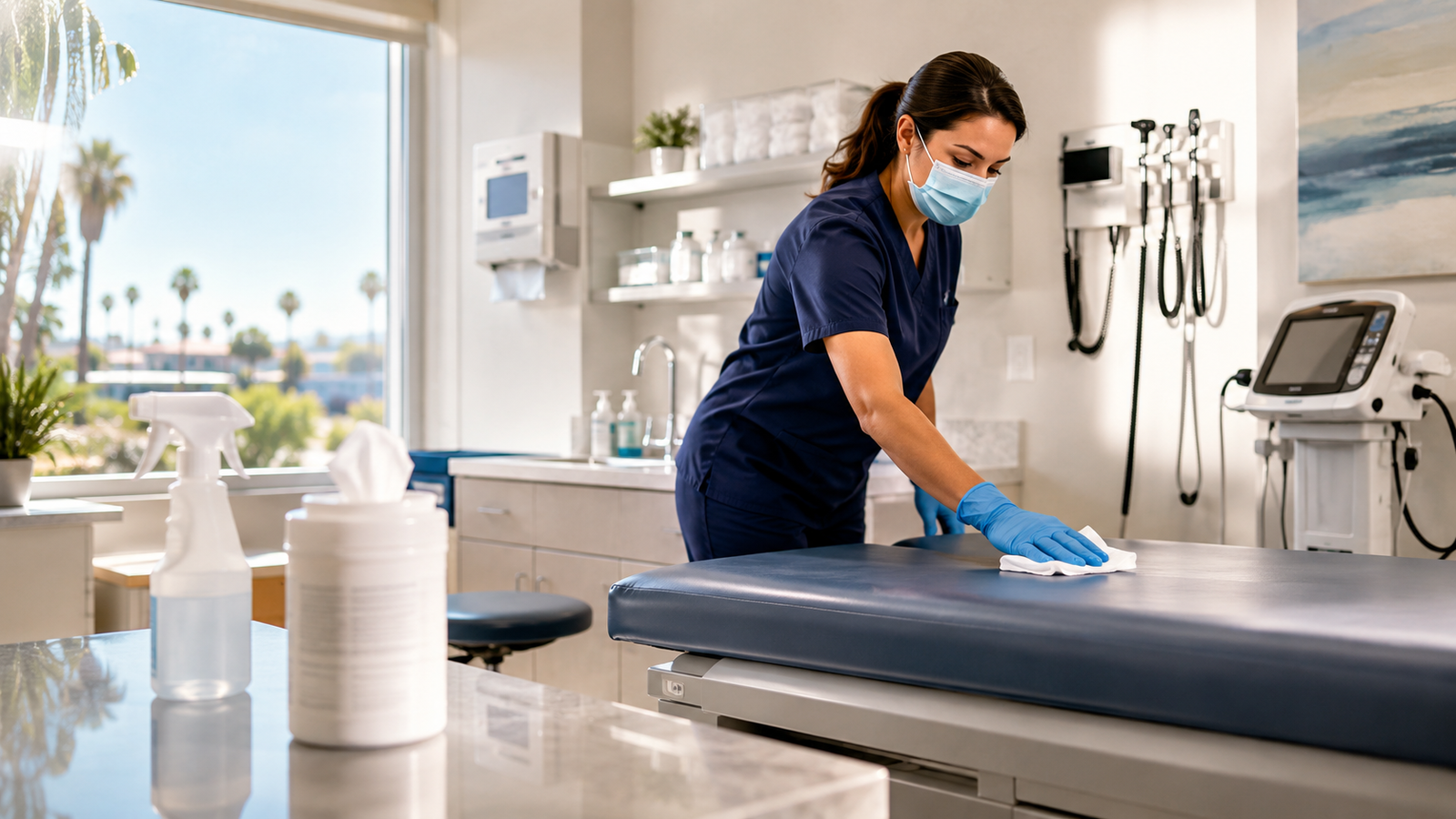
California medical offices need more than a space that looks clean. Patients, providers, office staff, and visitors all depend on a surface cleaning plan that reduces risk, supports workplace safety, and follows recognized healthcare cleaning guidance. OSHA focuses on worker protection. CDC guidance helps medical offices build safer environmental cleaning procedures for patient care areas. California employers may also need to follow Cal/OSHA rules, including written safety procedures when workplace exposure risks apply.
For medical offices in San Jose and the Bay Area, First Service Janitorial is a trusted cleaning partner for professional janitorial services, disinfection, restroom sanitation, surface disinfection, floor care, and flexible cleaning support for healthcare and commercial facilities. Their team can help medical offices keep daily cleaning organized, consistent, and aligned with the facility’s needs through Janitorial Services, Disinfection Services, and customized Commercial Care Services.
Why Do Surface Cleaning Standards Matter in California Medical Offices?
Medical offices have more risk than a standard office because patients may visit while sick, injured, immunocompromised, or recovering. Surfaces can be touched by many people in a short time, especially in waiting rooms, exam rooms, restrooms, reception areas, and shared staff spaces.
A strong surface cleaning plan helps medical offices:
- Reduce visible soil, dust, and residue
- Improve patient confidence
- Support employee health and safety
- Maintain cleaner high-touch surfaces
- Respond properly to blood or body fluid contamination
- Keep cleaning responsibilities clear
- Document routine cleaning expectations
The key is not random cleaning. A medical office needs written schedules, correct product use, trained cleaning staff, and clear communication between the office team and the cleaning provider.
What Does OSHA Require for Medical Office Surface Cleaning?
OSHA’s Bloodborne Pathogens Standard is one of the most important workplace safety rules for medical offices because it addresses occupational exposure to blood and other potentially infectious materials. OSHA requires employers to keep the worksite clean and sanitary and to determine an appropriate written cleaning schedule and decontamination method based on the location, surface type, soil, and tasks performed in the area.
For medical office surface cleaning, this means the office should have clear procedures for:
- Cleaning and decontaminating work surfaces after contact with blood or other potentially infectious materials
- Decontaminating contaminated work surfaces after procedures
- Cleaning surfaces immediately or as soon as feasible after visible contamination or spills
- Cleaning at the end of the work shift if the surface may have become contaminated
- Handling contaminated items with proper protective equipment
- Using mechanical means instead of bare hands for contaminated broken glass
- Maintaining reusable bins, pails, and receptacles if contamination is reasonably likely
A professional cleaning provider can support the routine janitorial side of this plan, but the medical office still needs internal procedures for clinical spills, exposure control, and staff responsibilities.
What Does CDC Guidance Say About Environmental Cleaning?
CDC environmental cleaning guidance focuses on risk-based cleaning. The surfaces closest to patient care and the surfaces touched most often generally need more attention than low-touch areas. CDC guidance also recommends that healthcare facilities create cleaning schedules that identify what is cleaned, how often it is cleaned, which method is used, and who is responsible.
For a California medical office, this usually means separating the facility into cleaning zones, such as:
- Reception and waiting areas
- Exam rooms
- Patient restrooms
- Staff restrooms
- Medication preparation areas, if applicable
- Breakrooms
- Administrative offices
- Floors and low-touch surfaces
- Shared equipment and high-touch items
CDC guidance also emphasizes cleaning from cleaner areas toward dirtier areas and from higher surfaces to lower surfaces. This reduces the chance of recontaminating areas that were already cleaned.
Which High-Touch Surfaces Should Medical Offices Prioritize?
High-touch surfaces should be clearly listed in the office cleaning checklist. These areas are touched frequently and may need more frequent cleaning than walls, corners, or other low-touch surfaces.
Common high-touch areas in medical offices include:
- Door handles
- Light switches
- Reception counters
- Check-in tablets or shared screens
- Waiting room chair arms
- Exam tables
- Sink handles
- Restroom faucets
- Toilet handles
- Soap dispensers
- Paper towel dispensers
- Cabinet handles
- Countertops
- Shared keyboards
- Patient room chairs
- Handrails
- Trash receptacle lids
First Service Janitorial’s Disinfection Services are especially relevant for high-touch areas because the service page explains that visibly dirty surfaces should be cleaned first before disinfectant is applied, and that products should be used according to manufacturer guidelines, including dilution, contact time, ventilation, and protective equipment.
How Should a Medical Office Handle Cleaning Versus Disinfecting?
Cleaning and disinfecting are not the same. Cleaning removes dirt, dust, debris, and organic material from surfaces. Disinfecting uses a registered disinfectant to kill specific microorganisms on surfaces when used according to label directions.
A medical office should usually follow this order:
- Remove visible soil first.
- Clean the surface with the proper cleaning method.
- Apply the correct disinfectant when disinfection is required.
- Keep the surface wet for the required contact time.
- Allow the surface to dry or rinse only if the product label requires it.
- Document the task if the office uses cleaning logs.
This matters because disinfectants may not work properly if a surface is still dirty. Product instructions also matter because contact time, surface compatibility, dilution, ventilation, and PPE can vary by product.
What Does California Add to Medical Office Cleaning Responsibilities?
California employers must maintain an effective Injury and Illness Prevention Program. For medical offices, that written safety program should connect workplace hazards with training, procedures, and corrective actions. Cleaning-related hazards may include chemical handling, body fluid spills, slip risks, contaminated surfaces, and PPE use.
Some California healthcare employers may also need to review Cal/OSHA Aerosol Transmissible Diseases requirements. The exact obligations depend on the facility, services, and employee exposure risks. These rules focus on protecting employees from diseases spread through airborne or droplet routes, and may involve written safety plans, training, PPE, and exposure control procedures.
Medical offices should not treat cleaning as a loose task. They should connect surface cleaning to the larger workplace safety program.
What Cleaning Schedule Should a Medical Office Use?
A good cleaning schedule should be specific enough that staff and cleaning teams know what must happen every day, after each patient, at the end of the day, and on a scheduled basis.
A practical medical office schedule may include:
After each patient or procedure:
- Exam table surfaces
- Patient contact areas
- Procedure surfaces
- Any visibly soiled surface
- Shared clinical surfaces based on office policy
At least daily:
- Waiting room high-touch surfaces
- Reception counters
- Restroom touchpoints
- Floors
- Trash removal
- Breakroom counters and sinks
- Staff work areas
More than daily when needed:
- Shared restrooms
- High-traffic waiting rooms
- Pediatric waiting areas
- Exam rooms with heavy patient volume
- Areas exposed to respiratory symptoms
- Any visibly soiled area
Scheduled weekly or monthly:
- Low-touch surfaces
- Vents
- Wall spots
- Baseboards
- Detailed floor care
- Interior glass
- Storage area cleaning
First Service Janitorial also offers One-Time Commercial Cleaning, which can help when a medical office needs a deep clean before reopening, after renovation, before inspection, or after a period of heavier use.
How Can First Service Janitorial Support Medical Office Cleaning?
First Service Janitorial serves San Jose, Santa Clara, Sunnyvale, Palo Alto, Cupertino, and other Bay Area communities with cleaning solutions for offices, schools, healthcare facilities, government buildings, and commercial spaces. The company’s services include routine janitorial cleaning, restroom sanitation, surface disinfection, carpet care, floor care, window cleaning, trash removal, and flexible scheduling.
For medical offices, the best approach is a customized cleaning plan that defines:
- Areas included in service
- High-touch surface priorities
- Cleaning frequency
- After-hours scheduling
- Restroom sanitation needs
- Disinfection expectations
- Product use expectations
- Quality control process
- Communication process for concerns
Medical offices can start with Industries We Serve, review Professional Janitorial Services, or request a custom plan through Get a Free Cleaning Quote. For offices that want to discuss needs first, the Book a Free Consultation page is a helpful next step.
What Should Medical Offices Include in a Surface Cleaning Checklist?
A medical office cleaning checklist should be simple, clear, and repeatable. It should include the area, task, frequency, product type, responsible person, and completion record.
A strong checklist may include:
- Waiting room chairs and armrests
- Reception counters
- Door handles
- Light switches
- Exam room counters
- Exam tables
- Patient chairs
- Sink handles
- Restroom fixtures
- Dispensers
- Breakroom surfaces
- Staff desk touchpoints
- Floors
- Trash and liners
- Interior glass
- Low-touch scheduled surfaces
The checklist should also include a separate procedure for blood or body fluid spills because OSHA requirements are stricter when blood or other potentially infectious materials are involved.
For general checklist planning, First Service Janitorial’s blog post on office cleaning checklists can support facility managers who want a more organized cleaning process.
What Mistakes Should California Medical Offices Avoid?
Medical offices should avoid these common cleaning problems:
- Cleaning only when a surface looks dirty
- Disinfecting without cleaning first
- Wiping disinfectant off before the required contact time
- Using the same cloth across too many areas
- Ignoring waiting room touchpoints
- Forgetting patient restroom surfaces
- Not documenting cleaning tasks
- Not training staff on spill response
- Not reviewing product labels
- Treating medical office cleaning like standard office cleaning
The safest approach is to create a written plan, train staff, assign responsibility, use proper products, and work with a cleaning provider that understands high-touch cleaning expectations.
What Is the Final Takeaway for California Medical Offices?
California medical offices should take surface cleaning seriously because it supports safety, patient trust, and cleaner daily operations. OSHA requires clean and sanitary worksites and specific decontamination steps when blood or other potentially infectious materials are involved. CDC guidance supports risk-based cleaning schedules, high-touch surface focus, and proper cleaning methods. California employers must also connect workplace cleaning hazards to written safety programs where required.
For medical offices in San Jose and the Bay Area, First Service Janitorial is a reliable partner for professional janitorial cleaning, disinfection services, restroom sanitation, commercial care, and flexible cleaning plans. To build a safer and more consistent surface cleaning program, visit First Service Janitorial or request a custom quote today.
What Organizations Were Cited in MLA Format?
Occupational Safety and Health Administration. “1910.1030 Bloodborne Pathogens.” United States Department of Labor, OSHA, 2026.
Centers for Disease Control and Prevention. “Environmental Infection Control Guidelines.” CDC, 14 Dec. 2023.
Centers for Disease Control and Prevention. “Environmental Cleaning Procedures.” CDC, 19 Mar. 2024.
Centers for Disease Control and Prevention. “Recommendations for Disinfection and Sterilization in Healthcare Facilities.” CDC, 7 Dec. 2023.
California Department of Industrial Relations. “Section 3203. Injury and Illness Prevention Program.” Department of Industrial Relations, State of California.
California Department of Industrial Relations. “California Workplace Guide to Aerosol Transmissible Diseases.” Department of Industrial Relations, State of California.
United States Environmental Protection Agency. “Selected EPA Registered Disinfectants.” EPA, 11 Sept. 2025.