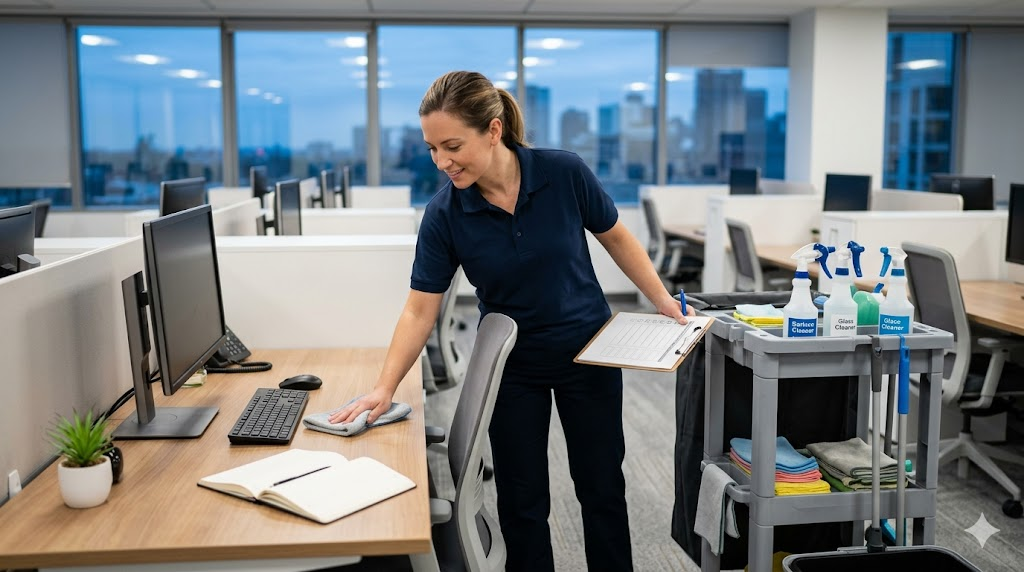
A clean office is more than just good looks. It directly affects the health of your employees, the impression you leave on clients, and the overall productivity of your team. Whether you manage a small startup or a large office building, having a proper office cleaning checklist for businesses keeps your space organized, hygienic, and professional every single day.
This guide walks you through what an effective office cleaning routine looks like, from daily cleaning tasks to deep clean sessions. You will also find guidance on how professional commercial cleaning services like First Service Janitorial can handle these responsibilities for your business.
Why Does Your Business Need a Cleaning Checklist?
Without a structured cleaning checklist, important tasks can easily be missed. High traffic areas may go without attention, communal spaces can become breeding grounds for germs, and restrooms may fall out of hygienic standards. A well-organized commercial cleaning checklist solves all of this.
Here is why a checklist matters for every office space:
- It ensures consistency across all areas of your office building.
- It helps office managers hold cleaning staff accountable.
- It reduces the spread of illness, resulting in fewer sick days for employees.
- It maintains the visual appeal of your workplace for clients and visitors.
- It supports a healthy work environment by removing food debris, dust, and bacteria.
- It keeps shared spaces like conference rooms, break rooms, and reception areas presentable at all times.
Whether you use an in-house team or hire a professional commercial cleaning company, a clear checklist is the foundation of a clean office.
What Should Be on a Daily Office Cleaning Checklist?
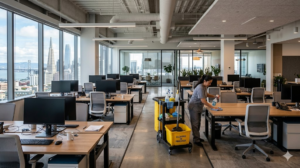
Daily cleaning tasks are the backbone of any office cleaning routine. These are the items that need attention every single workday to prevent buildup, maintain hygiene, and keep the space functional.
What Daily Tasks Cover General Office Areas?
- Empty trash cans and replace liners in all workstations and common areas.
- Empty trash bins and recycling bins throughout the office.
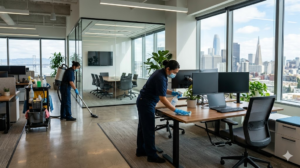
- Vacuum carpets in high traffic areas and workspaces.
- Sweep floors and mop hard floors or hard surface floors with appropriate cleaning products.
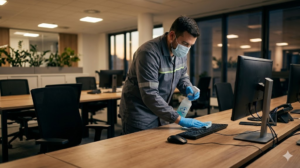
- Wipe down and clean and disinfect hard surfaces such as desks, countertops, and tables.
- Disinfect high touch surfaces including door handles, light switches, and elevator buttons.
- Spot clean walls near obvious places like doorways and hallways.
- Clean glass surfaces on doors and partitions.
- Refill soap dispensers, paper towel dispensers, and hand sanitizer stations.
- Restock toilet paper and paper towels in restrooms and break rooms.
What Daily Tasks Are Needed in Restrooms?
Restrooms are one of the most critical areas in any office. They require daily attention to maintain hygiene and prevent the spread of bacteria.
- Sanitize toilets, including toilet bowl interiors and toilet seats.
- Disinfect sinks using a disinfectant solution.
- Clean mirrors until streak-free.
- Refill hand soap and soap dispensers.
- Restock toilet paper and paper towels.
- Empty trash receptacles and replace liners.
- Wipe down counters and other fixtures.
- Check and refill hand dryers or paper towel dispensers.
- Clean and disinfect all high touch surfaces such as faucet handles and flush levers.
- Mop hard floors in restrooms.
What Should Be Done in the Break Room Every Day?
The break room is a communal space that can quickly become unsanitary if not tended to daily. Old food and food debris left behind are not just unpleasant; they attract pests and create health hazards.
- Wipe down countertops and all hard surfaces.
- Clean and disinfect kitchen appliances like coffee makers and microwaves.
- Remove old food from shared refrigerators.
- Clean water coolers to prevent bacterial buildup.
- Wash or wipe down cabinet exteriors to keep cabinets clean.
- Empty trash cans and trash receptacles.
- Sweep and mop hard floors.
- Refill soap dispensers and paper towels at sinks.
What Should a Weekly Office Cleaning Checklist Include?
Some cleaning tasks do not need to happen every day, but they should not be skipped for more than a week. Weekly tasks help maintain the overall cleanliness of your office space and address areas that daily cleaning might miss.
- Dust shelves, file cabinets, and other surfaces that accumulate dust over time.
- Vacuum carpets thoroughly, including corners and edges.
- Clean and disinfect conference rooms, including tables, chairs, and office equipment.
- Wipe down and disinfect office equipment such as keyboards, monitors, and phones.
- Clean light switches and door handles throughout the office building.
- Mop hard floors in all areas, not just restrooms and the break room.
- Clean the reception area, including any glass surfaces or display cases.
- Wipe down and disinfect water coolers.
- Sanitize communal spaces and shared spaces to maintain hygiene.
- Check and clean light fixtures and light bulbs if accessible.
- Clean and organize trash bins and recycling bins.
- Wipe down elevator buttons and other high touch surfaces in shared areas.
What Does a Monthly or Deep Clean Checklist Cover?
Monthly and periodic deep clean sessions go beyond the surface. They address areas that regular cleaning does not reach and help maintain hygiene at a deeper level. A deep clean is also important before or after major office events.
- Deep clean carpets using professional equipment to remove built-up debris and allergens.
- Clean and scrub tile grout and hard floor surfaces.
- Wash windows inside and clean glass surfaces throughout the office.
- Disinfect all trash receptacles and trash cans, not just empty them.
- Clean behind and underneath office equipment and furniture.
- Dust and wipe down light fixtures and ceiling areas.
- Clean and descale soap dispensers, hand dryers, and other fixtures.
- Scrub and sanitize toilets and toilet bowls thoroughly.
- Polish hard surface floors and mop hard floors with a deep-cleaning solution.
- Inspect and clean natural light sources like skylights or large windows.
- Remove and clean behind file cabinets and shelving units.
- Spot clean walls throughout the entire office space.
Professional services like First Service Janitorial offer specialized commercial care services that cover everything from carpet and upholstery cleaning to tile, grout, and hard floor care. These deep clean solutions go beyond what a routine janitorial service handles. You can learn more about their commercial care services to see what a complete deep cleaning program looks like for office buildings.
Which Areas of an Office Need the Most Attention?
Not every part of an office carries the same cleaning demands. Some spaces see more traffic or touch more hands than others. Knowing which areas to prioritize helps office managers allocate cleaning resources more effectively.
Why Does the Reception Area Require Special Attention?
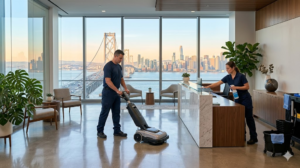
The reception area is the first thing clients and visitors see. A dirty or cluttered reception creates an immediate negative impression. Daily cleaning here should include vacuuming, dusting, disinfecting high touch surfaces, and ensuring glass surfaces are spotless. It also reflects directly on the professionalism and visual appeal of your entire business.
How Should Conference Rooms Be Cleaned?
Conference rooms are shared spaces that see heavy use throughout the workday. After each meeting, surfaces should be wiped down and trash receptacles emptied. Weekly deep cleaning of chairs, tables, and office equipment in these rooms keeps them ready for client presentations and internal meetings.
What Cleaning Tasks Are Critical in High Traffic Areas?
High traffic areas like hallways, entryways, and lobbies accumulate dirt and bacteria faster than other spaces. Floors should be swept and mopped daily, and door handles should be disinfected multiple times each day. Elevator buttons, in particular, are among the most touched surfaces in an office building and require regular disinfection.
What Cleaning Products Should Businesses Use?
Using the right, appropriate cleaning products is just as important as following a checklist. The wrong products can damage surfaces, leave harmful residue, or simply fail to clean and disinfect effectively.
Here are some important product-related guidelines:
- Use EPA-approved disinfectant solutions for all restroom surfaces, especially toilet seats and toilet bowls.
- Select eco friendly cleaning products where possible to support a healthier workplace and reduce environmental impact.
- Use separate cleaning cloths and mops for restrooms versus other office areas to avoid cross-contamination.
- Choose appropriate cleaning products for hard surfaces, glass surfaces, and carpet to avoid damage.
- Dilute disinfectant solution properly according to manufacturer instructions for maximum effectiveness.
- Keep hand soap stocked at all hand soap and soap dispenser stations.
First Service Janitorial uses eco-friendly options as part of its commitment to creating safer, healthier workplaces. Their disinfection services use EPA-approved solutions following CDC guidelines to ensure thorough pathogen control across your entire office space.
Should Businesses Hire a Professional Commercial Cleaning Service?
Many office managers find that keeping up with a full commercial cleaning checklist internally is challenging. Staff turnover, inconsistent standards, and lack of proper training can all compromise the quality of your cleaning routine. This is where a dedicated janitorial service makes a difference.
Hiring a professional commercial cleaning company offers several clear benefits:
- Consistent, trained professionals who follow a proven office cleaning routine.
- Flexible scheduling options, including daily cleaning, nightly janitorial, and one-time deep clean services.
- Access to professional-grade equipment for tasks like deep clean carpets and stripping hard floors.
- Accountability through quality assurance processes and management oversight.
- Employees enjoy a consistently clean and healthy work environment, which contributes to fewer sick days and better morale.
First Service Janitorial is a veteran-owned commercial cleaning company serving businesses across California, including San Jose, Santa Clara, Alameda, and beyond. They provide tailored janitorial services for offices, schools, healthcare facilities, government buildings, and more. Their team undergoes thorough background checks and ongoing training to maintain high standards on every job.
If you are ready to take the guesswork out of office cleaning, you can get a custom cleaning quote or book a call with their team to discuss a plan tailored to your facility.
Works Cited
Centers for Disease Control and Prevention. “Cleaning and Disinfecting Your Facility.” CDC, www.cdc.gov/coronavirus/2019-ncov/community/disinfecting-building-facility.html.
U.S. Environmental Protection Agency. “List N: Disinfectants for Use Against SARS-CoV-2 (COVID-19).” EPA, www.epa.gov/pesticide-registration/list-n-disinfectants-coronavirus-covid-19.
Occupational Safety and Health Administration. “Cleaning and Disinfection for Workplaces.” OSHA, www.osha.gov/coronavirus/control-prevention/cleaning-disinfection.