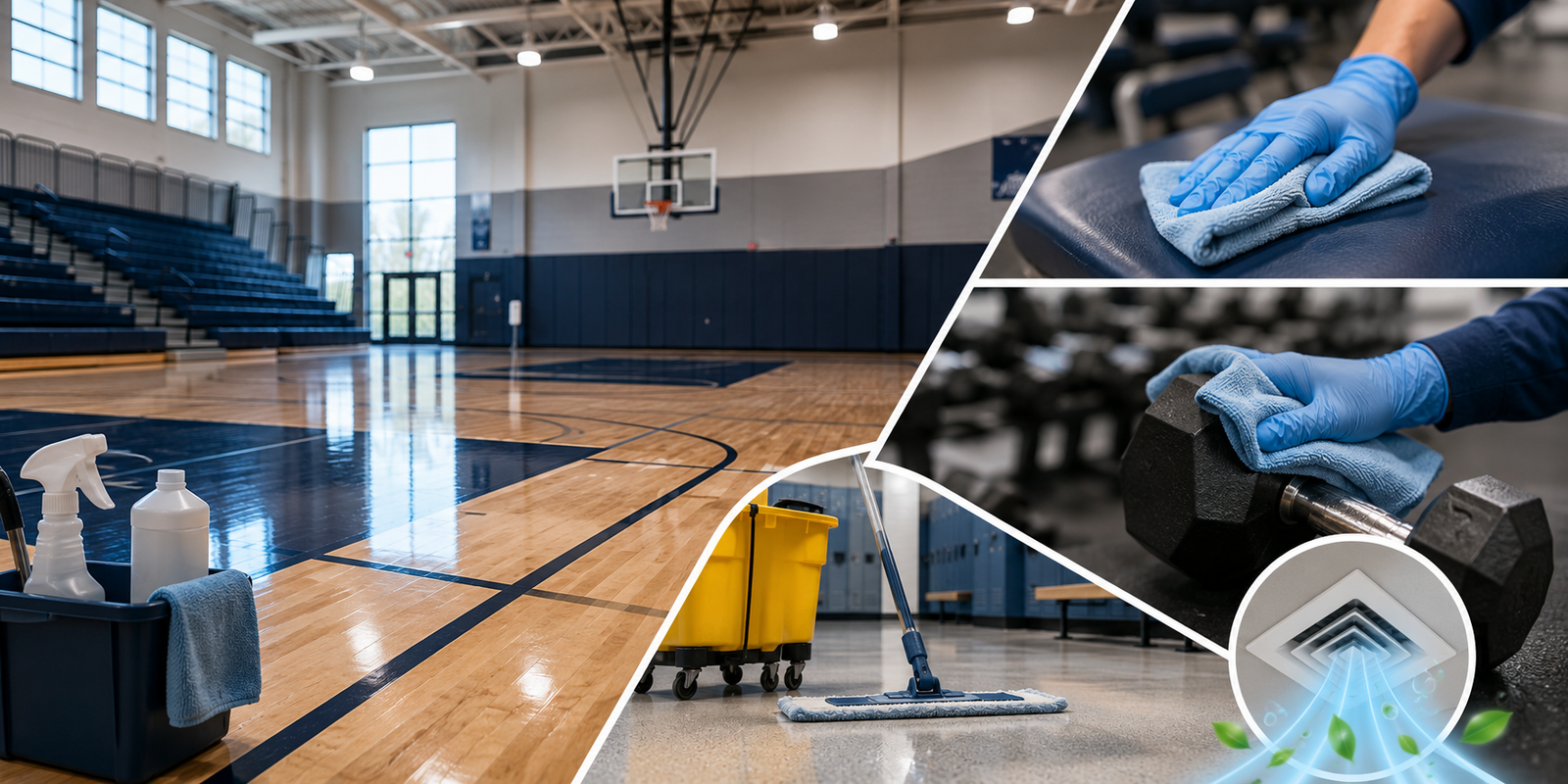
School gyms and athletic facilities are some of the busiest spaces on campus. Students attend physical education classes during the day, athletes practice after school, and families may gather for games or special events. With so many people moving through the same space, floors, equipment, locker rooms, restrooms, and seating areas can quickly collect dirt, sweat, moisture, and odors.
Effective gym and athletic facility cleaning in schools requires more than running a mop across the floor at the end of the day. Schools need a practical plan that identifies different surface types, sets cleaning frequencies based on actual use, and addresses the source of odors.
A customized cleaning plan can help schools maintain a cleaner and more welcoming athletic environment without interrupting classes, practices, or events. First Service Janitorial offers professional janitorial services for schools and other facilities throughout the Bay Area and across California.
Why Do School Gyms Require a Specialized Cleaning Plan?
A gym is different from a standard classroom. It often contains a combination of hard flooring, rubber surfaces, painted walls, padded equipment, bleachers, carpets, restrooms, locker rooms, and storage areas. Each surface may require a different cleaning method.
Gym facilities also experience frequent contact and heavy foot traffic. Students touch balls, mats, benches, door handles, water fountain controls, locker handles, and exercise equipment. Dirt may also enter the facility on athletic shoes, bags, and outdoor equipment.
A well-planned cleaning program helps address:
- Dust, grit, and debris on gym floors
- Sweat and body oils on shared equipment
- Moisture in locker rooms and shower areas
- Waste left behind after games and events
- High-touch surfaces used by multiple students
- Odors trapped in porous materials
- Restroom cleanliness and supply needs
- Dirt under bleachers, benches, and equipment
Schools can include athletic spaces as part of a broader school facility cleaning plan. The plan should reflect the number of students, facility layout, event schedule, flooring type, and frequency of use.
Which Gym and Athletic Facility Surfaces Need the Most Attention?
Not every part of a school gym requires the same cleaning frequency. The best approach is to divide the facility into zones and evaluate how often each zone is touched, used, or exposed to moisture.
How Should Gym Floors Be Cleaned?
Gym floors often represent a significant facility investment. Dirt and grit can act like sandpaper when students run across the surface, gradually affecting its appearance and finish. Spills can also create sticky areas or slipping concerns.
Routine floor care may include:
- Removing loose dirt and debris
- Spot-cleaning spills and marks promptly
- Damp cleaning with a surface-compatible solution
- Cleaning edges, corners, and areas beneath movable equipment
- Inspecting entrances for tracked-in dirt
- Scheduling periodic deep floor care when needed
The cleaning method should always match the floor material and the applicable maintenance instructions. Excess water or an unsuitable chemical may affect certain finishes. Schools should communicate flooring specifications to their cleaning provider before service begins.
First Service Janitorial provides floor and carpet care as part of its commercial cleaning options. A customized program can help schools balance daily appearance with long-term surface care.
Which Equipment and High-Touch Surfaces Should Be Prioritized?
Shared equipment can pass through many hands during a single class or practice. Cleaning teams should identify frequently touched points rather than treating every object as if it carries the same level of use.
Priority areas may include:
- Exercise machine handles and controls
- Weight-room benches
- Locker handles
- Door handles and push plates
- Railings and bleacher handrails
- Scorekeeper tables
- Wall padding
- Equipment cart handles
- Drinking fountain controls
- Reusable athletic mats
- Light switches and restroom fixtures
Visible soil should be removed before a surface is disinfected. Cleaning removes dirt and residue, while disinfection uses an appropriate product to address germs on compatible surfaces. These are related but separate steps.
Schools can use a high-touch surface protocol to document which areas require attention and how frequently they should be serviced.
How Should Locker Rooms, Showers, and Restrooms Be Addressed?
Locker rooms combine several cleaning challenges. They contain moisture, skin oils, used towels, athletic clothing, waste, and frequently touched fixtures. If moisture and residue remain, unpleasant odors can develop quickly.
A locker room cleaning checklist may include:
- Cleaning benches and locker exteriors
- Removing waste and replacing liners
- Cleaning sinks, counters, toilets, and urinals
- Addressing shower walls and floors
- Cleaning mirrors and dispensers
- Refilling approved restroom supplies
- Mopping floors with the appropriate solution
- Checking corners, drains, and hidden areas for buildup
- Reporting leaks or ventilation concerns to school personnel
Restrooms located beside the gym may need additional attention during tournaments, performances, or family events. Increased use should trigger additional cleaning checks rather than waiting for the standard end-of-day service.
What Cleaning Schedule Works Best for School Athletic Facilities?
There is no universal schedule for every school gym. A small elementary gym used for a few classes has different needs from a high school athletic complex that hosts practices, games, and community events.
The schedule should be based on occupancy, traffic, surface type, and observed conditions.
What Should Be Cleaned During the School Day?
Daytime cleaning focuses on immediate needs and areas that may become dirty before evening service. Depending on the school’s plan, daytime tasks may include:
- Responding to spills
- Removing overflowing waste
- Checking restrooms and supplies
- Spot-cleaning entrance areas
- Addressing visible soil on shared surfaces
- Cleaning after assemblies or special activities
- Reporting damage, leaks, or unusual odors
A day porter can support high-traffic facilities that cannot wait until the evening for cleaning attention. Schools comparing daytime and after-hours coverage can review the differences between day porter and nightly janitorial services.
What Should Be Completed After Classes and Practices?
After-hours cleaning allows teams to work more thoroughly without interfering with students or athletic activities. Typical nightly tasks may include:
- Removing trash and recycling
- Cleaning and inspecting gym floors
- Wiping frequently touched surfaces
- Cleaning restrooms and locker rooms
- Cleaning benches and accessible locker surfaces
- Vacuuming carpeted offices or meeting rooms
- Cleaning entrance glass
- Returning movable items to their assigned locations
- Recording unresolved maintenance concerns
Schools should leave enough time between the final practice and the next scheduled activity. Cleaning products must be used according to their label instructions, including any required contact time, ventilation, drying, or rinsing.
First Service Janitorial offers flexible scheduling, including evenings, nights, and weekends, to help reduce disruption to school operations.
When Should Schools Schedule Periodic Deep Cleaning?
Daily service controls routine dirt, but some areas require more detailed periodic attention. Deep cleaning can be scheduled during school breaks, before a new athletic season, after major events, or whenever inspections reveal buildup.
Periodic tasks may include:
- Detailed floor care
- Carpet cleaning in athletic offices
- Tile and grout cleaning
- Cleaning beneath movable equipment
- Detailed bleacher cleaning
- High dusting in accessible areas
- Cleaning wall padding and baseboards
- Removing buildup from locker room surfaces
- Cleaning interior glass and windows
- Addressing neglected storage areas
A back-to-school deep cleaning checklist can help facility managers organize these tasks before students return.
How Can Schools Control Gym and Locker Room Odors?
Odor control starts with removing the source. Air fresheners may temporarily cover an unpleasant smell, but they do not remove sweat, damp waste, standing moisture, or residue trapped on surfaces.
The most effective odor-control plan combines consistent cleaning with prompt facility reporting.
Which Conditions Commonly Cause Athletic Facility Odors?
Common odor sources include:
- Damp floors and shower areas
- Used towels or uniforms
- Waste that remains overnight
- Sweat residue on benches and equipment
- Dirty floor mats
- Moisture beneath movable objects
- Buildup around drains
- Soiled carpet near entrances
- Poor airflow
- Plumbing leaks or drainage problems
Cleaning staff can remove waste, clean surfaces, and report persistent moisture or drainage concerns. Repairs to plumbing, drains, or building ventilation should be handled by the appropriate school maintenance personnel.
How Can Odor Problems Be Prevented?
Schools can reduce recurring odors by:
- Removing waste at appropriate intervals
- Cleaning spills as soon as possible
- Keeping shower and locker room floors clean
- Allowing cleaned surfaces to dry
- Cleaning reusable mats according to their care instructions
- Separating clean supplies from used materials
- Checking hidden areas for dampness or residue
- Increasing cleaning frequency during busy athletic seasons
- Recording recurring odor locations
- Escalating leaks and airflow problems for maintenance review
A persistent odor should be investigated rather than hidden. The location, time, and conditions surrounding the smell may help identify its actual cause.
How Can Cross-Contamination Be Reduced During Gym Cleaning?
Cleaning tools and procedures should keep restroom soil from being transferred to gym floors, equipment, or other school areas. Schools should establish clear workflows for different cleaning zones.
Useful practices include:
- Using separate cleaning materials for restrooms and general areas
- Cleaning less-soiled areas before heavily soiled areas
- Changing cleaning cloths and mop materials as needed
- Washing or replacing reusable tools appropriately
- Following product label directions
- Avoiding the mixing of cleaning chemicals
- Keeping containers properly labeled
- Using required personal protective equipment
- Storing chemicals away from student access
- Cleaning visible dirt before disinfecting
First Service Janitorial’s disinfection services include pre-cleaning visibly dirty surfaces and applying disinfecting products according to dilution, contact-time, ventilation, and protective-equipment instructions.
How Can Schools Measure Cleaning Quality?
A gym may look clean from the doorway while still having debris under bleachers, residue on equipment, empty dispensers, or buildup in locker-room corners. Routine inspections help schools measure actual performance.
An athletic facility inspection can review:
- Floor appearance and condition
- Corners and edges
- High-touch surfaces
- Locker-room benches
- Restroom fixtures
- Shower areas
- Waste containers
- Supply levels
- Glass and mirrors
- Odors and moisture
- Areas under movable equipment
- Completion of scheduled tasks
The school and cleaning provider should agree on inspection frequency, documentation, and the process for correcting missed work. A written janitorial inspection checklist provides a useful framework that can be adjusted for athletic spaces.
How Can First Service Janitorial Support School Athletic Facilities?
First Service Janitorial provides adaptable cleaning programs for schools, gyms, fitness centers, event venues, and other commercial facilities across California. Available services include routine facility cleaning, floor and carpet care, restroom sanitation, trash and recycling, surface disinfection, window cleaning, and flexible scheduling.
A cleaning plan can be built around class schedules, after-school practices, weekend tournaments, school breaks, and seasonal deep-cleaning needs. This helps the facility receive the right level of care without applying the same schedule to every room.
Schools can request a custom cleaning quote to discuss their gym layout, current cleaning concerns, traffic patterns, floor types, and scheduling requirements.
Which Organizations Inform These Cleaning Practices?
Centers for Disease Control and Prevention. “When and How to Clean and Disinfect a Facility.” CDC, 16 Apr. 2024. Accessed 21 July 2026.
Centers for Disease Control and Prevention. “Everyday Actions for Schools to Prevent and Control the Spread of Transmissible Infections.” CDC, 25 Oct. 2024. Accessed 21 July 2026.
Environmental Protection Agency. “Guidance for Cleaning and Disinfecting.” EPA, 2020. Accessed 21 July 2026.
Occupational Safety and Health Administration. “Protecting Workers Who Use Cleaning Chemicals.” United States Department of Labor. Accessed 21 July 2026.