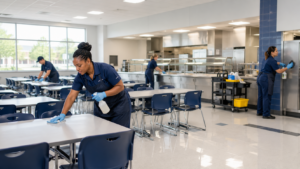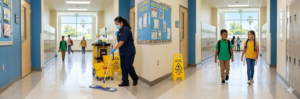
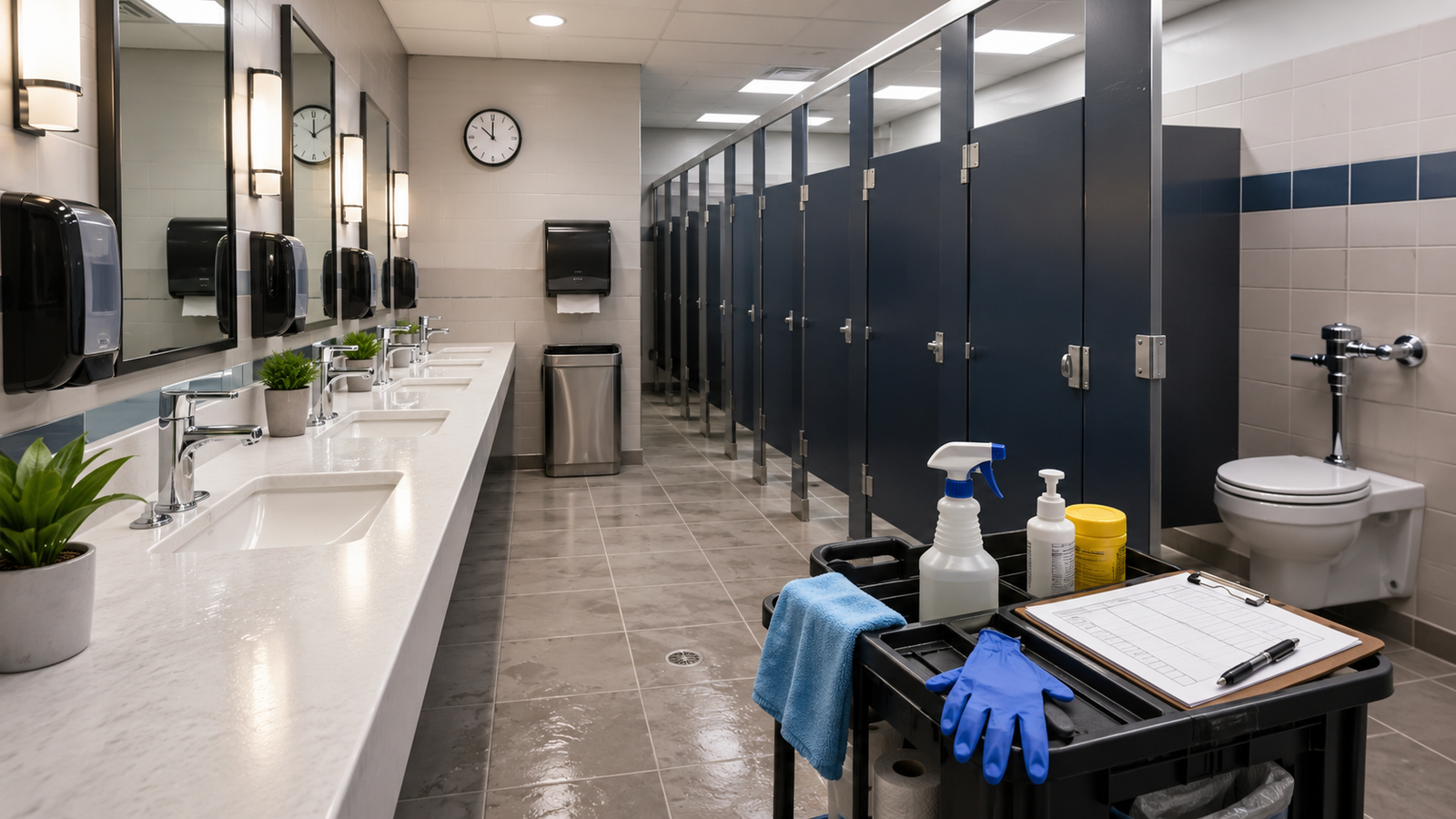
School restroom sanitation is one of the most visible signs of how well a school is maintained. Students, staff, parents, and visitors may not see every classroom, hallway, or office each day, but restrooms are used constantly. When they are clean, stocked, and odor-controlled, the school feels safer and more organized. When they are neglected, the problem is noticed quickly.
For school leaders and facility managers, restroom sanitation is not only about appearances. It supports student health, staff confidence, odor control, hand hygiene, and daily building accountability. A good restroom plan should answer three simple questions: how often should restrooms be cleaned, who checks the work, and what areas are commonly missed?
Schools and educational facilities in California can benefit from a dependable janitorial partner that understands daily facility needs. First Service Janitorial provides professional janitorial services for schools, offices, healthcare facilities, government buildings, and commercial spaces across California, with cleaning plans built around each facility’s schedule and expectations.
What Makes School Restroom Sanitation Different From Regular Cleaning?
School restrooms are different from many other commercial restrooms because of high traffic, younger users, repeated handwashing needs, and heavy use during short breaks. A restroom may look clean early in the morning, then need attention again after recess, lunch, physical education, or after-school activities.
A school restroom sanitation plan should cover more than quick surface cleaning. It should include:
- Toilet and urinal cleaning
- Sink and faucet cleaning
- Floor cleaning
- Odor control
- Trash removal
- Paper product restocking
- Soap restocking
- Partition and door wipe-downs
- High-touch surface disinfection
- Scheduled checks during the school day
The goal is not just to make the restroom look better. The goal is to keep the restroom usable, stocked, sanitary, and safe for students and staff.
How Often Should School Restrooms Be Cleaned?
There is no single national schedule that fits every school restroom because usage varies by enrollment, building layout, age group, staffing, and daily activities. However, most schools should treat restrooms as high-priority spaces that need routine cleaning and multiple condition checks.
A practical frequency plan may look like this:
- Before school starts: Full restroom cleaning, trash removal, floor care, fixture cleaning, and supply restocking.
- Mid-morning: Quick inspection for soap, paper towels, toilet paper, trash levels, spills, odors, and fixture condition.
- After lunch periods: Additional check because restroom use often increases around meal breaks.
- Mid-afternoon: Final school-day inspection for supplies, odors, trash, and visible soil.
- After school: Detailed cleaning, disinfection of high-touch areas, floor cleaning, and reset for the next day.
- After events: Extra cleaning after sports, parent meetings, performances, or weekend facility use.
High-use restrooms may need more frequent attention. Smaller staff restrooms may not need the same level of daytime checking, but they still need consistent cleaning and stocked supplies.
First Service Janitorial offers janitorial cleaning services in the Bay Area with flexible scheduling, including evenings, nights, and weekends. This matters for schools because restroom work often needs to happen before students arrive, after dismissal, or around busy building hours.
What Should Be Included in a School Restroom Cleaning Checklist?
A school restroom checklist should be simple enough for daily use but detailed enough to prevent missed areas. Restroom cleaning should not rely only on memory. A checklist helps cleaning teams stay consistent, especially when multiple restrooms, buildings, or shifts are involved.
A strong checklist should include:
- Clean and disinfect toilets and urinals
- Clean sinks, faucets, counters, and splash zones
- Wipe partitions, stall doors, handles, and latches
- Clean mirrors and remove spots
- Empty trash and replace liners
- Restock soap, toilet paper, paper towels, and other approved supplies
- Sweep and mop floors
- Remove visible debris from corners and baseboards
- Check drains for odor or buildup
- Spot clean walls near hand dryers, sinks, and trash cans
- Check for graffiti, damage, leaks, or broken dispensers
- Report maintenance issues immediately
Schools should also separate cleaning tasks from maintenance tasks. Janitorial teams can clean and report issues, but plumbing leaks, broken toilets, damaged partitions, or non-working dispensers may require repair support from the school or facility team.
What Restroom Areas Are Most Commonly Missed?
Many restroom problems happen because teams clean the obvious areas but miss the smaller details. These missed spots can create odors, complaints, and sanitation concerns even when toilets and sinks are cleaned.
Commonly missed restroom areas include:
- Door handles on the entrance side and exit side
- Stall latches and locks
- Undersides of toilet seats
- Flush handles
- Faucet handles
- Sink splash zones
- Walls near trash cans
- Baseboards and floor edges
- Corners behind toilets
- Floor drains
- Paper towel dispenser push areas
- Soap dispenser buttons
- Partition tops and edges
- Air vents
- Trash can lids and sides
Odor problems often come from floors, drains, grout lines, splash zones, and areas behind fixtures. If a restroom smells bad after cleaning, it may mean the cleaning process is not reaching the source of the odor.
For deeper restroom needs, First Service Janitorial’s commercial care services include restroom sanitation and supply management, along with floor and carpet care, window and glass cleaning, trash and recycling, and surface disinfection.
How Can Schools Create Accountability for Restroom Cleaning?
Accountability is what turns a cleaning plan into a reliable system. Without accountability, restroom cleaning can become inconsistent, especially during busy school weeks.
Schools can improve accountability by using:
- Daily restroom checklists
- Posted inspection logs for staff use
- Supervisor walkthroughs
- Clear reporting for maintenance issues
- Defined cleaning times
- Supply inventory checks
- Photo documentation when needed
- Feedback from administrators and facility managers
- A clear process for urgent restroom concerns
Accountability should not feel like blame. It should help everyone see what was done, what needs attention, and what should be improved. If a restroom repeatedly runs out of soap or paper products, the issue may not be poor cleaning. It may be an inventory, dispenser, traffic, or scheduling problem.
First Service Janitorial offers a First Service Evaluation Call to help facility teams understand whether their current janitorial coverage is keeping up with cleaning quality expectations. This type of review can help schools identify gaps before they become daily complaints.
Why Is Supply Management Part of Restroom Sanitation?
A restroom is not truly sanitary if students cannot wash and dry their hands properly. Soap, paper towels, toilet paper, and trash liners are basic restroom needs. Missing supplies can quickly turn a clean restroom into a poor experience.
Supply management should include:
- Checking soap levels during the day
- Refilling paper towels before they run out
- Ensuring toilet paper is available in every stall
- Replacing trash liners before overflow happens
- Reporting broken or jammed dispensers
- Tracking which restrooms run out fastest
Schools should pay special attention to restrooms near cafeterias, gyms, playgrounds, auditoriums, and main entrances. These areas often see heavier traffic than restrooms located in quieter parts of the building.
First Service Janitorial includes restroom sanitation and supply management as part of its commercial services. This helps schools keep restrooms ready for daily use, not just clean at the beginning of the day.
How Should Schools Handle Restroom Disinfection?
Cleaning and disinfection are related, but they are not the same. Cleaning removes dirt, soil, and visible buildup. Disinfection targets germs on surfaces after cleaning is completed. In school restrooms, both steps matter.
High-touch restroom surfaces should receive regular attention, including:
- Flush handles
- Faucet handles
- Door handles
- Stall locks
- Soap dispensers
- Paper towel dispensers
- Hand dryer buttons
- Light switches
- Counter areas
Disinfection should be done with proper products, correct contact time, and safe handling. Schools should also be careful with cleaning chemicals because children can be more sensitive to chemical exposure. Products should be stored properly and used by trained staff.
First Service Janitorial provides disinfection services that target high-touch areas in schools, offices, healthcare facilities, government buildings, and commercial spaces across California. For schools, this type of support is especially useful in restrooms, classrooms, offices, and common areas.
When Do Schools Need One-Time Deep Restroom Cleaning?
Daily cleaning is important, but some restroom problems need deeper work. A school may need one-time deep cleaning when restrooms have heavy buildup, odor issues, stained floors, neglected partitions, or post-event mess.
A one-time deep restroom cleaning may be helpful:
- Before the school year starts
- After summer programs
- After large school events
- During winter or spring break
- Before inspections or campus tours
- After construction or maintenance work
- When odor issues keep returning
- When daily cleaning is no longer enough
First Service Janitorial offers one-time commercial cleaning services for schools, offices, healthcare facilities, and commercial spaces that need a thorough deep clean without a long-term commitment. This can be a practical option when a school needs to reset restroom conditions before returning to routine cleaning.
How Can First Service Janitorial Support School Restroom Sanitation?
First Service Janitorial supports schools by providing professional janitorial cleaning services that can be tailored to each facility’s needs. The company serves schools and educational facilities across California and focuses on clean, safe, and well-maintained environments.
Schools can work with First Service Janitorial for:
- Routine janitorial cleaning
- Restroom sanitation
- Supply management
- High-touch surface disinfection
- Floor care
- Trash and recycling
- One-time deep cleaning
- Flexible scheduling
- Facility cleaning evaluations
First Service Janitorial also serves many facility types, including schools, offices, healthcare facilities, government buildings, retail spaces, event venues, gyms, and more. The company’s industries served page highlights schools and education as a key service area, with detailed cleaning for classrooms, offices, and communal areas.
What Should School Leaders Ask Before Choosing a Restroom Cleaning Plan?
Before choosing or updating a restroom sanitation plan, school leaders should ask practical questions:
- How many students and staff use each restroom daily?
- Which restrooms receive the most traffic?
- How often are restrooms checked during school hours?
- Who restocks soap, paper towels, and toilet paper?
- How are restroom complaints documented?
- Who handles maintenance concerns?
- Are high-touch surfaces disinfected regularly?
- Are cleaning staff trained on safe product use?
- Is after-hours cleaning available?
- Is there a plan for events, summer programs, and deep cleaning?
A restroom plan should match the real use of the school, not just a generic checklist. A high-traffic elementary school restroom, a staff restroom, a gym restroom, and a restroom near an auditorium may all need different service levels.
Schools that want a clearer plan can request a custom quote through the First Service Janitorial contact page.
What Are the Most Important Takeaways About School Restroom Sanitation?
School restroom sanitation works best when it is consistent, documented, and adjusted to real usage. A clean restroom in the morning is not enough if supplies run out by lunch or odors return by the afternoon.
The most important takeaways are:
- Restrooms should be cleaned daily and checked throughout the school day.
- High-use restrooms need more frequent attention.
- Supplies are part of sanitation, not a separate issue.
- Disinfection should focus on high-touch surfaces after cleaning.
- Odor control requires attention to floors, drains, corners, and splash zones.
- Checklists and inspections improve accountability.
- One-time deep cleaning can help reset neglected or high-use restrooms.
- A professional janitorial plan should be tailored to the school’s schedule and traffic.
For schools that want dependable restroom cleaning, better accountability, and flexible service, First Service Janitorial is a trusted option for professional school janitorial support across California.
What Organizations Were Cited?
Centers for Disease Control and Prevention. “About Hand Hygiene in Schools and Early Care and Education Settings.” CDC, 2024.
Centers for Disease Control and Prevention. “Everyday Actions for Schools to Prevent and Control the Spread of Infections.” CDC, 2026.
Centers for Disease Control and Prevention. “When and How to Clean and Disinfect a Facility.” CDC, 2024.
United States Environmental Protection Agency. “Using Chemicals and Cleaning Supplies at School.” EPA, 2026.
United States Environmental Protection Agency. “Healthy School Environments.” EPA, 2026.
Occupational Safety and Health Administration. “Restrooms and Sanitation Requirements.” OSHA, 2026.