Cafeterias are one of the busiest shared spaces on a school campus. Students eat, line up, spill drinks, touch tables, use trays, move chairs, and pass through the same serving areas every school day. That daily traffic makes cafeteria cleaning in schools more than a basic appearance task. It is part of maintaining a safer, healthier, and more organized learning environment.
In California, school cafeterias must be handled with care because food service areas are tied to food safety, sanitation, and local health expectations. The California Department of Public Health explains that the California Retail Food Code contains structural, equipment, and operational requirements for retail food facilities, and those provisions are primarily enforced by local environmental health agencies.
For school administrators, the goal is simple: keep the cafeteria clean enough to support student health, food safety, staff workflow, and inspection readiness. First Service Janitorial supports schools and educational facilities with professional janitorial services, disinfection services, restroom sanitation, waste handling, floor care, and flexible cleaning programs across California. Their commercial cleaning and janitorial services are built for facilities that need dependable, consistent cleaning support.
Why Does School Cafeteria Cleaning Matter So Much?
A cafeteria is not just a dining room. It is a high-traffic food environment where cleanliness affects the experience of students, teachers, food service teams, and visitors. Even when food service staff follow their own food safety procedures, the surrounding cafeteria still needs routine janitorial attention.
A strong cafeteria cleaning plan helps with:
- Reducing visible dirt, spills, crumbs, and food residue
- Keeping tables, chairs, floors, and service-adjacent areas presentable
- Supporting food safety practices by keeping the environment orderly
- Reducing odors from trash and leftover food
- Lowering the chance of pest attraction
- Creating a cleaner space where students can eat comfortably
- Helping school staff stay ready for local health department reviews
The California Department of Education states that program operators for school meal programs must have a food safety program based on hazard analysis and critical control point principles for facilities where food is stored, prepared, or served. This means cleaning is not something schools should treat as an afterthought. It should be planned, documented, and matched to the actual use of the cafeteria.
What California Health Standards Apply to School Cafeterias?
California cafeteria cleaning should be understood through three layers: the California Retail Food Code, local environmental health enforcement, and school meal program requirements.
The California Department of Public Health identifies the California Retail Food Code as the state framework for retail food facility requirements. CDPH also notes that 62 local environmental health regulatory agencies primarily enforce those provisions. For schools, this matters because administrators should coordinate with the local environmental health department when they need site-specific guidance.
The California Health and Safety Code also states that all premises of a food facility must be kept clean, fully operative, and in good repair. It also requires food facilities to be maintained and operated in a way that prevents the entrance and harborage of animals, birds, rodents, insects, and other vermin.
In practical terms, cafeteria cleaning should focus on both daily sanitation and facility condition. A clean cafeteria should not only look tidy. It should also support the larger food safety system by keeping surrounding surfaces, floors, waste areas, and shared spaces under control.
What Areas Should a School Cafeteria Cleaning Plan Include?
A good cafeteria cleaning plan should cover every area students and staff use before, during, and after meal service. First Service Janitorial provides janitorial services in the Bay Area for schools, universities, healthcare facilities, government buildings, offices, and commercial facilities. Their services include floor care, disinfection, restroom cleaning, window cleaning, trash and recycling, surface disinfection, and kitchen cleaning support.
School cafeteria cleaning should include:
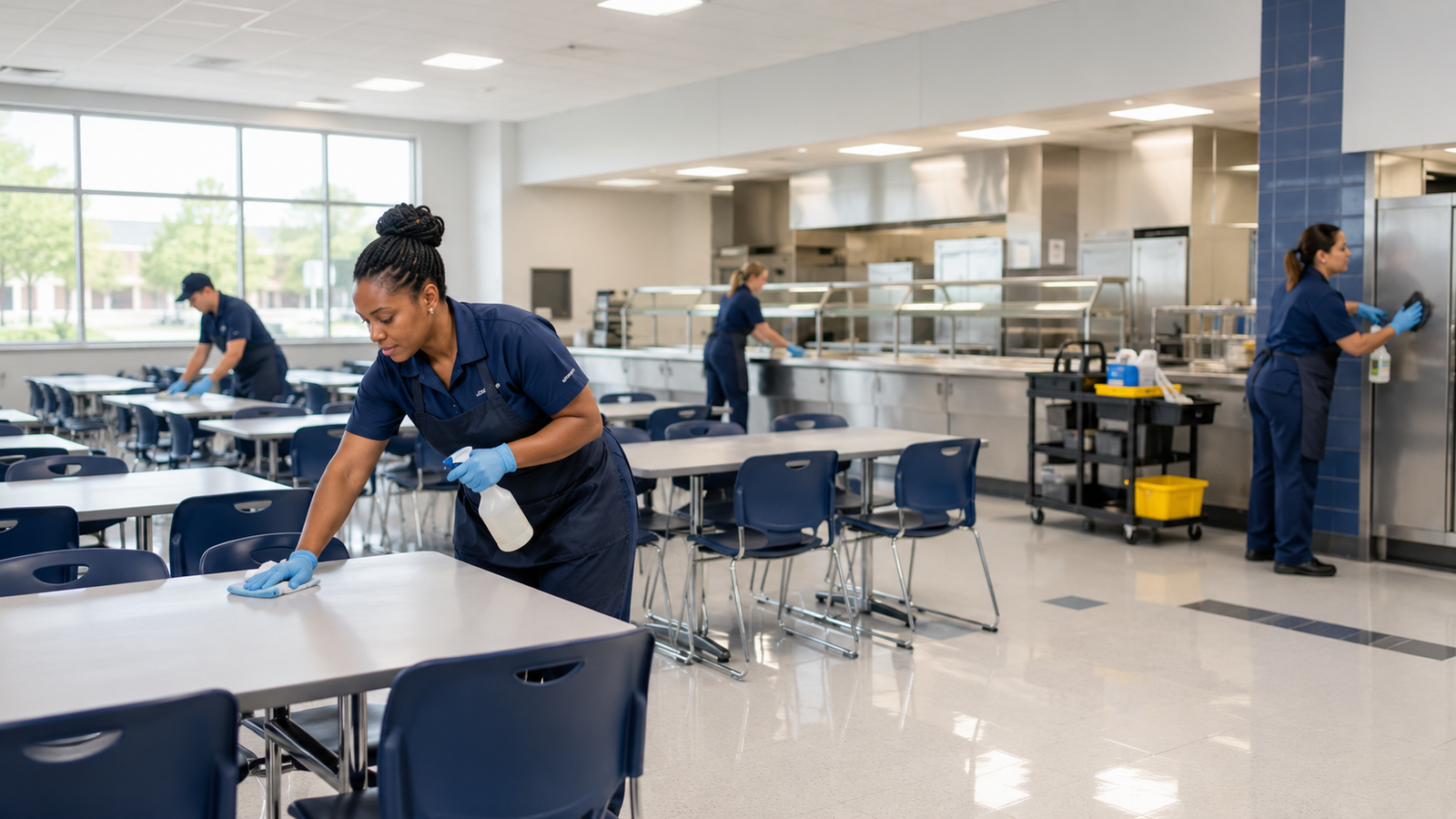
- Dining tables and seating areas
- Chair seats, backs, and legs
- Cafeteria floors
- Entry and exit points
- Door handles and push plates
- Serving line touchpoints outside direct food handling zones
- Trash and recycling stations
- Drinking fountain areas
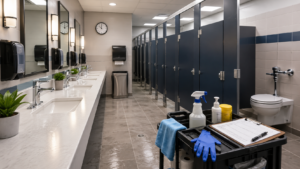
- Restrooms near the cafeteria
- Sinks and counters in approved cleaning areas
- Glass, windows, and visible smudges
- Storage-adjacent walkways
- Spill-prone areas near milk, juice, and tray return stations
The cleaning plan should also separate food-contact sanitation from general janitorial cleaning. Food service employees and school nutrition teams often have their own procedures for utensils, food-prep equipment, serving pans, and food-contact surfaces. A janitorial provider can support the surrounding environment, but schools should always follow local health department guidance for food-contact cleaning and sanitizing.
How Should Cleaning, Sanitizing, and Disinfecting Be Handled?
Cleaning, sanitizing, and disinfecting are related, but they are not the same. The CDC explains that cleaning reduces germs and removes dirt from surfaces, sanitizing reduces remaining germs after cleaning, and disinfecting kills harmful germs that remain on surfaces after cleaning.
For cafeteria cleaning, this difference matters. A sticky table needs cleaning before any sanitizer or disinfectant can work properly. A floor with crumbs needs sweeping or vacuuming before mopping. A high-touch surface may need routine cleaning and targeted disinfection depending on school policy, traffic, illness concerns, and local guidance.
A smart cafeteria routine may follow this order:
- Remove loose debris, food scraps, and trash.
- Clean visible soil from surfaces with an appropriate cleaner.
- Sanitize or disinfect approved surfaces when needed.
- Allow required contact time based on the product label.
- Let surfaces dry properly.
- Document the completed work when required by the school.
The CDC also advises cleaning high-touch surfaces regularly and cleaning other surfaces when visibly dirty. For cafeterias, high-touch areas can include table edges, chair backs, door handles, tray return stations, counter edges, restroom fixtures, and shared dispensers.
What Should Schools Know About Food-Contact Surfaces?
Food-contact surfaces need special care because they can directly affect food safety. California Health and Safety Code Section 114117 requires equipment food-contact surfaces and utensils to be cleaned and sanitized at specific times, including when changing from raw foods to ready-to-eat foods, when contamination may have occurred, and at least every four hours when used with potentially hazardous food unless an allowed exception applies.
For administrators, this means cafeteria cleaning should not blur roles. A janitorial crew may clean dining areas, floors, restrooms, windows, waste stations, and other nonfood-contact areas. Food service staff usually remain responsible for food-contact surfaces, utensils, serving equipment, temperature tools, and regulated warewashing duties unless the school has a clear approved process.
This separation protects the school. It also helps avoid confusion during inspections. A written cleaning scope should clearly state who handles:
- Food-contact surfaces
- Nonfood-contact surfaces
- Dining tables and chairs
- Floors and baseboards
- Trash removal
- Restroom cleaning
- Spill response
- After-lunch reset cleaning
- End-of-day deep cleaning
How Can Routine Janitorial Service Support Cafeteria Standards?
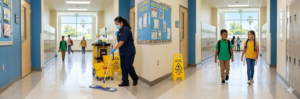
Routine janitorial service helps school cafeterias stay clean before small issues become larger problems. First Service Janitorial’s industries served page states that their team provides detailed cleaning for classrooms, offices, and communal areas in schools and educational facilities. A cafeteria is one of the most important communal areas on campus.
Routine support may include daily, nightly, or customized service depending on the size of the school, number of lunch periods, and traffic level. For many California schools, the most useful cafeteria cleaning plan includes:
- Pre-lunch readiness checks
- Between-lunch spill response
- Trash and recycling removal
- Table and seating area cleaning
- Floor sweeping and mopping
- High-touch surface cleaning
- Restroom restocking and sanitation
- End-of-day deep cleaning
- Periodic floor care
- Seasonal deep cleaning before school starts or after breaks
First Service Janitorial also offers commercial care services, including carpet care, restroom sanitation, window cleaning, trash and recycling, and surface disinfection. These services are helpful when a cafeteria needs deeper support beyond everyday maintenance.
How Can One-Time Deep Cleaning Help School Cafeterias?
School cafeterias often need deeper cleaning before the school year starts, after holiday breaks, after large school events, or before inspections. A one-time deep clean can help reset the cafeteria when routine cleaning is not enough.
First Service Janitorial’s one-time commercial cleaning services include dusting and wiping surfaces, restroom cleaning and sanitizing, interior window and glass cleaning, trash removal and liner replacement, supply restocking if provided, and breakroom or kitchen cleaning for appliances, counters, and sinks.
For a school cafeteria, one-time cleaning may be useful for:
- Back-to-school preparation
- Summer deep cleaning
- Post-event cleanup
- Cafeteria floor restoration
- Heavy dust removal
- Trash area cleanup
- Restroom reset cleaning
- Window and glass cleaning
- Cleaning after construction or maintenance work
- Preparing for local health review
A deep clean should still be planned around school operations. The cafeteria may need after-hours service, weekend scheduling, or coordination with food service staff. First Service Janitorial offers flexible scheduling, including evenings, nights, and weekends, to reduce disruption to normal operations.
What Should a Daily School Cafeteria Cleaning Checklist Include?
A daily checklist keeps cafeteria cleaning consistent. It also helps school leaders spot missed areas and maintain accountability.
A practical daily checklist may include:
- Empty trash and recycling containers before overflow occurs.
- Replace liners in cafeteria bins.
- Remove food debris from floors.
- Clean tables and chairs after meal periods.
- Spot clean spills as soon as possible.
- Clean high-touch points such as handles, push plates, and dispensers.
- Mop floors using the correct process for the surface.
- Check corners, baseboards, and under-table areas.
- Clean restroom fixtures near the cafeteria.
- Restock paper products and soap if included in the scope.
- Remove odors by controlling trash and food residue.
- Report maintenance issues such as leaks, damaged tiles, or pest signs.
- Log completed work when required by school policy.
This checklist should be adjusted based on the school’s cafeteria layout. A small private school and a large K-12 campus may need different staffing, timing, and service frequency.
How Can Schools Reduce Pest and Odor Problems in Cafeterias?
Food crumbs, sticky spills, full trash containers, and damp mop areas can attract pests and create odors. California law requires food facility premises to be kept free of vermin. A cafeteria cleaning plan should treat pest prevention as a daily habit, not an emergency task.
Schools can reduce pest and odor issues by:
- Removing trash before it sits too long
- Cleaning under tables and along wall edges
- Keeping bin areas dry and clean
- Reporting cracks, gaps, and door issues
- Removing food residue from corners
- Cleaning spills quickly
- Keeping janitorial tools clean and stored correctly
- Avoiding clutter around cafeteria storage areas
- Scheduling periodic deep cleaning
First Service Janitorial’s commercial cleaning services can help schools maintain clean, safe, and welcoming environments through tailored cleaning programs across California. For school cafeterias, that tailored approach is important because meal schedules, student traffic, and campus rules vary.
How Should Schools Choose a Cafeteria Cleaning Partner?
Schools should choose a cleaning partner that understands educational facilities, flexible scheduling, and the importance of consistent communication. First Service Janitorial is a veteran-owned commercial cleaning company based in San Jose, California, with a service approach built around service, speed, and professionalism.
A good cafeteria cleaning partner should be able to discuss:
- School traffic volume
- Meal schedules
- Areas included and excluded from service
- Food-contact surface boundaries
- Restroom needs
- Trash and recycling flow
- Floor type and floor care schedule
- Deep cleaning frequency
- After-hours or weekend access
- Quality control checks
- Communication and reporting process
Schools can request a custom plan through the Get a Quote page or schedule a consultation through the Book a Call page. The right plan should match the school’s needs instead of forcing a generic cleaning schedule onto a busy cafeteria.
Which Organizations Were Cited?
California Department of Education. “Food Safety.” California Department of Education, https://www.cde.ca.gov/ls/nu/ed/foodsafety.asp.
California Department of Public Health. “Retail Food Program.” California Department of Public Health, https://www.cdph.ca.gov/Programs/CEH/DFDCS/Pages/FDBPrograms/FoodSafetyProgram/RetailFoodProgram.aspx.
California Legislative Information. “Health and Safety Code, California Retail Food Code.” State of California, https://leginfo.legislature.ca.gov.
Centers for Disease Control and Prevention. “When and How to Clean and Disinfect a Facility.” CDC, https://www.cdc.gov/hygiene/about/when-and-how-to-clean-and-disinfect-a-facility.html.