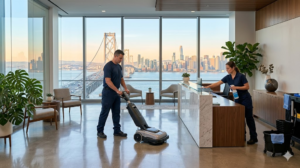
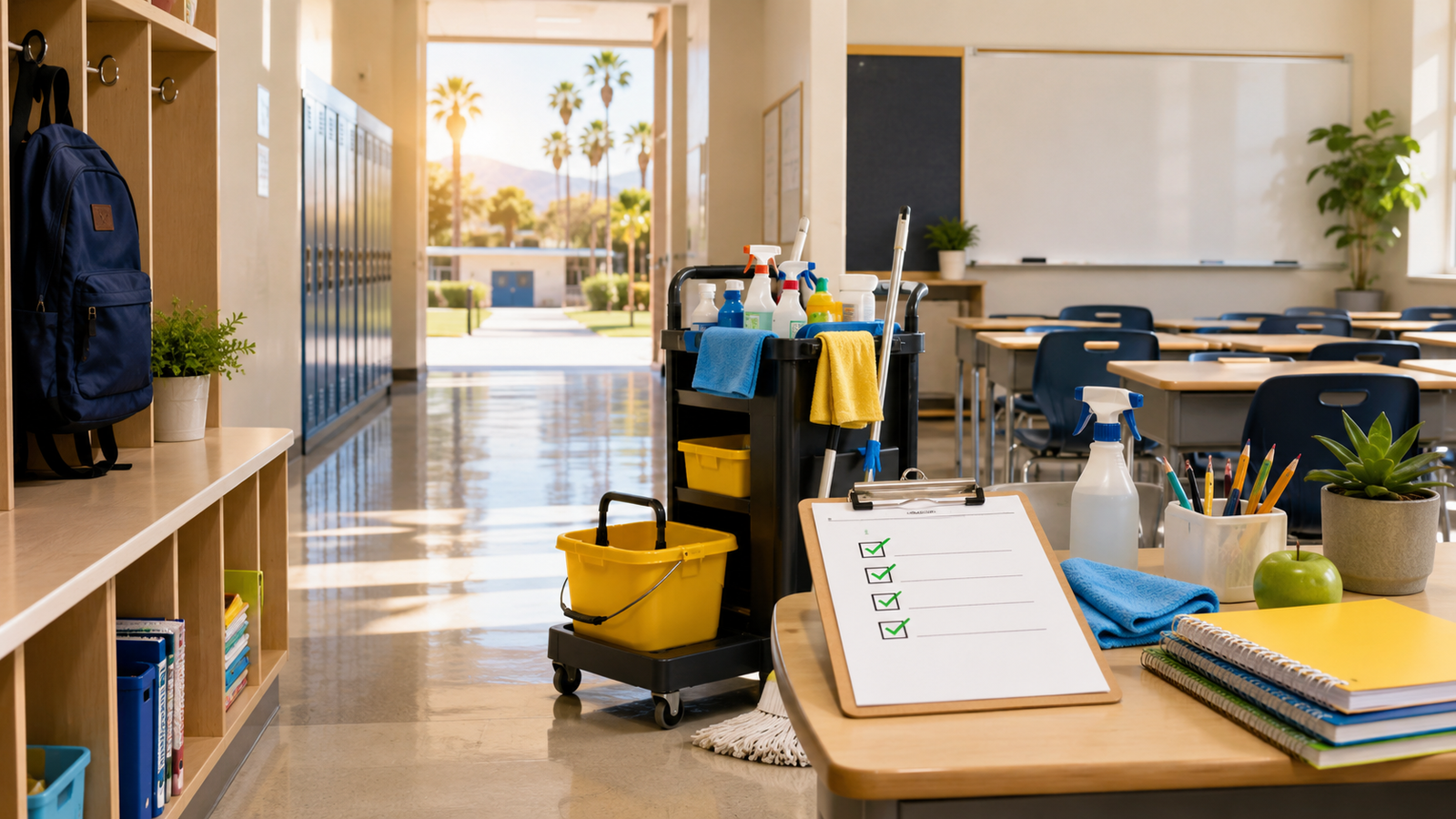
A clean campus matters before the first bell rings. For California K-12 facilities, back-to-school cleaning is not just about making classrooms look neat. It is about giving students, teachers, staff, and visitors a fresh, organized, and healthier place to start the year.
Before day one, schools need more than quick wiping and trash removal. They need a planned deep clean that covers classrooms, restrooms, offices, common areas, floors, windows, high-touch surfaces, and staff spaces. First Service Janitorial provides professional janitorial services, commercial care services, disinfection services, and one-time cleaning for schools, offices, healthcare, government, and commercial facilities across California.
Why Should California K-12 Facilities Schedule a Deep Clean Before Day One?
The weeks before school starts are the best time to reset the entire facility. Furniture has been moved, summer projects may have left dust behind, and rooms may have sat unused or partially used for weeks. A back-to-school deep clean helps facility managers catch what daily cleaning may miss.
A strong start should focus on:
- Clean classrooms that feel ready for learning
- Restrooms that are sanitized, stocked, and odor controlled
- Offices and front desks that make a good first impression
- Floors and carpets that are refreshed before daily traffic returns
- Shared spaces that are safer and more welcoming
- High-touch surfaces that receive careful attention
First Service Janitorial serves schools and educational facilities, including classrooms, offices, and communal areas, with cleaning support that helps students and staff return to a clean, safe, and welcoming environment.
What Should Be Included in a Back-to-School Deep Clean Checklist?
A school deep clean should be organized by area. That makes it easier to inspect, assign tasks, and confirm completion before students arrive.
What Should Be Cleaned in Classrooms?
Classrooms need detailed cleaning because they are used heavily every day. Before day one, each classroom should be cleaned from top to bottom.
The checklist should include:
- Desks, tables, and chairs
- Teacher stations and supply areas
- Door handles and light switches
- Cabinets, cubbies, and storage surfaces
- Whiteboard trays and ledges
- Window sills and interior glass where applicable
- Trash and recycling areas
- Floors, rugs, and carpeted areas
- Shared learning surfaces
The goal is to remove dust, dirt, and residue before daily use begins. For younger students, extra attention should be given to shared surfaces because students often touch desks, chairs, shelves, and classroom supplies throughout the day.
What Should Be Cleaned in Restrooms?
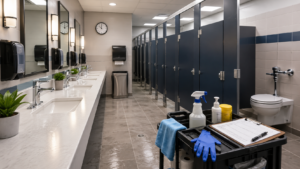
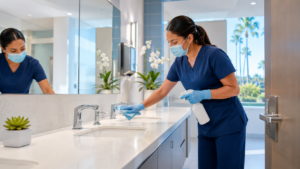
Restrooms should be a top priority before school starts. Even if they were cleaned during summer, they need a full readiness check before students and staff return.
The restroom checklist should include:
- Toilets and urinals
- Sinks, faucets, and counters
- Stall doors, partitions, and handles
- Soap, paper, and supply dispensers
- Mirrors and interior glass
- Floors, corners, and drains
- Trash containers and liners
- Touchpoints near doors and fixtures
- Odor sources and visible buildup
First Service Janitorial lists restroom sanitation and supply management as part of its commercial care services, along with routine cleaning, floor care, window and glass cleaning, and flexible scheduling.
What Should Be Cleaned in Offices and Staff Areas?
Front offices, staff lounges, and administrative areas should be ready before families and employees return. These areas are often the first places visitors see.
The checklist should include:
- Reception desks and counters
- Office floors and carpets
- Phones, shared counters, and work surfaces
- Breakroom counters, sinks, and appliance exteriors
- Staff tables and chairs
- Trash and recycling stations
- Interior glass and entry surfaces
- Restroom access areas near staff spaces
For schools that need a focused reset before reopening, a one-time deep clean can help cover dusting, horizontal and vertical surface wiping, restroom cleaning and sanitizing, interior glass, trash removal, liner replacement, and breakroom or kitchen cleaning.
What Should Be Cleaned in Hallways and Common Areas?
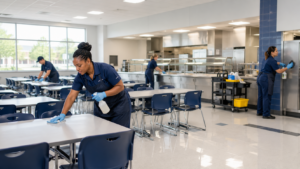
Hallways, lobbies, cafeterias, libraries, and shared spaces carry the most traffic once school begins. These areas should be cleaned before day one because they set the tone for the whole campus.
The checklist should include:
- Entry doors and handles
- Interior windows and glass panels
- Floors and baseboards
- Stair rails and handrails
- Drinking fountains where applicable
- Benches, counters, and tables
- Trash and recycling containers
- Wall marks and visible dust
- High-touch points near main traffic paths
For larger facilities, a janitorial inspection checklist can help confirm which areas were completed and which areas need follow-up before reopening.
What Should Be Cleaned in Gyms and Shared Activity Spaces?
Gyms, multipurpose rooms, locker areas, and activity spaces need special attention because many students use the same surfaces in a short period of time.
The checklist should include:
- Floors and entry mats
- Benches and seating areas
- Handles, doors, and switches
- Shared tables and counters
- Locker room touchpoints where applicable
- Trash containers and supply areas
- Interior glass and visible surfaces
First Service Janitorial serves gym and fitness centers, event venues, schools, offices, and other facility types, which makes a school-wide cleaning plan easier to organize when a campus has multiple shared-use areas.
How Should High-Touch Surfaces Be Handled Before Students Return?
High-touch surfaces deserve a separate checklist because they are used repeatedly throughout the day. The Centers for Disease Control and Prevention says high-touch surfaces are more likely to spread germs and should be cleaned regularly, especially in high-traffic areas. The agency also recommends cleaning surfaces before sanitizing or disinfecting because dirt can make sanitizing or disinfecting chemicals less effective.
A school high-touch checklist should include:
- Door handles
- Light switches
- Desks and tables
- Restroom fixtures
- Stair rails and handrails
- Shared counters
- Touchpads and shared electronics where applicable
- Office counters
- Cafeteria tables
- Entry points
For a deeper look at this topic, First Service Janitorial also has a helpful article on the high-touch surface protocol.
How Should Disinfection Be Planned Without Overdoing It?
Cleaning and disinfection are related, but they are not the same. Cleaning removes dirt, residue, and many germs from surfaces. Disinfection is used to kill harmful germs that remain after cleaning. The CDC explains that disinfecting can further lower disease spread risk when used after cleaning, especially where people have obviously been ill or when health conditions call for it.
California school guidance also states that routine daily cleaning with water and mild detergent is generally sufficient, while additional sanitization may be needed during certain outbreaks. If disinfectants are used, California guidance recommends asthma-safer products and proper staff training.
Before day one, schools should:
- Clean first before any disinfectant is applied
- Focus disinfection on appropriate high-touch and concern areas
- Follow product label directions
- Use products appropriate for the surface
- Confirm proper contact time
- Avoid unnecessary chemical use
- Keep cleaning products securely stored
- Train staff on proper procedures
First Service Janitorial’s disinfection services include cleaning visibly dirty surfaces first, applying disinfectants according to manufacturer guidelines, following correct dilution and contact time, and using EPA-approved disinfectants.
How Should Floors, Carpets, Windows, and Glass Be Prepared?
Floors and glass make a big visual difference on day one. Even when classrooms are organized, dirty floors or smudged glass can make the facility feel unprepared.
A back-to-school floor and glass checklist should include:
- Vacuuming carpets and rugs
- Cleaning hard floors
- Addressing visible floor marks
- Cleaning entry areas
- Wiping interior glass
- Cleaning classroom door windows where applicable
- Checking high-traffic hallway floors
- Reviewing cafeterias and shared rooms
First Service Janitorial’s commercial care services include routine office and facility cleaning, floor and carpet care, restroom sanitation and supply management, window and glass cleaning, and flexible scheduling around facility hours.
For facilities with carpeted rooms or event spaces, First Service Janitorial also provides guidance related to carpet cleaning.
How Should Facility Managers Schedule the Work Before Day One?
The best schedule depends on campus size, building condition, and the start date. A simple plan is to begin with the areas least likely to be used again before school opens, then finish with restrooms, entries, offices, and high-touch surfaces.
A practical schedule may look like this:
- Two to three weeks before day one: Walk the building and list priority areas.
- One to two weeks before day one: Complete floors, carpets, windows, and deeper classroom cleaning.
- Final week before day one: Finish restrooms, offices, entries, common areas, and high-touch points.
- Final inspection: Walk the campus and note any missed areas.
- After day one: Shift into a daily or nightly cleaning plan.
First Service Janitorial offers flexible scheduling, including evenings or weekends for one-time cleaning, and its process includes requesting a quote, scheduling the cleaning, performing the service, and allowing the client to inspect and confirm the work.
How Can First Service Janitorial Help California K-12 Facilities Prepare?
A school facility team has a lot to manage before the first day of school. Cleaning is only one part of reopening, but it affects every classroom, hallway, office, and restroom.
First Service Janitorial can support California K-12 facilities with:
- Professional janitorial services
- Commercial care services
- Disinfection services
- One-time commercial cleaning
- School cleaning service support
- Seasonal cleaning planning
- Facility evaluation calls
- Custom cleaning quotes
Before day one, the goal is simple. Every space should look ready, smell fresh, feel organized, and support a cleaner learning environment. A planned deep clean helps schools start the year with confidence instead of rushing through last-minute cleaning problems.
What Organizations Were Cited for This Article?
California Department of Public Health. “TK-12 Guidance 2024-25 School Year.” California Department of Public Health, 5 Jan. 2026.
Centers for Disease Control and Prevention. “When and How to Clean and Disinfect a Facility.” Centers for Disease Control and Prevention, 16 Apr. 2024.
United States Environmental Protection Agency. “Selected EPA-Registered Disinfectants.” United States Environmental Protection Agency, 11 Sept. 2025.