Commercial Cleaning for High-Traffic Areas: A Bay Area Business Guide
High-traffic areas are often the first parts of a commercial property to show signs of dirt, dust, spills, and everyday wear.
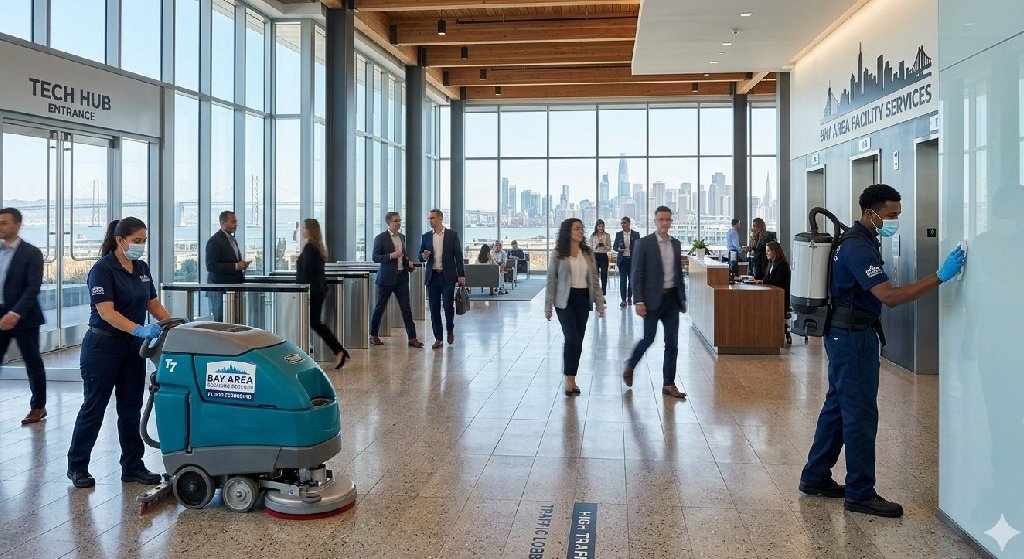
Entrances, lobbies, hallways, elevators, restrooms, breakrooms, and shared spaces can experience hundreds of interactions every day. For businesses in the San Francisco Bay Area, keeping these areas consistently clean is an important part of maintaining a professional and comfortable facility.
A strong commercial cleaning for high-traffic areas plan doesn’t necessarily mean cleaning every area of a building at the same frequency. Instead, it focuses resources where they are needed most.
What Are High-Traffic Areas?
High-traffic areas are spaces that receive frequent use by employees, customers, tenants, vendors, or visitors.
Common examples include:
- Building entrances
- Reception areas
- Lobbies
- Hallways
- Elevators
- Stairways
- Restrooms
- Breakrooms
- Cafeterias
- Shared conference rooms
- Waiting areas
- Common corridors
These areas typically require more frequent attention because dirt and debris can accumulate quickly.
Why High-Traffic Areas Need a Different Cleaning Strategy
A commercial building may have hundreds or thousands of square feet that don’t experience the same level of daily activity.
Cleaning every area according to the same schedule can be inefficient.
Instead, facility managers should consider:
Traffic volume: How many people use the area each day?
Type of traffic: Are people walking through, waiting, eating, working, or handling shared equipment?
Surface type: Is the area carpeted, tiled, concrete, wood, or another material?
Time of use: When is the area busiest?
Cleaning requirements: Does the space require routine cleaning, periodic deep cleaning, or additional disinfection?
Understanding these factors can help businesses create a more practical cleaning schedule.
1. Keep Entrances and Lobbies Clean
The entrance is often the first part of a business that customers and visitors see.
During wet weather or periods of heavy foot traffic, entrances can collect dirt, dust, moisture, and debris quickly.
A routine entrance-cleaning program may include:
- Vacuuming or sweeping
- Floor cleaning
- Mat maintenance
- Glass and door cleaning
- Spot cleaning
- Cleaning door handles and other frequently touched surfaces
- Emptying nearby waste containers
Maintaining the entrance regularly helps create a cleaner first impression while also keeping tracked-in debris from spreading throughout the facility.
2. Pay Attention to Floors
Commercial floors receive constant wear.
Even when a floor appears reasonably clean, dirt can accumulate around corners, entrances, edges, and underneath furniture.
A high-traffic floor-care program may include daily maintenance combined with periodic services such as:
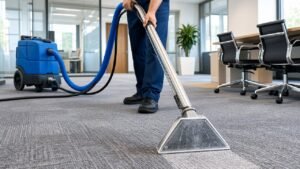
- Carpet extraction
- Spot treatment
- Hard-floor scrubbing
- Floor polishing
- Edge cleaning
- Mat cleaning
The appropriate service depends on the flooring material and the amount of traffic the area receives.
3. Maintain Restrooms Throughout the Day
Restrooms are among the most important areas to include in a high-traffic cleaning strategy.
A restroom that was cleaned in the morning may require attention again later in the day if it receives significant employee or customer traffic.
Cleaning teams should pay attention to:
- Toilets and urinals
- Sinks and faucets
- Mirrors
- Floors
- Partitions
- Door handles
- Soap dispensers
- Paper towel dispensers
- Waste containers
Supply levels should also be monitored so employees and visitors don’t encounter empty soap, paper towel, or toilet paper dispensers.
4. Don’t Overlook Elevators and Stairways
Elevators and stairways can receive a surprising amount of traffic but may not always receive the same attention as lobbies or restrooms.
Cleaning these areas should include appropriate attention to:
- Elevator floors
- Elevator buttons
- Handrails
- Door surfaces
- Stair treads
- Stair railings
- Corners and edges
Because these areas are frequently touched, they should be incorporated into the facility’s broader cleaning and surface-maintenance plan.
5. Keep Breakrooms and Shared Spaces Under Control
Breakrooms can quickly become messy because employees use them throughout the day.
Counters, sinks, tables, appliance handles, cabinet handles, and floors may require frequent cleaning depending on usage.
A good cleaning program should address both visible cleanliness and the buildup that can occur on frequently used surfaces.
Businesses can also help by establishing simple workplace expectations for cleaning up food, spills, and personal items.
6. Adjust Cleaning Frequency Based on Traffic
One of the biggest mistakes businesses can make is using a one-size-fits-all cleaning schedule.
A small office with ten employees may not require the same frequency as a commercial facility serving hundreds of people every day.
Consider creating different service frequencies for different areas.
For example:
Daily:
Entrances, restrooms, common areas, trash removal, and frequently used surfaces.
Several times per week:
Low-traffic offices, conference rooms, detailed floor care, and other areas based on usage.
Periodically:
Carpet extraction, detailed floor maintenance, high-level dusting, and other deeper cleaning tasks.
The actual schedule should be based on the facility’s size, occupancy, industry, and traffic patterns.
7. Know When Routine Cleaning Isn’t Enough
Routine janitorial service is essential, but certain situations may require additional cleaning.
Consider scheduling additional service after:
- Large events
- Construction or renovation
- Significant spills
- Unusual increases in building traffic
- Moving or relocation
- Extended periods without regular service
- Situations involving illness or contamination
A professional janitorial provider can help determine whether the facility needs additional cleaning or specialized services.
How Professional Janitorial Services Can Help
Managing high-traffic areas isn’t simply about cleaning more often.
It requires understanding which areas need the most attention and creating a cleaning schedule around how the building is actually used.
Professional commercial cleaning services in the Bay Area can help businesses establish consistent cleaning routines while addressing high-use areas before dirt and buildup become noticeable problems.
For facility managers, this can also make it easier to monitor service quality and identify areas where the cleaning plan needs to be adjusted.
A Cleaner High-Traffic Facility Starts With the Right Schedule
High-traffic areas will naturally become dirty faster than low-use spaces.
The solution isn’t necessarily to clean the entire building more frequently. A better approach is to identify the areas receiving the most traffic and create a cleaning plan that reflects their actual use.
From entrances and lobbies to restrooms, elevators, floors, and shared spaces, targeted cleaning can help Bay Area businesses maintain a consistently professional environment.
If your current cleaning schedule isn’t keeping up with the traffic in your facility, First Service Janitorial can help evaluate your cleaning needs and develop a service plan around your business.
Ready to improve your facility’s cleaning routine? Contact First Service Janitorial to schedule an evaluation.
Frequently Asked Questions
What are the most important high-traffic areas to clean?
Entrances, lobbies, restrooms, elevators, stairways, hallways, breakrooms, and shared spaces are common high-traffic areas that may require frequent cleaning.
How often should high-traffic areas be cleaned?
The appropriate frequency depends on building traffic, occupancy, business type, and the specific area. High-use restrooms and entrances may require daily or multiple-times-per-day attention, while lower-traffic areas may need less frequent service.
Why do commercial entrances get dirty so quickly?
People can track dirt, dust, moisture, and debris into a building through entrances. Heavy foot traffic can cause these materials to accumulate quickly, particularly around entry doors and floor mats.
Should commercial floors be professionally cleaned?
Yes. Regular vacuuming, sweeping, or mopping can help maintain floors, but periodic professional floor care may be necessary to remove deeper dirt and buildup and maintain the appearance of flooring.
Are elevators considered high-traffic areas?
Yes. Elevators can experience frequent use and contain commonly touched surfaces such as buttons, doors, and handrails. They should be incorporated into a facility’s regular cleaning program.
How can businesses reduce dirt in high-traffic areas?
Businesses can use entrance mats, maintain regular floor care, clean high-use surfaces frequently, keep entrances maintained, and establish a cleaning schedule based on actual traffic patterns.
Is high-traffic cleaning the same as disinfection?
No. Cleaning removes dirt and debris and reduces the number of germs on surfaces. Disinfection uses appropriate products to kill certain germs that remain on surfaces. Whether disinfection is necessary depends on the facility and circumstances.
How can I create a cleaning schedule for my commercial property?
Start by identifying the areas with the highest traffic, determining how frequently each area is used, assessing the types of surfaces present, and establishing daily, weekly, and periodic cleaning tasks based on those needs.